










TLDR: The Belfast Giants hockey team is helping unite Northern Ireland by creating a rare neutral space free from sectarian tensions.
In its simplest form, the protracted tensions in Northern Ireland have at their foundation two separate sectarian identities deeply divided over how, and by whom, they are governed — Protestant/Unionist populations wishing to maintain British rule and Catholic/Nationalists desiring a united Ireland.
The 1998 Good Friday Peace Agreement brought an end to armed hostilities that devastated cities and towns through years of urban guerilla conflict. Yet divisions remain sewn into the everyday lives and patterns of the Northern Irish people — 90 per cent of students attend segregated schools and there are few friendships spanning the sectarian divide.
One setting sits identifiably apart from these entrenched divisions: the ice hockey arena. Now in their 25th season, the Belfast Giants, Ireland’s only professional hockey team, impressively draws an average of 6,480 spectators to their games. They’ve also built a large and enthusiastic fan base known as the “Teal Army.”
As a spectator sport with limited opportunity to play the game competitively and no significant history on either side of the conflict, the hockey arena has emerged as something of a neutral ground where fans from different backgrounds come together side-by-side.
The arena is a place where symbols of division, so common across Northern Ireland via flags, murals and graffiti, are not allowed.
The lack of a historical association with one side of the conflict, the fact that the sport is played predominantly by men from outside Northern Ireland — mostly from North America and Scandinavia — and a name and logo rooted in the shared regional lore of mythical giant Finn McCool has allowed the team to forge its own path post-peace agreement.
The Friendship Four
In 2015, after years of planning, the Belfast Giants hosted the inaugural Friendship Four hockey tournament.
Held over the American Thanksgiving weekend, the tournament has since become an annual event that sees four Division I hockey teams from American universities come to Belfast for a two-day experience that includes intercultural exchange, educational visits to local schools and a hockey tournament.

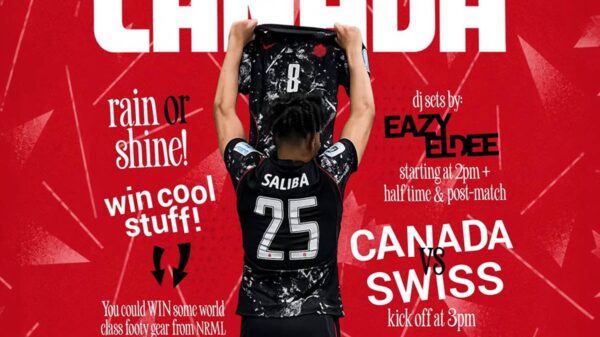
The Friendship Four promotional poster. (Notre Dame Hockey X account)
Since the tournament began, it has hosted teams from the New England and Boston areas as a means of fostering stronger ties between the sister cities of Belfast and Boston.

In 2024, the Friendship Four tournament notably included a school with a long association with Ireland, the University of Notre Dame. As a prominent American Catholic university with a team name — the Fighting Irish — that is directly connected to the island’s divisive history, the team’s inclusion in the Friendship Four had the potential to tarnish the neutrality of the event.
Controversial social media post
As a researcher who has engaged significantly with supporters of the Belfast Giants, and as an alumnus of the University of Notre Dame, this tournament drew me to Belfast.

The ‘Know Before You Go’ post from Notre Dame Hockey on X on Nov. 19, 2024 that was subsequently deleted. (Notre Dame Hockey X account)
Before the 2024 tournament in November, the Notre Dame Hockey account posted guidelines on X for their supporters in Belfast, including an image of what to wear, and what not to wear, around the city. It noted: “Just a reminder to avoid our Irish symbolism, that may be deemed offensive to some, while out around town.”
The post was deleted a few hours later, and an apology was issued acknowledging the tournament was meant to build bridges, not stoke division. Nonetheless, the original post drew significant attention and criticism.
Belfast media and British news outlets picked up the story about the Notre Dame post. Many of the comments on social media about the story were situated in ethno-sectarian views or pointed fingers of blame.
The outrage that greeted the Notre Dame X post demonstrates the tension and complexity of identity and symbols in Northern Ireland. But it thankfully wasn’t replicated in the Belfast hockey arena because the groundwork of social capital among hockey fans in the city has been built over the last 25 years.
‘Game on!’ and getting on with it
On Nov. 29, 2024, the Notre Dame team took to the ice to play against Harvard without any extra fanfare.
The afternoon game was filled with school groups carrying homemade signs and cheering for the teams whose players had visited their schools earlier in the week with overt hopes of seeing themselves on the jumbotrons. The game could have been in Saskatoon given the lack of any sectarian tensions.

Action at the Friendship Four Championship Hockey Game on Nov. 30, 2024, in Belfast. ((Notre Dame Hockey Facebook)
In an age of rising polarization and lack of human connection, the hockey arena in Belfast is worthy of attention.
Hallmarks of post-conflict reconstruction include the development of a shared understanding of the truth about past events and directly engaging with contested acts and issues. Neither effort has been particularly well-executed in Northern Ireland.
Nonetheless, as people wait for a more fulsome peace in the region, they have managed to live peacefully side by side in places like the Belfast hockey arena.
As peace and conflict research continues its attempts to understand how those in conflict-affected communities navigate their everyday lives, the importance of non-traditional, non-partisan activities that can bridge divides should not be overlooked.
Written by Eric Lepp, Assistant Professor of Peace and Conflict Studies, University of Waterloo
This article is republished from The Conversation under a Creative Commons license. Read the original article.