











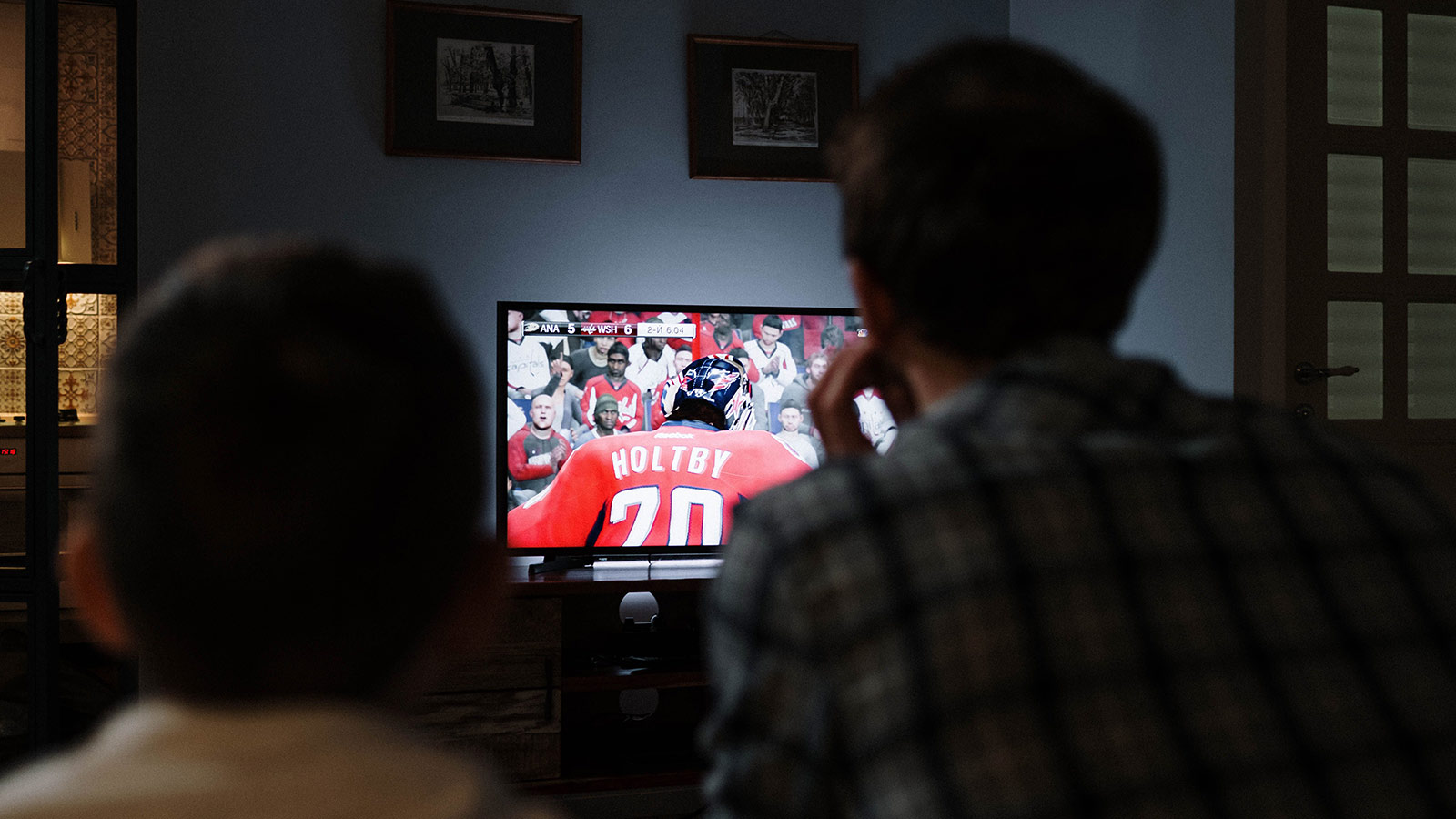

After nearly 75 years, the final horn has sounded on CBC’s iconic Hockey Night in Canada program. The recent decision by CBC and Rogers Communications to end the sub-licensing deal that allowed CBC to air National Hockey League games has been met with a mix of anger, regret, disappointment and sadness.
Some called for defunding the national public broadcaster and others bemoaned the failures of successive federal governments to properly invest in the CBC. Many other Canadians, however, mourned the loss while simultaneously breathing a sigh of relief when the CBC finally handed over NHL broadcasting rights to private, for-profit networks.
It’s certainly a good time to reminisce and reflect on the significance of this cherished tradition of Canadian culture.
But a more fulsome discussion moves beyond emotion and nostalgia for a bygone era. It recognizes the historical relationship between CBC and Canada’s game, how the NHL and the media landscape have fundamentally changed and considers the opportunities that may lie ahead.
The ‘Hockey Night in Canada’ tradition
What developed into a time-honoured tradition uniting hockey fans across the country originated in the 1920s with the first radio broadcasts. Radio broadcaster Foster Hewitt’s greeting — “Hello Canada and hockey fans in the United States and Newfoundland” — became just as recognizable as his signature call “he shoots, he scores!”
In 1936, the newly established Canadian Broadcasting Corporation took over the Saturday night broadcast of NHL games and renamed it Hockey Night in Canada. Radio helped propel the game’s growth for the next two decades. By 1952, CBC and the NHL were ready for prime-time television.
Despite fears that televised games would hurt ticket sales in the Toronto and Montréal markets, the NHL supported Hockey Night in Canada because of its potential to reach a national viewing audience. Canadians watched, sponsors signed on and the game exploded in popularity from coast to coast.
In the following decades, hockey became synonymous with Hockey Night in Canada and it became a Saturday night staple. When fans recall their favourite NHL moments, they hear the voices of those who brought them to life. Among the announcers were Hewitt, René Lecavalier, Danny Gallivan, Dick Irvin and Bob Cole.
Their voices captured the “feel and flow” of the game for those tuning in. Hockey Night in Canada was the conduit through which generations of Canadians experienced professional hockey. And they did so for free, in the comfort of their own homes, alongside family and friends.
A changing landscape
The final quarter of the 20th century witnessed transformative changes in both the sports media industry and professional hockey. In short, they became big business.

Cable sports entertainment competed for content, which expanded to NHL hockey, especially following the trade of superstar Wayne Gretzky. The NHL’s subsequent exposure in the United States brought higher revenues for the league and eventually its players.
Competition gradually stiffened among media outlets to secure television rights, placing enormous pressure on CBC as it saw its funding drastically cut. By 2013, it could no longer compete with Rogers Communications for sole NHL broadcasting rights and instead struck a deal to sub-license them. Since then, however, fans have turned digital, live-streaming hockey games through their personal electronic devices and watching them on the Rogers Sportsnet app.
CBC has also felt the erosion of trust in public institutions, not helped by decisions made by their for-profit partner.
Particularly damaging was the backlash created when Rogers Media signed a multi-year deal with Chinese telecom giant Huawei as Hockey Night in Canada‘s major sponsor. Accusations of Huawei being a threat to national security quickly followed, prompting calls to boycott the company’s products..
The latest blight on Hockey Night in Canada and its broadcasters is the proliferation of in-program advertising by sports betting companies. Growing numbers of Canadians find this trend of the NHL cozying up to gambling alarming and want it banned.
A new era dawns
Though the end of Hockey Night in Canada provides closure for many, it hits particularly hard as the country’s sovereignty is under threat. The loss is yet another blow to the cultural fabric of the country, which has recently lost the Snowbirds, the Hudson’s Bay Company, door-to-door postal delivery and even the beloved Canadian Cherry Blossom candy.
There have long been calls to protect Canada’s icons and traditions, including Hockey Night in Canada, as a matter of cultural citizenship. CBC’s mandate includes providing programming that entertains and contributes to a shared national consciousness and identity, which for all of its history featured hockey as the national game.
The end of the sub-licensing deal, of course, does not preclude CBC from continuing its efforts to unite Canadians in this way.
In fact, a renewed CBC focus on the youth, amateur and professional women’s hockey may indeed strengthen Canadian identity. The public broadcaster can achieve this if allowed to operate unfettered from the strict for-profit strategies of corporate media giants and the risky and morally troubling relationships they engage in.
Written by Mike Dove, Director and Professor of Public History, Western University, Canada, Western University
This article is republished from The Conversation under a Creative Commons license. Read the original article.

5 Ways to Support HipHopCanada:
- Submit Your Music
- Follow Canadian Fresh (HipHopCanada’s Spotify Playlist)
- Follow us on Instagram
- Follow us on X (Twitter)
- Like us on Facebook