



















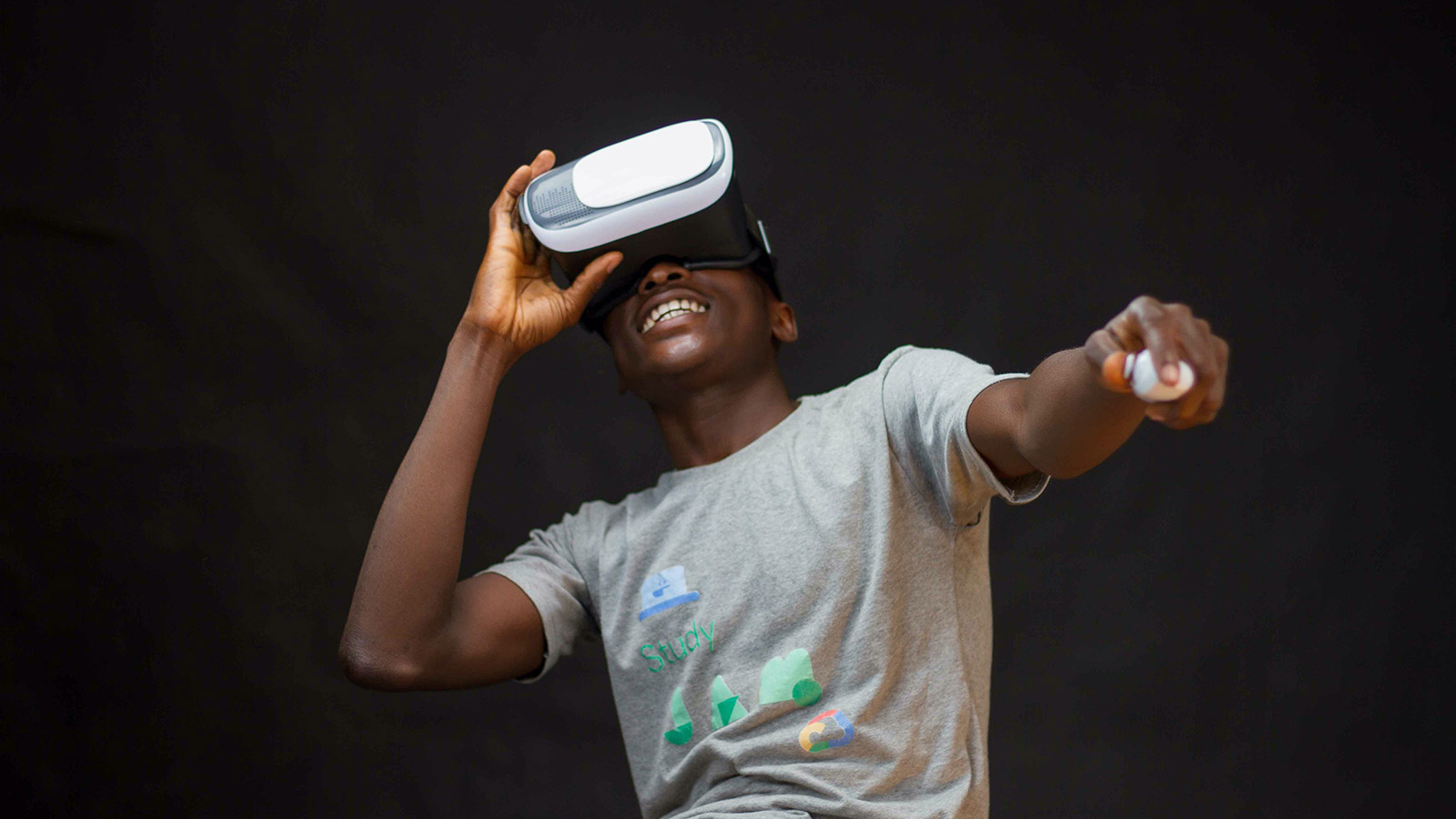

Despite recent waves of Big Tech layoffs, billions of dollars have been sunk into virtual reality (VR) hardware and software over the past few years.
For this investment to be worthwhile, the VR industry needs to achieve sustainability and growth. To do this, it will have to explore many different applications of VR technology, including manufacturing and social VR. Social VR is a type of virtual reality experience where users can meet and interact with one another in a virtual world.
As a University of Toronto Mississauga (UTM) associate professor who researches social VR and teaches classes on virtual environments, I am often faced with the question of what will drive the adoption of social VR by broader society.
As the UTM lead of the University of Toronto’s Responsible Data Science initiative, I am also interested in the data collection, retention and deployment that is needed to build an efficient and ethical metaverse.
Walled gardens
At the present moment, our cultural imagination of the metaverse surpasses the real thing. In books about the metaverse, you can speed across the world on a motorcycle with katana in-hand, or slip in and out of cyberspace on a mission for artificial intelligences.
In films and television shows about it, you can leave behind your everyday life to embark on a scavenger hunt through ‘80s nostalgia or save the world while bending your body around the trajectory of bullets. Or you can walk through a door in your workplace and find yourself in Sherlock Holmes’s London or the wild west. In all these versions of the metaverse, we imagine leaving the physical world and entering a new, fully formed digital universe.
However, this is not the current state of VR technologies. Rather, we seem to be stuck in the walled garden phase of this potentially revolutionary interactive technology. Until the VR industry figures out how to move beyond these walled gardens, the metaverse may never live up to the hype.
A walled garden is a mediated environment that restricts users to specific content within a website or social media platform. This is how the early internet worked — providers like AOL, CompuServe and Prodigy kept users on affiliated sites.

This later changed when the true potential of the internet was realized and users began freely traversing sites and platforms. Users connected and drew on information from many different sources.
Today, information, memes, images, celebrity gossip and cultural moments all diffuse across the internet and are accessible from many different hardware devices, including cellphones, tablets and computers.
Today’s VR more closely resembles a walled garden environment than the interconnected internet. There are only a handful of social software programs that are accessible from different headsets.
Software developers may find it difficult to program for multiple headsets at once, in part due to a lack of a standard software development kit across VR hardware devices. This leaves the current virtual reality market, despite the potential for immersive, interactive, social experiences, more similar to the gaming console market than a communication channel.
For VR to become the next widely adopted communication channel, the industry needs to move beyond the walled garden phase. To do this, VR needs to increase its interoperability — the ability for programs and applications to be able to integrate and for software to run across VR hardware.
Interoperability raises important questions about the data infrastructure of VR hardware and software, the sharing of consumer and corporate data and our ability to traverse to different parts of the metaverse.
The tipping point
Virtual reality adoption is often talked about as if it’s just about to take off. In 1992, VR visionary Jaron Lanier predicted the possibility of home VR by the turn of the century.
Researchers Tony Liao and Andrew Iliadis found something similar in their research on the augmented reality industry. Augmented reality was consistently talked about as if widespread adoption was just another five to 10 years out.
Yet, as author and researcher Dave Karpf succinctly lays out in WIRED, while both augmented and virtual reality technologies keep advancing, they have yet to reach the tipping point necessary for widespread social adoption.
The technology, Karpf argues, is always “about to turn a corner, about to be more than just a gaming device, about to revolutionize other fields.” Yet, the primary use case of virtual reality remains as a gaming device.
Leaning into VR as a gaming platform could work for the industry — the usage of VR as a gaming device is increasing and gamers are used to buying consoles that can only run specific titles created for that console — but it misses the potential of virtual reality. VR has the ability to bring communicators together into shared spaces to engage, interact and share human social experiences.
The creation of these shared VR spaces will likely require movement towards interoperable social spaces where users can move easily and freely from one social VR space to another.
Interoperability, in turn, requires open software standards and data sharing between entities that have traditionally kept a close hold on their data collection and analysis processes. Consumers deserve to have confidence in the safety and protection of the data generated by their social interactions.
The future of VR
If the VR industry is to experience the kind of growth that will make it worthy of the billions of dollars that have been invested in it, we need to view the metaverse as public infrastructure, much like the internet is.
Those of us in both the VR industry and the VR research community must turn our attention to how data can contribute to interoperability while protecting individual instances of social interaction from surveillance and commodification.
The balance between the openness needed for interoperability, and the protections necessary to maintain consumer confidence, will be a tough balance to strike. Yet, without this balance, widely adopted social VR will continue to remain out of reach.
Written by Bree McEwan, Associate Professor, Institute of Communication, Culture, Information and Technology, University of Toronto
This article is republished from The Conversation under a Creative Commons license. Read the original article.