















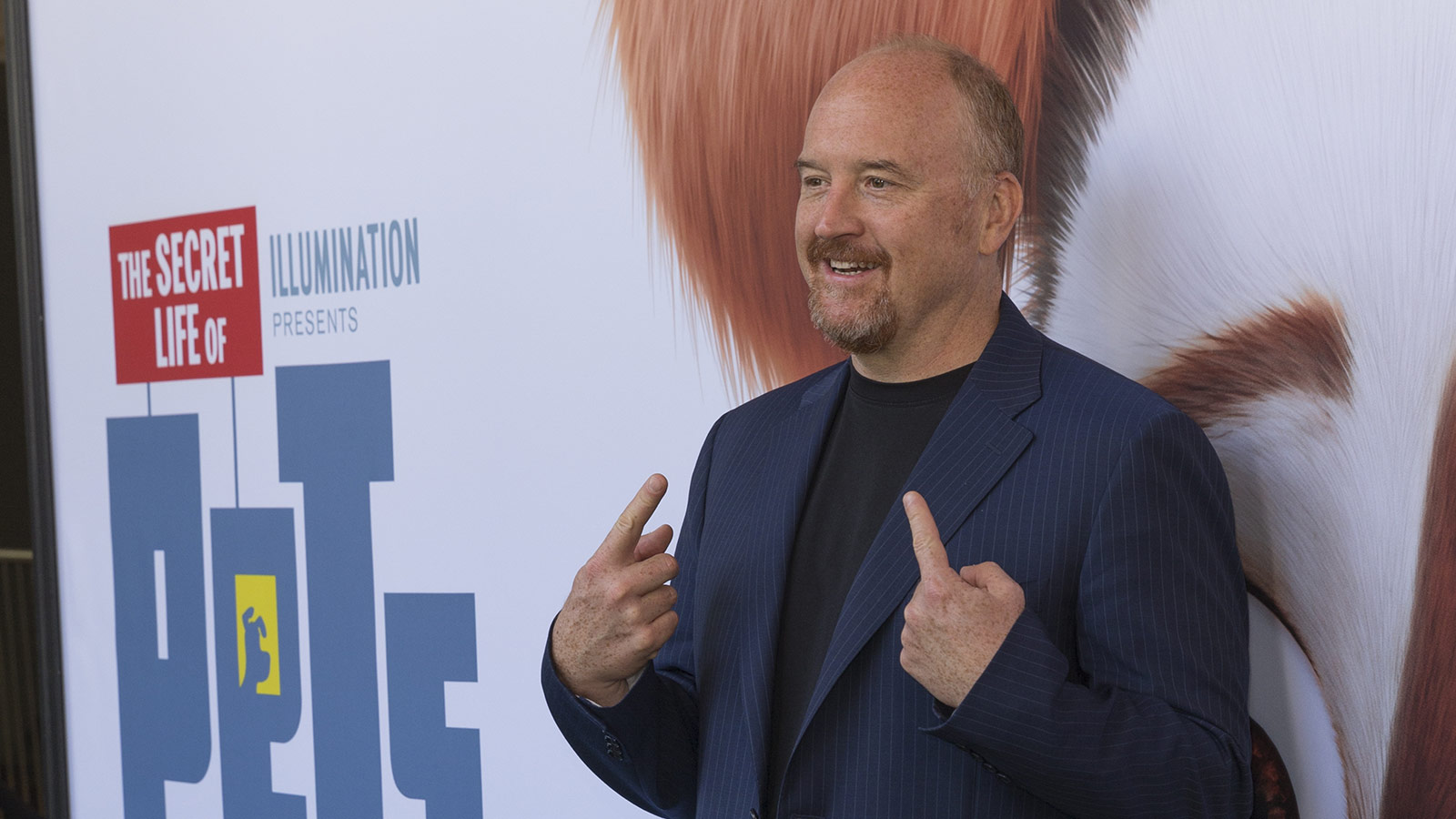

On Dec. 18, comedian Louis C.K. — who was accused of sexual misconduct during the height of the #MeToo movement — released a new hour-long stand-up special called Sorry.
A quick scan of Twitter suggests there is no consensus on whether or not this is a good development. But many tweets clearly express frustration that he’s still getting attention and releasing new specials.
In 2017, five women accused C.K. of sexual misconduct, claiming he masturbated in front of them or made inappropriate sexual advances.
Power, media and #MeToo
In our forthcoming book, Defining Sexual Misconduct: Power, Media, and #MeToo, we trace how the social recognition and censure of sexual misconduct has changed over the past 40 years.
While the language of “sexual misconduct” first emerged in the 1970s and ‘80s, alongside its related counterpart “sexual harassment,” it is only more recently that the discourse of sexual misconduct has materialized into a significant public conversation.
It is now common for a wide range of behaviours to be identified as inappropriate sexual conduct and condemned widely in public venues, including conversationally and on social media.
We define the discourse of sexual misconduct as broader public awareness of women’s lived experiences of unwanted and uninvited sexual conduct, accompanied by widespread cultural recognition that such experiences are, in fact, commonplace. Experiences defined as sexual misconduct can range widely in scope in terms of harm and effect (from catcalls to criminal sexual assault).
Sexual harassment is distinct from sexual misconduct; harassment is enshrined in numerous laws, where sexual misconduct is a social, rather than a legal term. In response to sexual misconduct allegations, C.K. admitted that he “wielded his power irresponsibility.” What C.K. did was wrong, but it did not necessarily meet the legal bar for criminal or sexual harassment.
Umbrella term of sexual misconduct Unlike sexual harassment and criminal sexual assault, the term sexual misconduct encompasses wildly varying behaviours ranging from consensual encounters (like employer restrictions of any sexual relationships between co-workers of equal status and rank) to sexual assault and rape.
Importantly, the discourse of sexual misconduct is unique from all other descriptors of sexual harm because it covers a much broader symbolic terrain than any of its related counterparts.
The discourse of sexual misconduct expands the parameters by which people, mostly women, can identify and speak about sexual harms. It helped develop the foundation for the #MeToo movement and related campaigns. This has led to sharp increases in disclosures of sexual harassment and sexual assault.
However, the imprecise nature of sexual misconduct has raised concerns about the minimization of sexual violence when, say, rape is described under the same umbrella as catcalling.
The lack of legal parameters around the concept of sexual misconduct effectively means that while these behaviours may not all be defined as crimes or as actions that are punishable in the legal sense, social censure and “cancel culture” are standing in as proxy forms of punishment for perpetrators of sexual misconduct.
It is this reality that produces the mixed reactions to C.K.’s attempted return to public life.
Understanding sexual misconduct and the pursuit of justice
There is no universal consensus on how we should understand sexual misconduct. In western societies, we have constructed and reified the criminal processing system as the primary means by which justice is done.
For many, justice is accomplished in a courtroom setting where a punishment is imposed and where procedural due process is followed in accordance with fundamental fairness. Perpetrators are incentivized to deny harm, to exercise their right to remain silent and to hope that the burden of proof falls in their favour.
When we see instances of harm where perpetrators have, seemingly, avoided legal accountability, our sense of justice leads us to seek other forms of punishment. Cancel culture is the symptom of a society that recognizes a profound disconnect between survivors’ experiences of harm and the lack of systemic and individual accountability for these harms. Restorative and transformative justice emphasize responding to and repairing the harms that victims experience, encouraging all parties to engage in dialogue to address healing and concerns about safety and respect.
Unlike in our retributive court system, in restorative and transformative processes persons who have caused harm are encouraged to acknowledge the harm, to accept responsibility and to be held directly accountable to the persons they harmed.
The focus is not on determining guilt and suitable punishment, but on creating space for dialogue to change people and creating conditions in which the harm will not be repeated.
Cancel culture, as a type of internet vigilantism, we argue, appears fundamentally incompatible with the actualization of restorative justice because it is oriented to punishment and exclusion, leaving no space for dialogue or personal change.
But cancel culture is what is left when people who have caused harm fail to actively accept responsibility and work to repair that harm.
Moving forward
If we want to send a message that sexual harm will no longer be tolerated, then people who cause harm must be held accountable for that harm — even if it doesn’t meet the threshold of criminal responsibility.
To our knowledge, C.K. has not made a direct apology to the women for his actions. His public statement of remorse in 2017 was widely criticized for failing to include the words “sorry” or “apologize.” In titling his new special Sorry, he has opened himself to renewed criticism for a seemingly flippant treatment of the harm that he caused.
This all suggests he’s missed a key opportunity to engage in meaningful dialogue with the women he hurt and has failed to learn an important lesson about atonement. If C.K. won’t make himself accountable for his actions, others will continue to do so.
Written by Christopher J. Schneider, Professor of Sociology, Brandon University and Stacey Hannem, Professor of Criminology, Wilfrid Laurier University This article is republished from The Conversation under a Creative Commons license. Read the original article.