





















Dognapping, a variable noun, defined as the crime of stealing a dog, usually to get money from its owner in exchange for its return.
It’s late at night, and a stranger walking down an alley sees your family dog sleeping on the porch inside your fenced yard. The stranger softly calls the dog over and begins to pet him. While checking to see if anyone is watching, he opens the gate, clips a leash to your dog’s collar and leads him away, never to be seen again. The next morning, your family is distraught; when a neighbour’s video surveillance reveals that your dog was stolen, you feel deeply violated.
While the emotions described are implied, the circumstances are not: Reports suggest that dog thefts are on the rise in the U.S..
Losing a pet can be devastating, and it’s a crime that has repercussions that go far beyond the animal’s financial value. Many dog owners view their dogs as members of their family; a 2020 study found that the loss of a pet can have a similar emotional impact to the loss of a loved one.
As criminologists, we wanted to better understand dognapping and dognappers, while pointing to some ways pet owners can keep their four-legged friends out of harm’s way.
Working with criminal justice researcher J. Mitchell Miller, we studied 82 incidents of dog thefts captured on surveillance cameras and posted online.
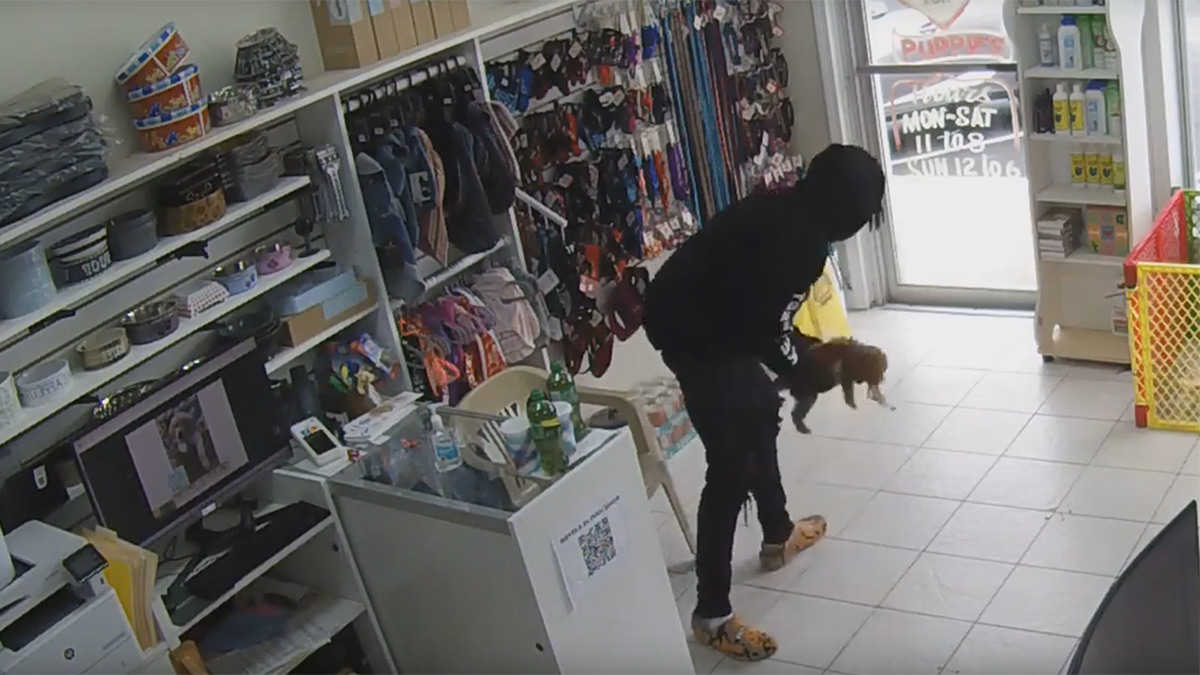
Security footage of a young man whisking away a puppy from a New Jersey pet store in 2022. (NJ.com / YouTube)
Breaking down the footage
In the videos we analyzed, about half of thefts seemed to involve a single perpetrator operating alone. Around 38% appeared to involve two perpetrators, while 9% involved three or more people working together.
The thefts appeared to usually involve some planning and strategy. In our sample, nearly 38% of thieves used vehicles to transport the stolen pets, approximately 3% used bicycles, and 50% fled on foot. Three incidents involved the use of violence – such as shoving the owner – and around 15% of the thefts included some form of force, such as breaking into a property. In roughly 37% of the cases, the thieves were able to hide the animal using bags, clothing or other methods.
Thieves sometimes deployed distraction techniques. In one case, two thieves distracted a pet store clerk while the other snatched a puppy from a display kennel by the front door.
The vast majority of incidents – 74% – involved the theft of a single animal, and these were usually small dogs. According to the American Kennel Club, certain breeds, such as French bulldogs and Yorkshire terriers, make more attractive targets; they’re relatively small, and they tend to sell for higher prices than other breeds.

Interestingly, only a handful of dogs nipped or barked as they were being whisked away. Over half appeared calm during the incident, while around 33% acted friendly toward the thieves.
About 68% of the thefts happened during the day, and 60% occurred indoors; those that occurred inside tended to happen in pet stores, rather than people’s homes. When a dognapping happened outside, the dogs were usually snatched from people’s front yards, where the pets could be seen from the street.
Punishment that doesn’t fit the crime
There are several reasons why someone might steal a dog. Some people do it to simply make a quick buck – a practice known as pet flipping – or to extract a ransom from the owner.
Others have grander visions, targeting highly valued purebreds, such as Rottweilers and chow chows, to start a breeding operation. Then there are those who steal pets for dogfighting rings, while some thieves simply want a dog for themselves and don’t want to pay for one or go through the process of adoption.
Recent reports indicate that dognapping and pet theft is on the rise. One clear indicator is an increase in the number of social media posts detailing lost or stolen pets.
The COVID-19 pandemic exacerbated this trend: The demand for pets exploded during lockdowns, and dog prices surged on the secondary market.
Compounding matters is a legal system that, in our view, often fails to adequately address the gravity of dognapping. Many jurisdictions treat pet theft similarly to property theft. As a result, many pets – even some purebreds – could be valued at less than $1,000, which usually results in relatively lenient penalties.
A thief who comes onto your property and steals your dog and sells it to someone else would likely receive the same punishment as someone who took your bike.
Needless to say, viewing and valuing a dog no differently than other possessions overlooks the deep emotional attachment between pets and their owners.
Defensive measures to stop dognapping
There are some preventive steps that dog owners and pet shop owners can take.
Many thefts happened where pets were easily accessible and visible to passersby, such as front yards or near the exit of pet stores. Something as simple as a higher fence could better protect dogs. Microchipping pets and using GPS collars can make stolen pets easier to recover and less attractive to thieves.
Of course, stricter laws and harsher penalties for pet theft could further deter criminals. While there is no database on the number of stolen pets, each pet that is kept safe means one less devastating loss for a family.
Written by Ben Stickle, Professor of Criminal Justice Administration, Middle Tennessee State University and Brenda Vose, Associate Professor of Criminology and Criminal Justice, University of North Florida
This article is republished from The Conversation under a Creative Commons license. Read the original article.