














Uncommon Courses is an occasional series from The Conversation U.S. highlighting unconventional approaches to teaching.
Title of course:
Science Fiction as Intellectual History
What prompted the idea for the course?
For most of its history, science fiction was a disreputable, throwaway genre. But sources of culture and thought aren’t just found in classic literature or in the writings of the great thinkers. They’re also in popular entertainment: movies, comics, pulp magazines, TV.
Big thoughts often come in chunks with labels like “The Future” or “Technology” or “Freedom.” And most ideas about these things are shaped by science fiction.
So in this class, my students explore how the theories of Charles Darwin, for example, are reflected in science fiction like “Jurassic Park,” “The Island of Dr. Moreau,” “X-Men” and “The Wrath of Khan.”
I’m lucky to be the third generation of professors teaching this course at Auburn. It’s an old staple here that I inherited.
What does the course explore?
I usually pick three big plot ideas from sci-fi: alien encounters, time travel and superhuman abilities. Then we trace the development of those ideas, primarily through American fiction.
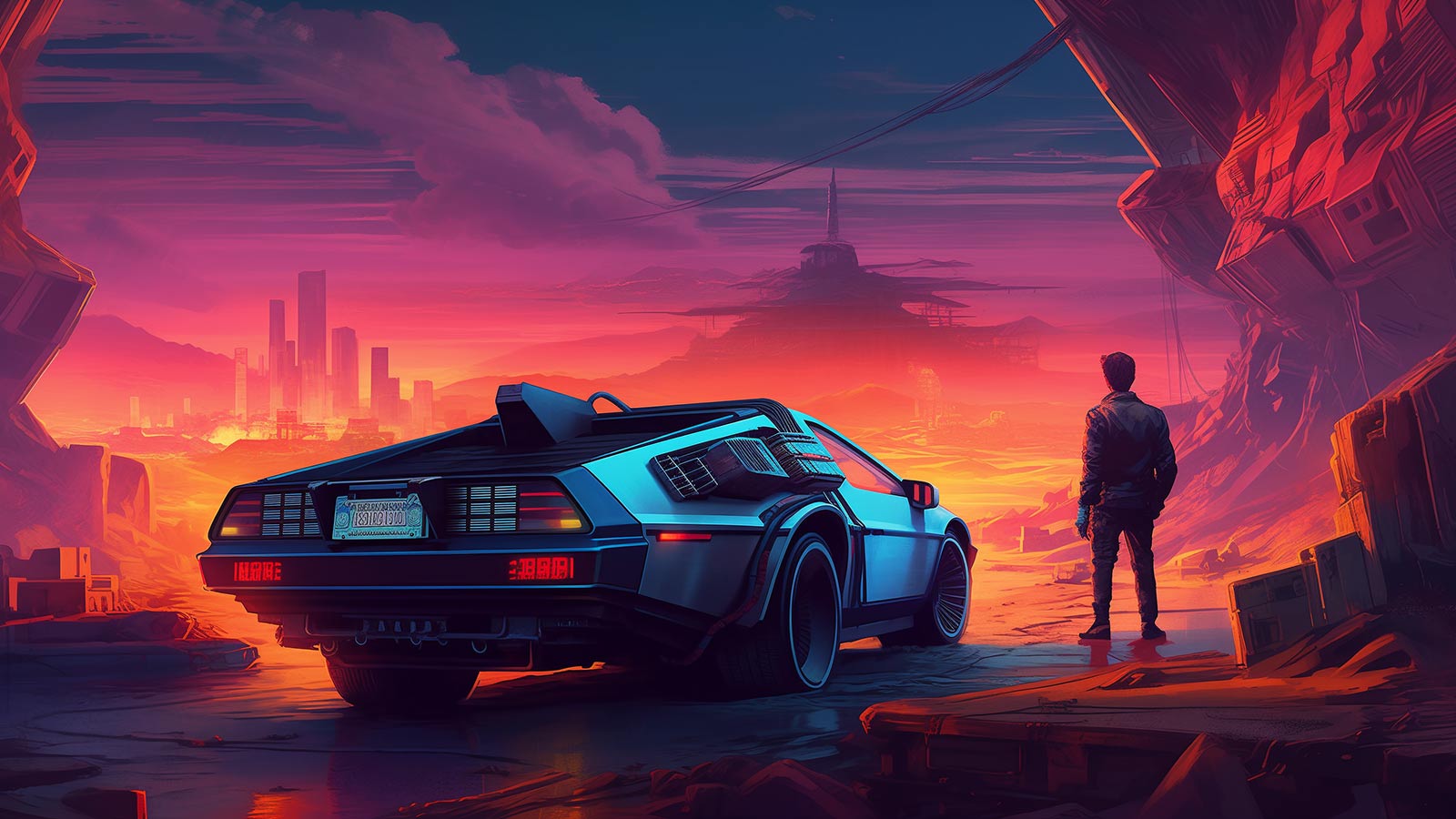
Students might read H.G. Wells’ “The Time Machine,” which was written in the 1890s and tells the story of the Eloi and Morlocks, post-human races from 800,000 years in the future; C.L. Moore’s secret visitors from the future in the 1953 novella “Vintage Season“; and Steven Spielberg’s 1985 escape to an idealized 1950s in “Back to the Future.”
These works all include mind-bending theories about what time travel might look like. But students also see how each of them tells a different story about the anxieties and obsessions of the times in which they were created.
For example, Wells’ novel is a vision of how thousands of years of Victorian class divisions lead to the evolution of a group of cannibalistic underground humans. In “Back to the Future,” Marty McFly leaves the dingy, broken-down 1980s for a clean and shiny version of the 1950s, one that looks much more promising than 1985. The film taps into the 1980s political and cultural nostalgia for so-called “simpler” times. (Of course, in their version of 1955, Biff and Marty never deal with segregation or Cold War nuclear panic.)

Science fiction offers a kind of film negative of history – a back door into what made people worried or scared rather than what was heroic. Sci-fi captures that fear and anxiety.
Rod Serling’s 1960 “Twilight Zone” episode “The Monsters Are Due on Maple Street” is the story of how neighbors turn on each other when they suspect an alien invasion is taking place. It parallels the American crisis over desegregation and communist subversion.
As Serling concluded, “For the record, prejudices can kill and suspicion can destroy, and a thoughtless, frightened search for a scapegoat has a fallout of its own – for the children, and the children unborn. And the pity of it is that such things cannot be confined to the Twilight Zone.”
Why is this course relevant now?
New technology, along with endless predictions and prophecies about the future, bombard students.
It’s important to take a moment to step back. How is the way we talk about and use technology influenced by the way we’re trained to think about technology and the future? And how much do past visions of the future dictate the choices of the present?
What’s a critical lesson from the course?
Students often think technology has rules and it will follow those rules. But technology doesn’t work like that.
That’s both terrifying and uplifting, because it means that we can still create and imagine our future as we see fit.
What materials does the course feature?
I anchor the course with a series of novels; the list changes, but it always includes “The Time Machine” and Ursula K. Le Guin’s 1971 novel “The Lathe of Heaven.”
Beyond that, I try to pepper in a mix of pulp stories, TV shows, radio dramas, comic books and films. I assign the 1970s avant-garde sci-fi stories of Brian Aldiss and Joanna Russ, and underground literature from the 1980s, such as the graphic novel “Ed the Happy Clown.”
I shape the course like a traditional “great books” course – those that feature the works of intellectual and literary giants – by assigning a different work every week. I just have a different idea about what makes a great book.
We also spend a delightful week examining the economic and cultural history of “so-bad-its-good” B movies and late-night features, where I have them watch an episode of the Canadian sci-fi show “The Starlost,” considered one of the worst shows in television history. Sometimes you have to learn what not to do.
What will the course prepare students to do?
They learn to read and think. They learn that all stories have ideas and philosophies, whether simple or complex, wise or foolish.
I hope they learn to watch for nonsense in public debates about technology and the future – like how some people assume computer modeling for human language is the same thing as language – and keep an eye out for ideologies masquerading as action films.
I hope they learn to love an author they’ve never read before – and learn to appreciate how much reading and stories make life worth living.
Written by Adam Jortner, Goodwin Philpott Eminent Professor of Religion, Auburn University
This article is republished from The Conversation under a Creative Commons license. Read the original article.