



















At least 125 soccer fans have died in Indonesia, and more than 300 have been injured, in what is being reported as one of the worst sports stadium tragedies in history.
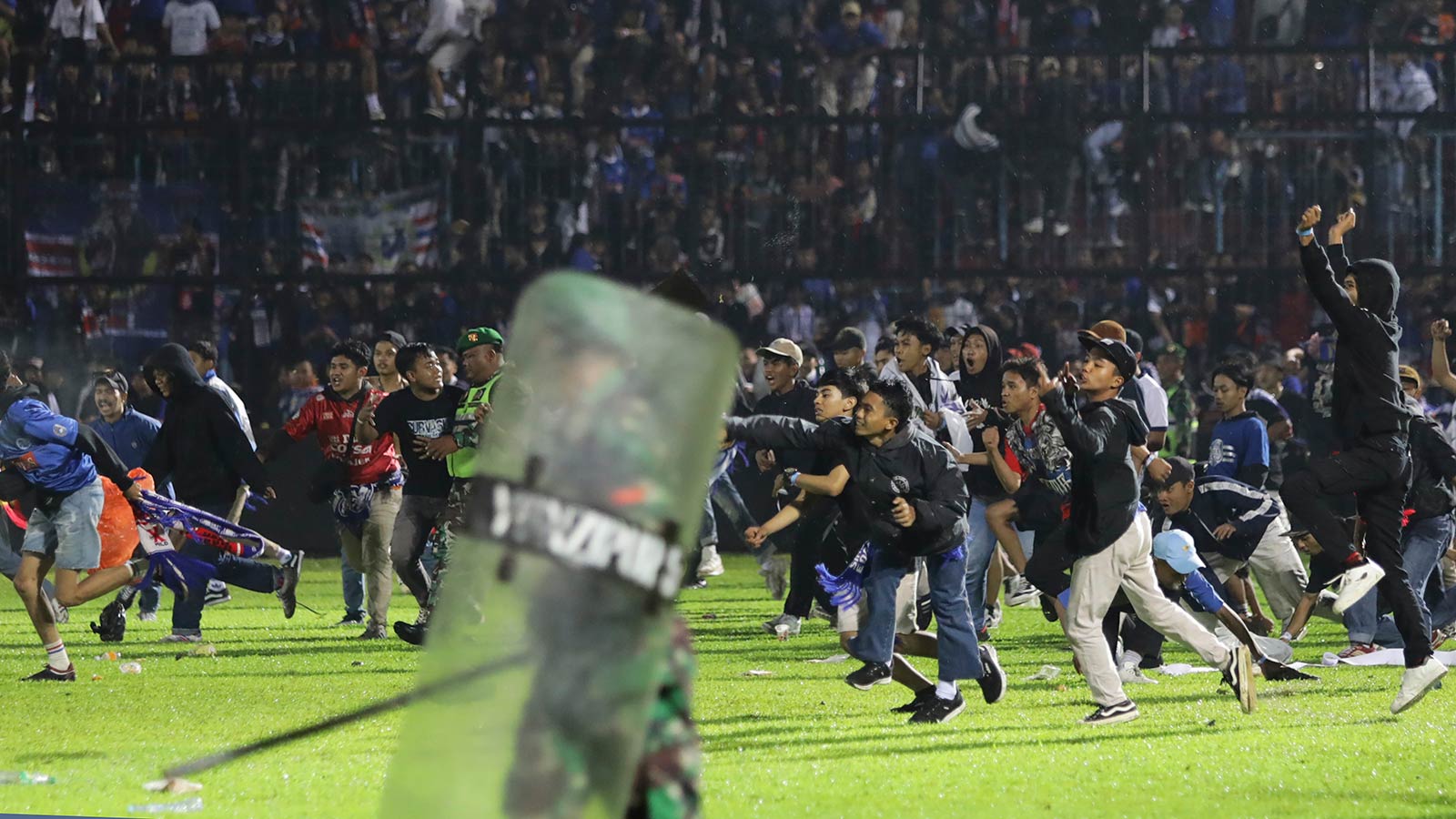
The disaster happened on Saturday night at the Kanjuruhan stadium in Malang, East Java. Up to 3,000 fans reportedly streamed onto the pitch following a Premier League game in which Persebaya Surabaya defeated Javanese club Arema 3-2.
Disappointed with the loss, Arema supporters threw bottles and other objects at players and officials before storming the pitch – which eventually led to a deadly stampede. Video footage shows authorities firing tear gas, and armed with batons and shields as they chased fans in an effort to restore order.
I’m an expert on crowd safety, with a specific focus on how to boost safety at large events, including sporting tournaments. Like most tragedies of this nature, the events in Malang appear to tie into a common thread.
What went wrong
News outlets have reported Saturday’s event was filled beyond capacity. According to The Guardian, Indonesia’s chief security minister said 42,000 tickets had been issued for a stadium that holds a maximum of 38,000.
In such a densely packed venue, police’s decision to use tear gas would have only escalated an already confusing and chaotic situation.
Also, the Kanjuruhan stadium only has one exit (which is also the entry). In competitive sporting environments, crowds already have heightened emotions. So it’s not difficult to see how a frenzied crowd rushing through a single exit could lead to death and injury.
These lessons have been learnt previously with the 1989 Hillsborough disaster and the 2010 Love Parade disaster (to name a few) – where a combination of police actions, poor communication, and poor access and egress for patrons has ended in tragedy.
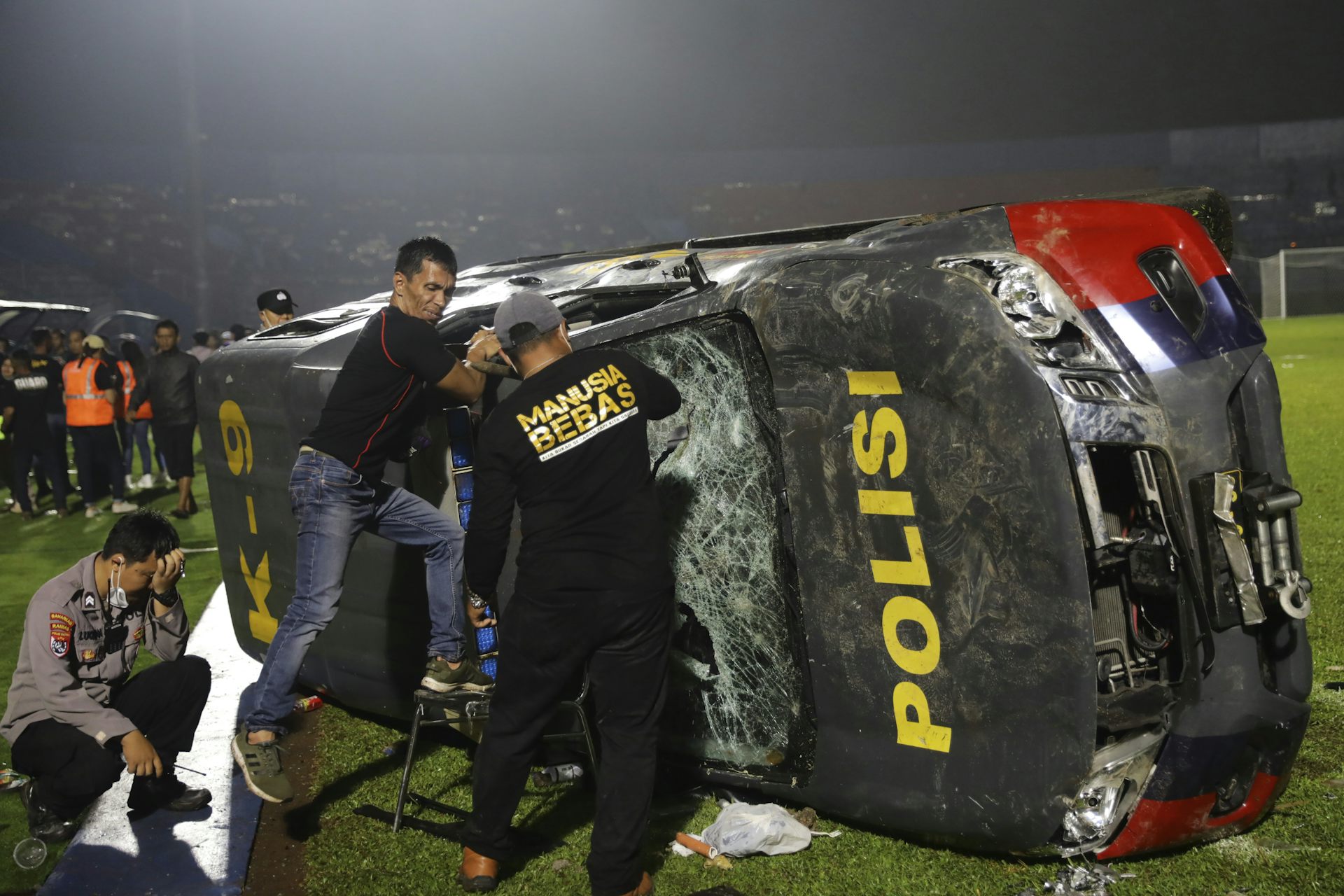
Cars were destroyed and torched amid the chaos, which local reports say spilled over to outside the stadium. (Yudha Prabowo/AP)
Could this tragedy have been avoided?

Yes – and a few techniques can be used to ensure it does not happen again.
For example, research has shown lighting up a stadium to let the audience know the show is over can help move them out in an orderly fashion. Audiences also like to leave a venue the same way they came in, so all exits should be open, accessible and well-lit.
Beyond this, Indonesia’s football crowds are well-known for their excitability. So the risk of crowds getting out of hand should be managed pre-emptively.
One way to do this would be to separate spectators into different zones – a technique already used in World Cup events. This can reduce tensions in the stadium by reducing the likelihood of fans from different teams encountering each other.
Police can also form a peaceful barrier around the oval towards the end of a game, to signal to the crowd they are there to manage the situation. Importantly, they do not need to be armed. In the UK, “soft policing” is used for crowd management with great success.
And having officers wear baseball caps and hoodies instead of riot gear (as was the case in Malang) has been shown to soften the crowd’s response, and allow police to walk through and break up small skirmishes before they escalate.
The use of tear gas
Soccer’s world governing body FIFA (Federation Internationale de Football Association) specifies in its safety regulations no firearms or “crowd control gas” should be carried or used by stewards or police.
The use of tear gas irritates the eyes and excites the pain receptors, which can lead to panic. In Malang, the use of tear gas in an already emotionally heightened situation created further panic and led to a crush.
Also, while most people sprayed with tear gas recover, there is risk of long-term health consequences for those exposed to large doses and people with preexisting medical conditions.
The use of the gas was a poor decision and likely worsened the situation. FIFA president Gianni Infantino called the events “a dark day for all involved in football and a tragedy beyond comprehension”.
Indonesia’s last soccer tragedy?
In 1995, researcher and former UK policeman Alexander Berlonghi argued for the importance of understanding crowds to ensure “competent and effective action” when managing them.
He said without understanding the nuances of a crowd’s behaviour, disastrous mistakes can happen in planning and crowd control. More than two decades later, we are still seeing the same mistakes happening, and leading to a loss of life.
In the aftermath of yet another crowd tragedy, Indonesia’s President Joko Widodo said authorities must thoroughly evaluate security at matches, adding that he hoped this would be “the last soccer tragedy in the nation”.
Violence is common at soccer games in the country, with spectators reportedly beating up rivals if they are recognised as a fan from another team.
Moving forward, there should be a focus on developing pre-emptive harm reduction strategies, and ensuring police are adequately trained to handle such events. There is also an urgent need to review the overall soccer culture in Indonesia.
If history is anything to go by, authorities will have to take drastic steps to make sure Saturday’s events are never repeated.
Written by Alison Hutton, Professor, University of Newcastle
This article is republished from The Conversation under a Creative Commons license. Read the original article.