










As someone who teaches and writes about Afrofuturism, I’ve been eagerly awaiting the release of “Black Panther: Wakanda Forever.” I’m particularly excited about the introduction of Namor and the hidden kingdom of Talokan, which he leads.
The first “Black Panther” film adhered to a longstanding practice in Afrofuturist stories and art by engaging in what I call “acts of recovery” – the process of reviving and celebrating elements of Black culture that were destroyed or suppressed by colonization. This practice is often linked to “Sankofa,” an African word from the Akan tribe in Ghana that roughly translates to “it is not taboo to fetch what is at risk of being left behind.”
“Wakanda Forever” pulls from the past in the same way, but with a twist: Talokan is inspired not by African cultures, but by Mesoamerica, a vast area that covers most of Central America and part of Mexico.
A theory of time
The idea that African knowledge and contributions to science and culture have been erased and must be recovered is central to Afrofuturism. The term, which was coined in 1994, describes a cultural movement that pulls from elements of science fiction, magical realism, speculative fiction and African history.
On its home page, the Afrofurist listserv, an email list organized by social scientist Alondra Nelson in 1998, pointed to this process of recovery as a central tenet of the genre:
“Once upon a time, in the not-so-distant past, cultural producers of the African diaspora composed unique visions on the world at hand and the world to come. This speculation has been called AfroFuturism – cultural production that simultaneously references a past of abduction, displacement and alien-nation; celebrates the unique aesthetic perspectives inspired by these fractured histories; and imagines the possible futures of black life and ever-widening definitions of ‘blackness.’”
This fascination with uncovering the ways in which Black contributions have been erased and suppressed means that Afrofuturist works often mine the past as a first step toward creating visions of the future.
Afrofuturist scholars such as Kinitra Brooks even describe Afrofuturism as a theory of time. For her, the “present, past, and future” exist together, creating the opportunity to push against the systemic devaluation of Black people that occurred during slavery and Jim Crow segregation, and persists in contemporary anti-Black violence.
Looking back to see tomorrow

This recovery can take many forms.
Several Black writers published serialized novels of speculative fiction, such as Martin R. Delany’s “Blake: Or the Huts of America,” a slave revolt story written between 1859 and 1861. Pauline Hopkins’ “Of One Blood: Or, the Hidden Self,” published in 1903, tells the story of mixed-race Harvard medical students who discover Telassar, a hidden city in Ethiopia, home to an advanced society possessing technology and mystical powers.
Both narratives refuse to depict Black culture as backwards or impotent, and instead celebrate Black empowerment and the rich cultural legacies of Black people.
Curator Ingrid Lafleur has long talked about how Afrofuturist visual aesthetics relies on recovering ancient African cosmology. You can see this practice in the work of musical artists such as Sun Ra, who used Egyptian symbolism throughout his work, and visual artists such as Kevin Sipp, who remixes and reimagines African cultural symbolism to create sculptures and visual work that fuse past styles and symbols with contemporary practices.
Simply put, a reverence for ancestral knowledge and culture is the beating heart of Afrofuturism, and has become an integral part of Afrofuturism’s mission to forge a better future.
Mesoamerica takes center stage
The first “Black Panther” film celebrated an array of African cultures.
Costume designer Ruth Carter deliberately infused elements from across the continent in every scene. For example, the headdress worn by Queen Ramonda, played by Angela Bassett, was inspired by the isicholo, a South African hat traditionally associated with married women. And Lupita Nyong’o’s Nakia wore clothing inspired by the Suri tribe.
And so the film highlighted African cultures not by depicting them as fragile or foundering, but as paragons of artistry and sophistication.
In “Black Panther: Wakanda Forever,” these themes are explored both in the way the mantle of Black Panther presumably passes to Princess Shuri, and in the depiction of Namor and the kingdom of Talokan.
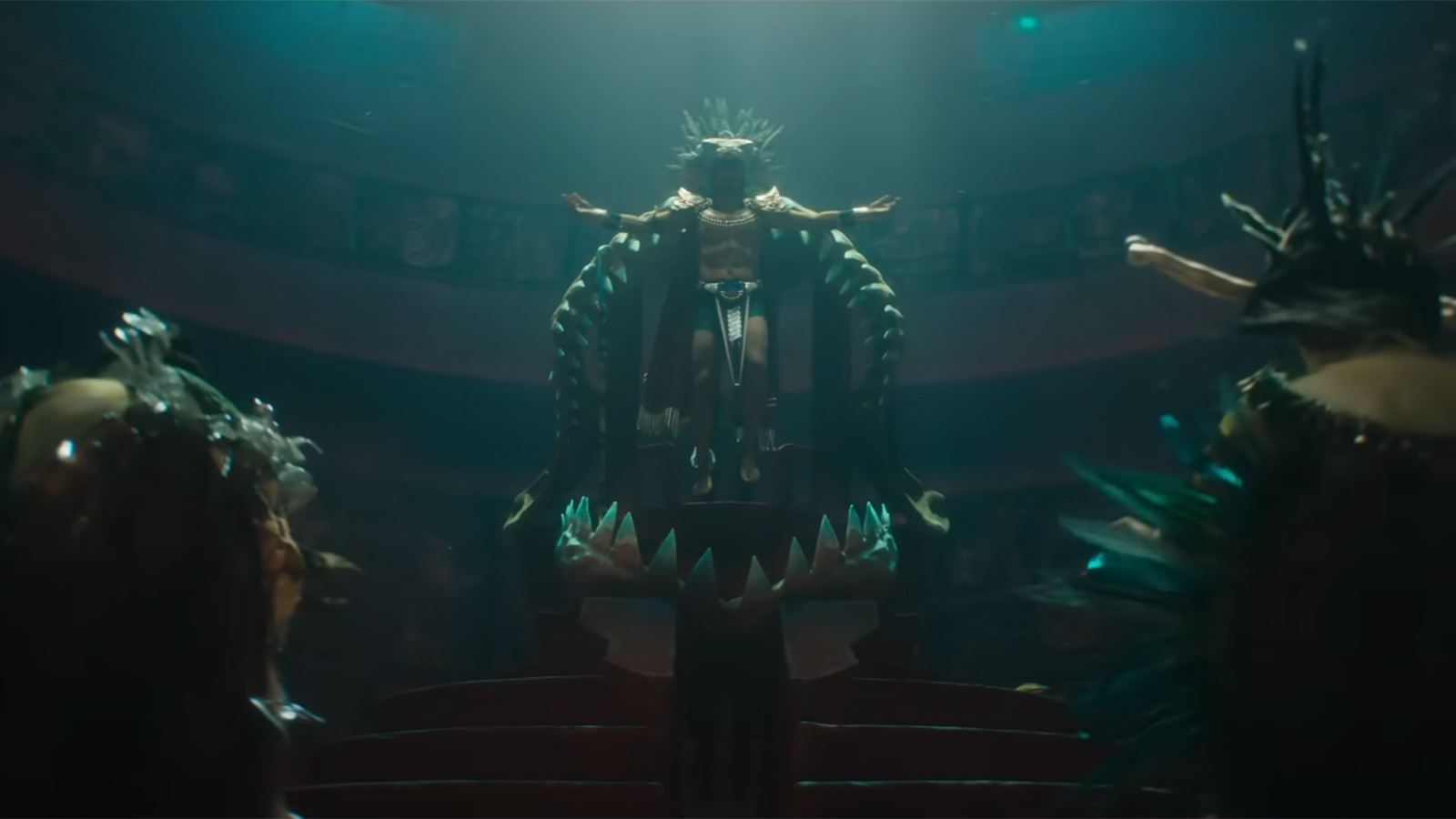
While Talokan is an underwater society inspired by the myth of Atlantis, Marvel Studios has signaled that the people of Talokan sought refuge underwater in response to colonial invasion.
By invoking the complexities of this history – and seemingly leaning heavily on parallels to Mayan culture – the film celebrates a society that scholarship has long noted for its achievements in architecture, mathematics, astronomy and language.
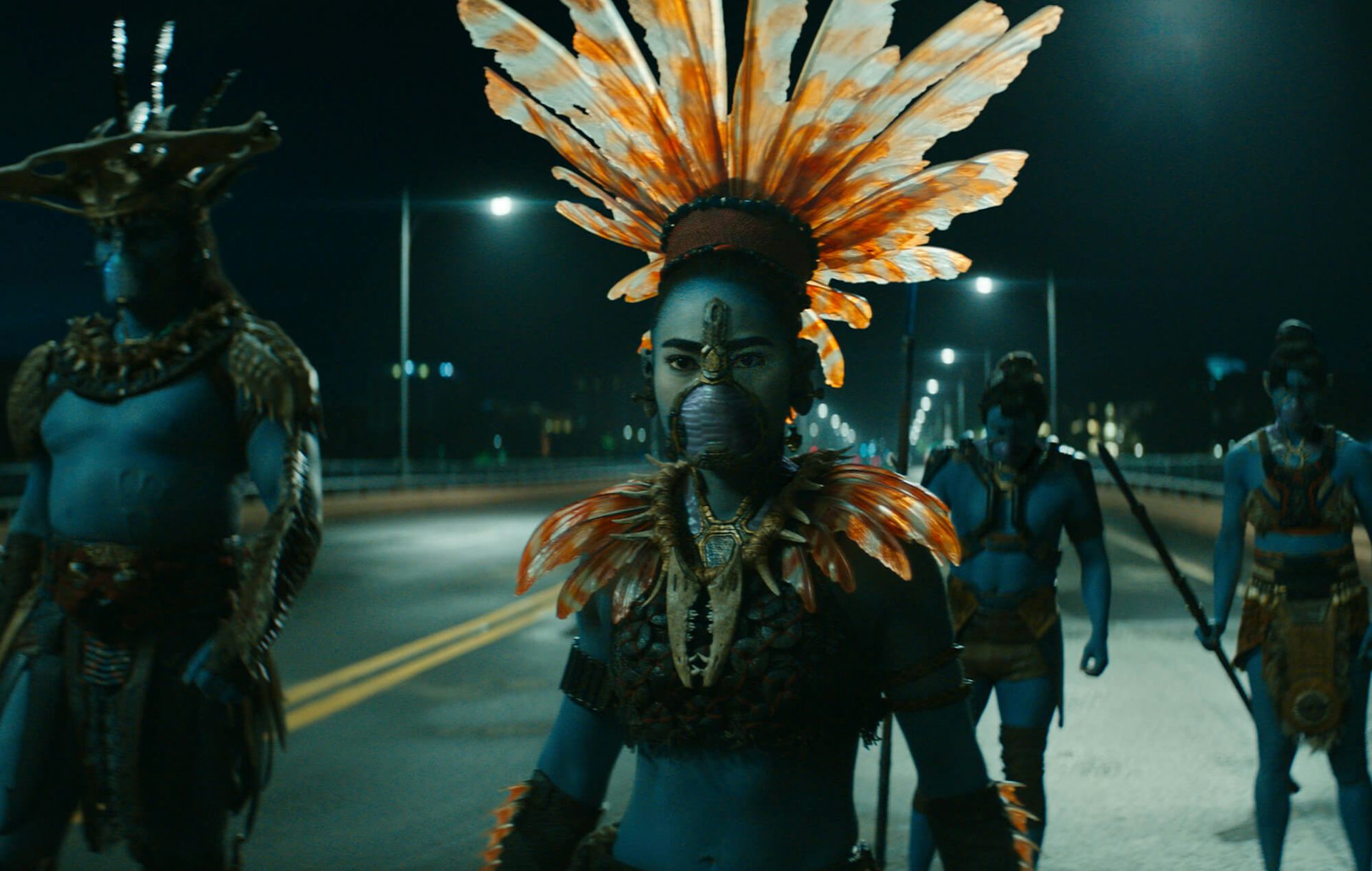
The costumes of Talokan soldiers were inspired by Mesoamerican culture. (Marvel Studios)
History books reference these accomplishments. But in popular culture, there’s little attention given to this cultural landscape.
Namor and the kingdom he leads are poised to remind a global audience of the rich world of Mesoamerica that thrived – until European contact beginning in 1502 led to conquest, decline and eradication.
Today, immigration, trade and drug trafficking dominate discussions of Central America and Mexico in the U.S. media. This film, on the other hand, invites the viewer to appreciate the profound cultural legacy of Mexican and Central American civilizations.
Written by Julian C. Chambliss, Professor of English, Michigan State University
This article is republished from The Conversation under a Creative Commons license. Read the original article.