





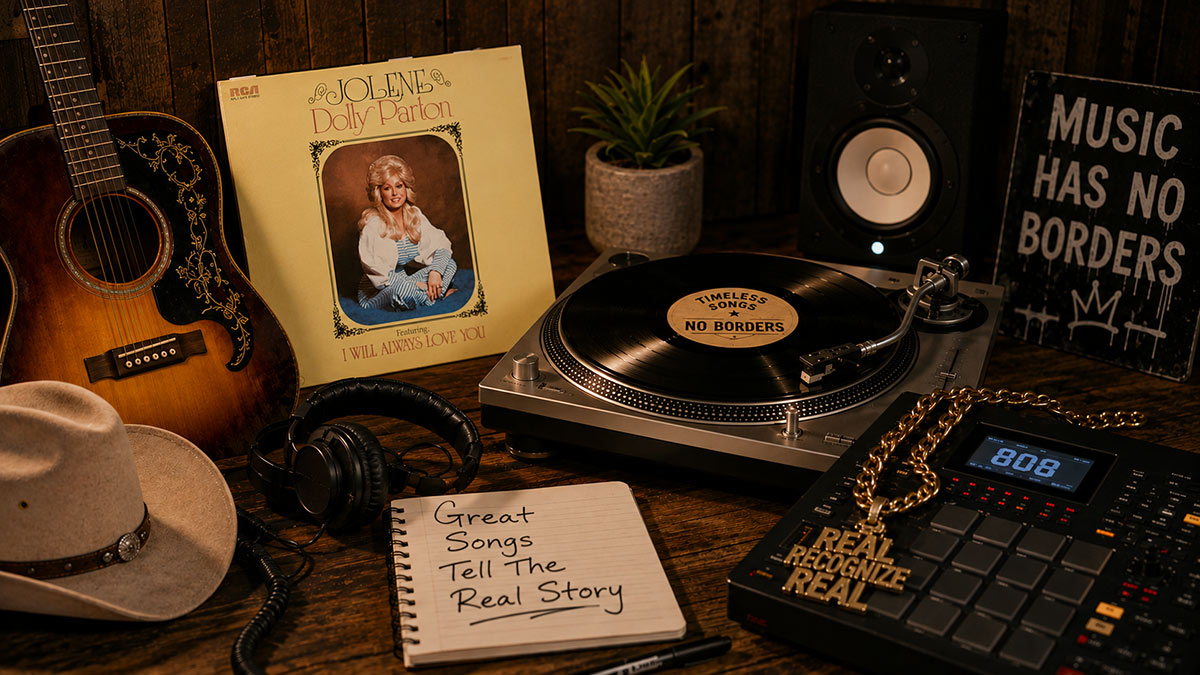

Dolly Parton may have been country music royalty, but the Tennessee icon, who died Tuesday at 80, leaves behind a musical footprint that stretches well beyond Nashville. Across decades, her songs found their way into hip-hop through samples, collaborations and unlikely cultural crossovers.
Pras, ODB and “Ghetto Supastar”
One of the biggest arrived in 1998. Pras’ “Ghetto Supastar (That Is What You Are),” featuring Ol’ Dirty Bastard and Mýa, borrowed the unmistakable melody of “Islands in the Stream,” Parton’s 1983 smash with Kenny Rogers. The song became an international hit and remains perhaps the most recognizable collision between Parton’s catalogue and hip-hop. Capone-N-Noreaga (aka CNN) also revisited “Islands in the Stream” on 2000’s “Full Steezy,” although the track never approached the crossover success of “Ghetto Supastar.”
From “9 to 5” to Pitbull
Her working-class anthem “9 to 5” travelled even further. Aesop Rock interpolated it on 2001’s “9-5ers Anthem,” while Blackalicious sampled the song on “Release,” featuring Zack de la Rocha, Saul Williams and Lyrics Born. More than two decades later, Pitbull brought Parton herself into the equation for 2024’s “Powerful Women,” which sampled “9 to 5.”
The Time Dolly Parton Rapped
Then there’s the time Dolly actually rapped.
During a 2013 appearance on The Queen Latifah Show hosted by Queen Latifah, Parton surprised the hip-hop pioneer with a playful rap performance, proving that she was always willing to wander outside country’s traditional boundaries, even when the moment was played for laughs.
Lil Nas X Takes on “Jolene”
That openness continued with a younger generation. Lil Nas X covered “Jolene” for BBC Radio 1’s Live Lounge in 2021, prompting Parton to publicly praise the genre-blurring star, saying she was “honoured and flattered” by his interpretation. He delivered a smooth, trap-pop-inspired rendition while leaving the song’s original lyrics intact.

Dolly Parton and Country-Rap’s Shared Ground
Parton’s connection to hip-hop also fits into a much larger story about the increasingly blurred line between country and rap. Long before the current wave of genre-crossing hits, Southern artists like Bubba Sparxxx helped bring rural imagery, country instrumentation and hip-hop production into the same space, while later artists including Upchurch and Colt Ford built careers around an even more explicit fusion of country culture and rap.
That crossover has continued to evolve. Jelly Roll moved from a career rooted largely in Southern hip-hop into one of country music’s biggest contemporary stars, while artists like Lil Nas X demonstrated just how dramatically country and hip-hop could collide in the streaming era. Their success reflects the increasingly porous genre boundaries that allowed a country institution like Parton to comfortably share musical space with rappers, hip-hop producers and a new generation of artists who rarely stay inside a single genre.
Dolly Parton Meets Cowboy Carter
Perhaps the most fitting late-career connection came through Beyoncé’s Cowboy Carter. Parton appeared on the “Dolly P” interlude introducing Beyoncé’s reimagined “Jolene” and contributed to “Tyrant,” a Southern rap-influenced record powered by 808s and production from hip-hop heavyweight D.A. Got That Dope.
Hip-Hop’s History of Sampling Dolly Parton
“Ghetto Supastar” and the various flips of “9 to 5” are only part of Parton’s history in hip-hop production. In fact, rappers were reaching into her catalogue well before Pras, ODB and Mýa scored their 1998 hit. DJ Jazzy Jeff & The Fresh Prince tapped into “Islands in the Stream” for “Make It Last” a decade earlier in 1988.
Producers have also ventured beyond Parton’s most obvious crossover hits. Cam’ron reached for “I Will Always Love You” on the Tiffany-assisted “Get Mine” in 2004, flipping the melody of the Parton-penned classic, later made globally famous by Whitney Houston, into the kind of sped-up backdrop that defined much of early-2000s rap.
“Jolene” has proven similarly adaptable. Theophilus London sampled the country standard for “Based God,” while Christian hip-hop artist Rip later drew from it for his own 2019 song “Jolene.” From Will Smith and Cam’ron to Blackalicious, Capone-N-Noreaga and Pras, the artists who have borrowed from Parton’s songbook represent wildly different corners and generations of hip-hop, making the sampling history itself another unexpected piece of her musical legacy.
Parton never needed to become a rapper to connect with hip-hop. Her songwriting did the travelling for her, crossing genres and generations while proving great records rarely stay inside the borders drawn around them.
RIP Dolly Parton.
5 Ways to Support HipHopCanada:
- Submit Your Music
- Follow Canadian Fresh (HipHopCanada’s Spotify Playlist)
- Follow us on Instagram
- Follow us on X (Twitter)
- Like us on Facebook