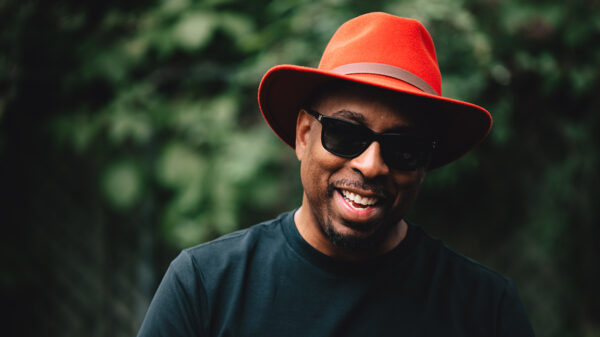










If there was any doubt that “billing” has become central to Nigerian conversations about dating, money and gender, eLDee the Don has supplied a new soundtrack with the song I Wish You Well.
I study the intersection of popular music and politics in Nigeria. eLDee’s 2011 youth mobilization campaign The Politics of Our Time was central to my analysis of electoral consciousness in the music of democratic Nigeria.
The rapper, singer, producer and label boss hasn’t released much music in the past decade. This time his subject is not electoral politics or poor governance, but the hot topic of billing: the expectation that a man who expresses romantic interest should also finance a woman’s needs and lifestyle.
eLDee has gravitas. He occupies an important place in the history of popular music in democratic Nigeria. Through the Trybesmen and the broader Da Trybe movement, he helped shape Nigerian hip-hop in the late 1990s and 2000s.
Songs like Plenty Nonsense, I Go Yarn, Bosi Gbangba, Big Boy and One Day combined entertainment with sharp observations about social aspiration, politics and everyday life. eLDee’s musical and political legacies formed the core of my chapter’s argument in The Politics of Laughter in the Social Media Age.
I Wish You Well continues that tradition through humour. Assisted by comedian Lasisi Elenu, eLDee narrates an encounter with a woman he has barely met. She first asks for a loan, saying her car has been towed and that rent is due. The requests soon expand to travel, designer goods and other markers of luxury consumption.
eLDee recognizes the script and wittily declines the role assigned to him:
I ain’t the one. I wish you well.
The song has further popularised the discussion about the relationship between romance, consumption and gender in Nigeria. Its use online is also extending to a wider conversation about having to financially support others, including relatives.
Afrobeats (Nigerian pop music) has long celebrated male wealth, generosity and conspicuous spending. The ideal successful man is often imagined as someone who can spend freely; at clubs, in restaurants, on fashion, travel, cars and romantic partners. Women, in turn, are frequently positioned as validators or beneficiaries of this prosperity.

So, in the billing culture debate, eLDee’s new track emerges as a bold and unusual outlier. It’s a crisp and witty takedown of a world and a popular culture where men are measured in money and women in beauty; where romance is a marketplace, intimacy is measured through transactions, and consumption becomes evidence of affection.
For better, for OPay
These shifting social expectations around romance are made even more visible through music videos and on social media, where public debates about what a woman may reasonably expect from a man play out. “For better, for OPay,” for example, is a playful catchphrase and internet meme that revises the marriage vows “for better, for worse” to describe Nigeria’s digital-payment culture.
There’s no doubt that the country’s difficult economy has also shaped the stakes of the dating game.
Intimate relationships may become part of the informal systems through which people manage everyday life. Rent, transport, food, education, healthcare and family obligations all enter the emotional economy of dating.
This is why eLDee’s new song matters. I Wish You Well is not most productively read as a simple complaint about “gold diggers.” It questions a gendered romantic economy in which men are expected to provide and women are expected to consume.
The phone, restaurant meal, holiday, designer bag or apartment is no longer merely a possession or experience. In Nigeria’s social media economy, it may also function as evidence of social value. To be seen receiving such things can generate cultural capital. To provide them can become a performance of masculine success.
Both men and women can be constrained by this script. Billing is a gender bargain that both sexes have inherited, performed and reinforced.
By centring a loan request as the catalyst for the story and ending with a noncommittal, even sarcastic blessing, the song critiques a system that monetizes intimacy but refuses to share surplus. It asks whether romance must begin with an invoice.
Afrobeats does more than reflect social life. It gives listeners a language through which to engage on it. The most important question raised by eLDee’s song is not whether billing is right or wrong, but what kinds of relationships become possible when people refuse the script that makes money the main measure of women’s compliance.
Written by Garhe Osiebe, Research Fellow, Rhodes University
This article is republished from The Conversation under a Creative Commons license. Read the original article.

5 Ways to Support HipHopCanada:
- Submit Your Music
- Follow Canadian Fresh (HipHopCanada’s Spotify Playlist)
- Follow us on Instagram
- Follow us on X (Twitter)
- Like us on Facebook