












“Resistance is justified when people are occupied.”
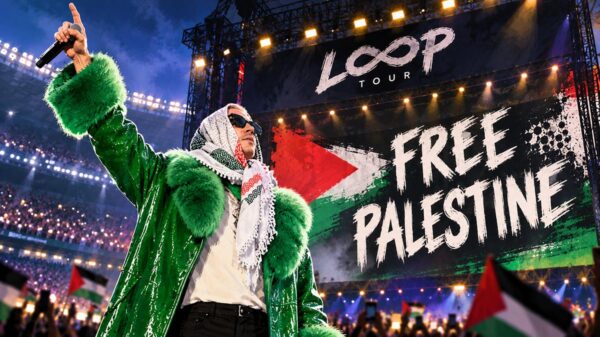
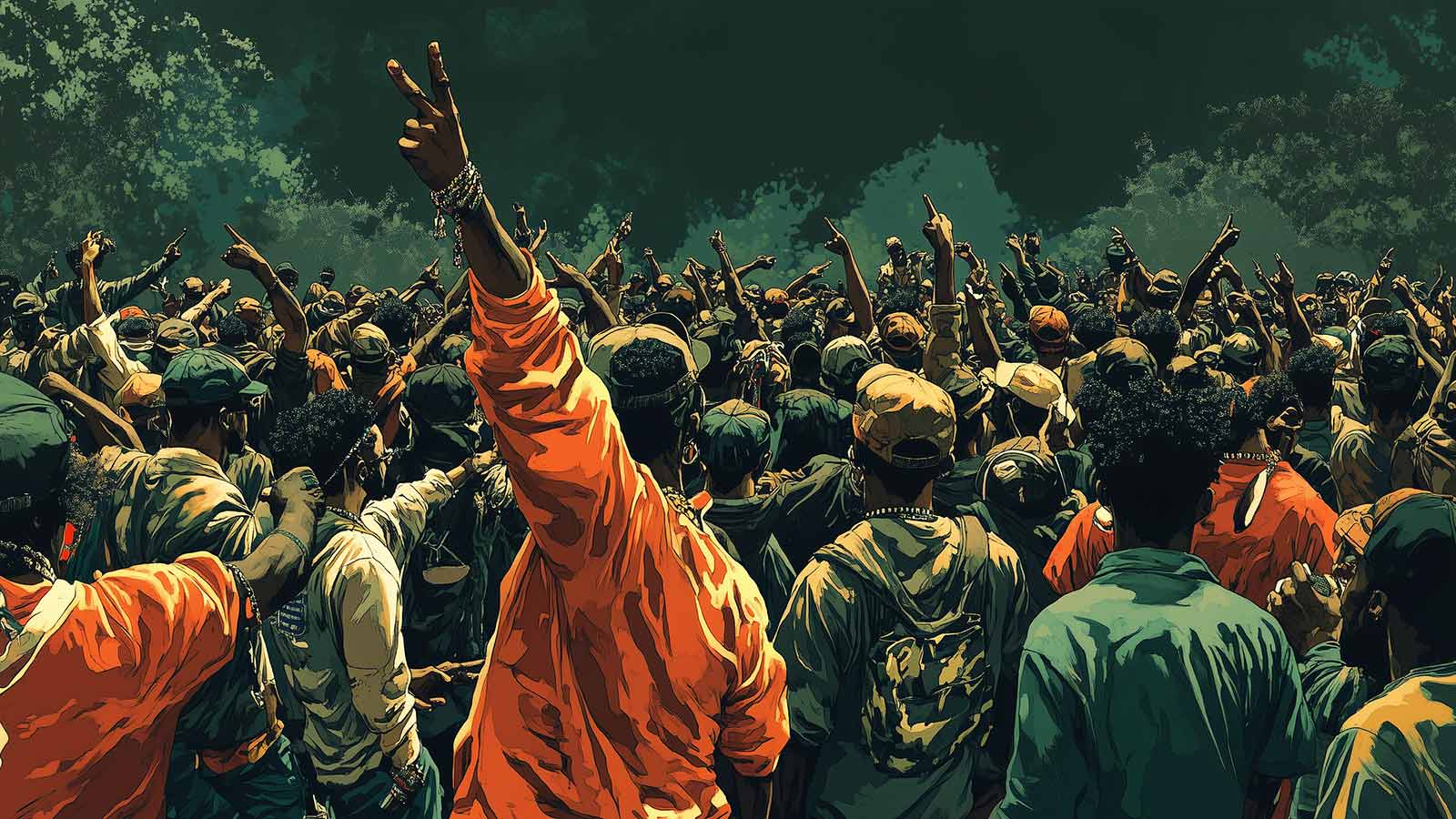
If you’ve passed or joined any pro-Palestine protest over the last 400 days, you’ve likely heard this chant. It has been held up as an anti-Israel call for not just resistance, but violent resistance, particularly in light of the Oct. 7, 2023 Hamas attacks.
While taking up arms again an oppressor is certainly one form of resistance, the term encompasses a great deal more.
As Donald Trump prepares to take office for a second time in the United States, some are also calling for resistance against him and his inner circle.
So, what exactly is resistance? And what are resistance advocates actually calling for?
Active vs. passive resistance
Resistance can be thought of as a movement that prevents one force from completely overwhelming another.
It doesn’t exist on its own, but rather in opposition to a larger force. Often these bigger forces — like capitalism, white supremacy, the patriarchy — shape the power structures that rule society. Despite these structures, marginalized people employ a variety of strategies and techniques to combat these structures, namely resistance strategies and resistance identities.
Resistance is inextricably linked to ideas of power and oppression. But not all resistance is the same or takes the same form.
Resistance can be categorized as either passive or active.
Active resistance involves direct action against a clearly articulated power, such as Israel or Trump. Mass protests are a key example of direct action, where people gather together to march and bring attention to a clearly identified injustice.

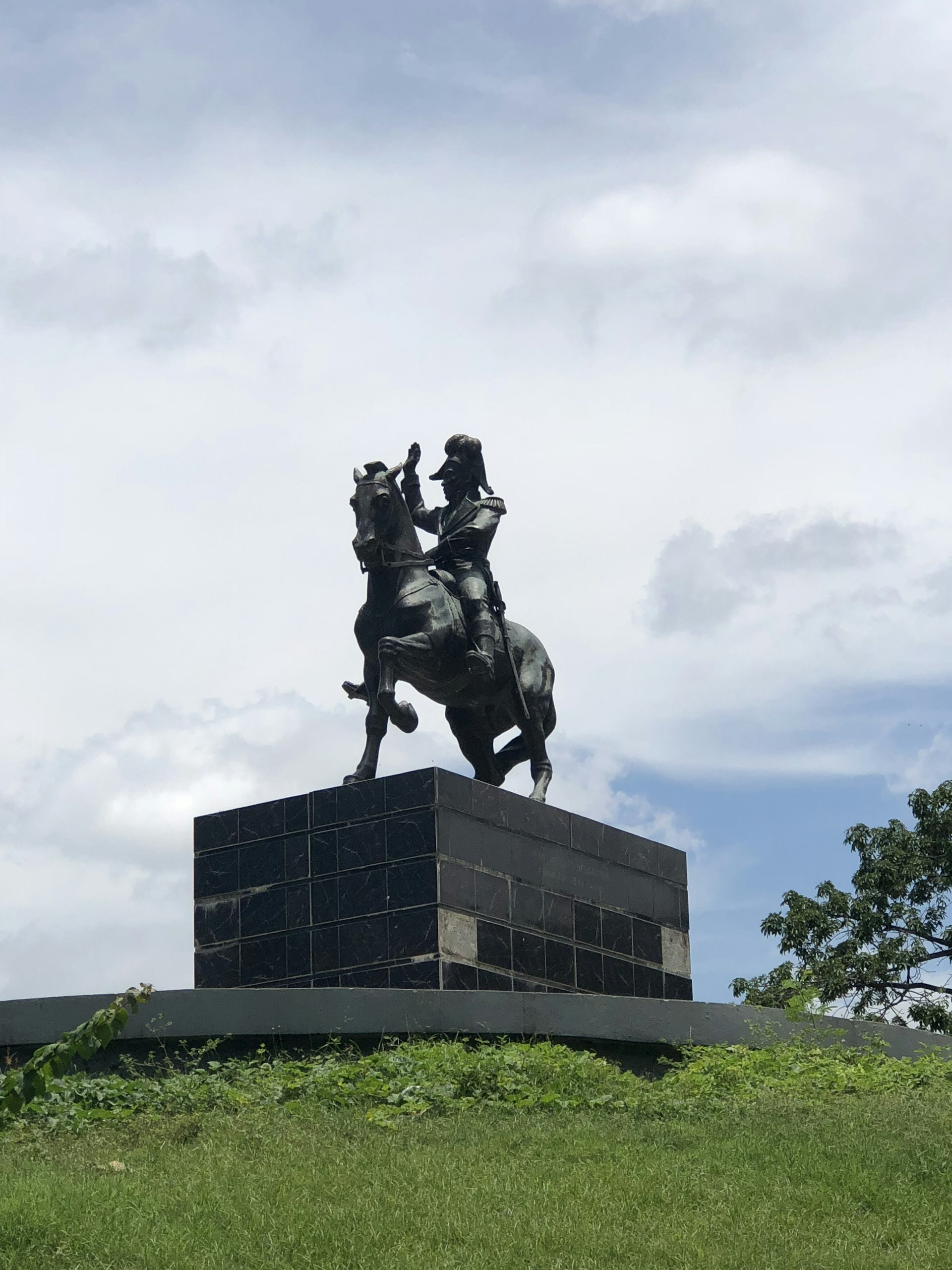
Statue of Jean Jacques Dessalines, the leader of the Haitian Revolution, in Port au Prince. ((WikiMedia), CC BY)
Instances of insurrection are also a well-known form of active resistance. Examples are the Haitian Revolution, a successful insurrection by self-liberated slaves against French colonial rule from 1791 to 1804; Nat Turner’s Rebellion, when dozens of white Americans were killed by enslaved Black Americans in 1831; and the Warsaw Ghetto Uprising, an act of Jewish resistance in German-occupied Poland during the Second World War.
In all these cases, a group of people united by a cause came together to undertake actions they believed would undermine the institutions or people in power and uphold justice.
Passive resistance is less direct.
With passive resistance, there is a consciousness of power inequality, but the resistance is less directed toward tangible social change. For example, when Palestinians living in Canada choose to introduce themselves as Palestinian, rather than Arab Canadian — or by mentioning their Lebanese, Syrian or Jordanian heritage — they are directly challenging colonial narratives of erasure and enacting resistance simply by claiming their identity.
Passive resistance can also involve choosing to pursue education despite systemic barriers. While passive resistance efforts rarely make headlines, they often consist of the everyday acts of resistance that allow for hope and perseverance in the face of adversity.
Collective vs. heroic resistance
Resistance can be further categorized as collective/organized resistance or heroic resistance. These are differentiated by whether the resistance takes a group or individual form.
In 2019, when Gazans organized the Great March of Return, it was a direct and collective form of resistance that sought to challenge Israeli suppression of their movement and reclaim their ancestral homeland.
Examples of heroic resistance, or one person resisting on their own, are the historic and courageous acts of Rosa Parks, Ahed Tamimi and other figures who took it upon themselves to challenge their personal injustices.
Heroic resistance can also be passive.
Rappers like MC Abdul and Shadia Mansour use their lyrics and platform to actively but indirectly call out injustices against the Palestinian people. While they sometimes collaborate with other rappers, they are solo artists who don’t appear to be part of a larger group or collective working together to challenge injustice.
Resistance doesn’t need to be active or external for it to be powerful. Racialized people are often portrayed as a spectacle by popular media when publicly resisting racism. An example is the mass media coverage of high-pressure fire hoses used during the Civil Rights Movement against protesters in the United States in the 1960s.
These acts of resistance and the subsequent media coverage, though important and necessary, are often dehumanizing to those involved. Therefore, many young people may choose the path of “quiet resistance.”
Existing as resistance
Quiet resistance is a form of internal personal defiance rather than external actions.
It can take the form of mere existence. For Indigenous people in North America, choosing to have loving families and share cultural bonds with others is a quiet form of resistance in the face of colonialism.
For Palestinians in Gaza and the West Bank, quiet resistance is choosing to remain on their land and continuing to do everyday activities like drink coffee and tend to their gardens.
Under the United Nations Resolution on the Rights of Peoples to Self-Determination/Struggle by All Available Means, armed resistance that does not target civilians is also an acceptable method of resistance.
We are seeing this form of violent resistance used throughout Ukraine.
Yet armed struggle is only one small aspect of resistance. Many of us resist every day, whether through sneaking a few extra minutes on our lunch break when working for a demanding employer or proudly claiming a marginalized identity. These acts of resistance are often justified and an important means of challenging the status quo in the quest for a more equitable world.
Written by Anna Lippman, PhD Candidate, Sociology, York University, Canada
This article is republished from The Conversation under a Creative Commons license. Read the original article.