

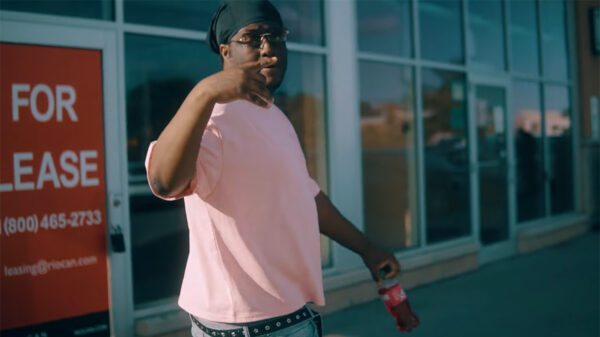







Benito Ocasio, better known as his stage name Bad Bunny, has challenged English dominance in music over the past few years. The streaming era has allowed the Puerto Rican artist to bypass traditional gatekeepers and he recently became Spotify’s most streamed artist globally for the fourth time in his career.
He also made history at the 2026 Grammy Awards, becoming the first artist to win album of the year for a record sung entirely in Spanish, DeBÍ TiRAR MáS FOToS.
Yet his selection to perform at this year’s Super Bowl halftime show has sparked controversy and backlash from President Donald Trump’s administration and its supporters in the United States.
The U.S. has a long history of excluding Latinos from its sense of national identity. In this current era of MAGA politics, Bad Bunny is exposing the many ways the American conservative right has narrowed its ideas about who truly “belongs” in America.
Borders around — and within — the U.S.
Borders have been central to MAGA politics, most clearly demonstrated by Trump’s hardline stance on immigration. So too has the subject of who can count themselves as part of “the people” — not simply who we agree with, but who is seen as deserving protection and belonging.
In MAGA’s political logic, citizenship status is only one factor of this. Race, language, sexual orientation, gender identity and political leanings have all emerged as markers of belonging or exclusion.
Conservative commentator Tomi Lahren’s insistence that Bad Bunny is “not an American artist,” U.S. Secretary of Homeland Security Kristi Noem’s threats to have ICE present at the halftime show and one Fox News host’s description of Ocasio as a “cross-dresser who doesn’t speak English” all reveal the importance of ethno-nationalist and populist border-making for the American right.
In this regard, history is repeating itself. In 1936, the U.S. forcibly removed up to two million people of Mexican descent from the country — up to 60 per cent of whom were American citizens. More recently, between January and October 2025, approximately 170 American citizens were detained by ICE, including young children and pregnant women.
Partly as a result of the Mexican-American war (1846-48), Latinos — and Mexicans in particular — were racialized in the U.S. in ways that positioned them not as internal “others,” but as “aliens” imagined to be external to the nation.
This logic resurfaced in Arizona’s ethnic studies ban, which targeted a Mexican-American studies program in Tucson between 2010 and 2016. Beyond territorial boundaries, this policy drew boundaries around the national story the country tells about itself.

Puerto Rico and second-class citizenship
Puerto Rico’s political status is another manifestation of Latino alienation in the U.S. As an unincorporated territory, Puerto Ricans have no voting representation in congress and cannot vote for president.
Puerto Ricans are arguably treated as second-class citizens in the U.S.. In 2017, nearly 3,000 Puerto Ricans died waiting for assistance after Hurricane Maria struck. In contrast, the number of direct and indirect deaths for hurricanes that struck Florida and Texas weeks earlier was 84 and 94 respectively.
Bad Bunny has been vocal about this neglect. He has regularly stood up for Puerto Rico, including cancelling his European tour in 2019 to protest the Puerto Rican governor’s sexist and homophobic comments.
He also excluded the dates on the continental U.S. during his most recent tour to avoid drawing ICE attention to his fans, and also spoke out against ICE at the recent Grammys, saying “ICE out.”
Despite not identifying as queer himself, Bad Bunny has also been a consistent ally of the LGBTQ+ community. In 2020, he wore a skirt on The Tonight Show Starring Jimmy Fallon to bring attention to the killing of a transgender woman in Puerto Rico.
Following the ICE slayings of Renee Good and Alex Pretti, demanding that authorities be held accountable appears to have joined the list of MAGA’s targetable offences. Bad Bunny’s embrace of people different from him may be yet another point of friction for the cult of national purity that the MAGA movement advocates for.
The dog-whistle of ‘family-friendly’
Turning Point USA is hosting an alternative “All American” Super Bowl halftime show “celebrating faith, family and freedom” — a description that reinforces right-wing ideas of nationhood and acts as a dog whistle for racial, sexual, linguistic and national purity.
One could argue the Turning Point show isn’t about race or exclusion, but it’s a difficult argument to sustain given the pattern of recent backlash.
Since 2019, Jay-Z’s company Roc Nation has collaborated with the NFL to rebuild the league’s image after its conflict with Colin Kaepernick, who was effectively pushed out of the league after kneeling during the national anthem to protest police violence and racial injustice.
The partnership has increased visibility for genres associated with resistance and resilience, including hip hop, rap and now reggaeton.
A more inclusive, somewhat diplomatic, selection process has pushed the halftime show into the realm of cultural relevancy, allowing the NFL to reach new communities. In America’s polarized climate, however, what counts as relevant is up for debate.
Concerns of “family friendly” content are evoked. Yet, they stand close to discourses of anti-Americanism and concerns about a lack of white representation. Turning Point USA doesn’t need to explicitly evoke race or language to signal it.
A political stage — whether we admit it or not
Many argue the NFL halftime show has become politicized. But in reality, it’s always been an inherently political event.
Who gets to be seen on a broadcast with hundreds of millions of viewers, who is considered a conventional choice and who is deemed provocative all involve questions about who really belongs — and who doesn’t.
The Super Bowl halftime show is just one manifestation of a larger conversation happening in the U.S. about the validity of a variety of expressions of the American experience.
The MAGA movement may have won the White House, but in terms of America’s cultural values and tastes, its borders aren’t stopping millions of Americans from getting excited about the show.
Written by Gavin Furrey, PhD Student, Political Science, L’Université d’Ottawa/University of Ottawa
This article is republished from The Conversation under a Creative Commons license. Read the original article.

5 Ways to Support HipHopCanada:
- Submit Your Music
- Follow Canadian Fresh (HipHopCanada’s Spotify Playlist)
- Follow us on Instagram
- Follow us on X (Twitter)
- Like us on Facebook