












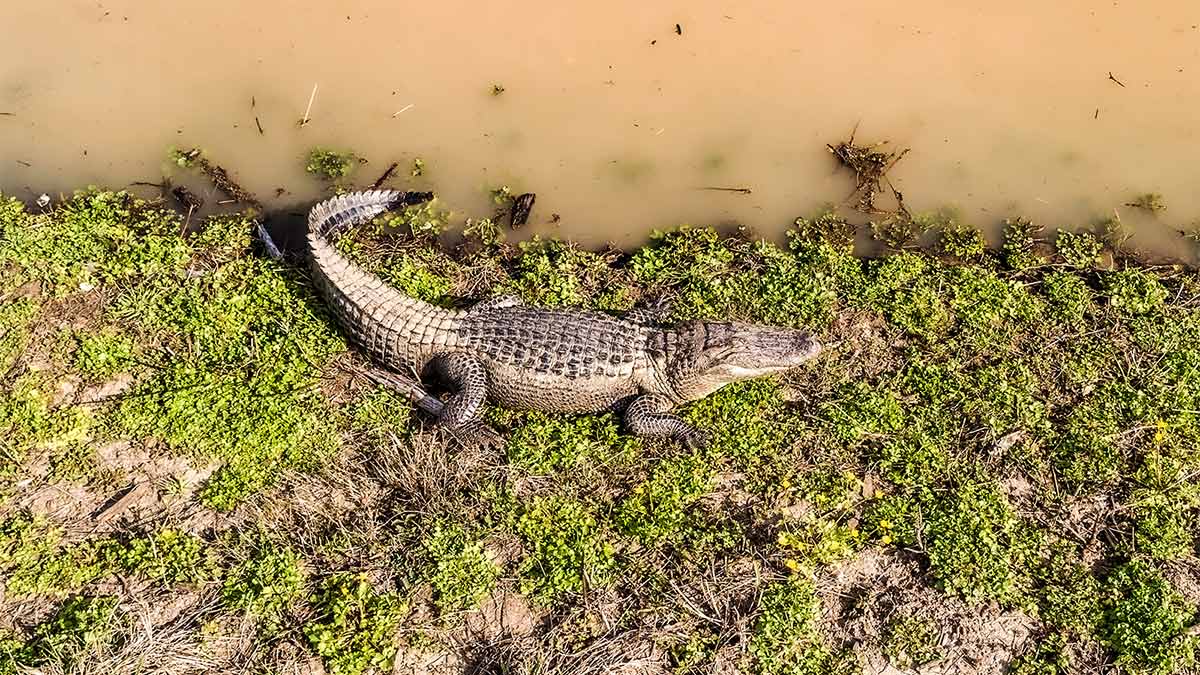

The migrant detention centre known as Alligator Alcatraz is closed, but much about it remains unresolved. There are lawsuits over detainees’ treatment, environmental claims over damage to protected wetlands and uncertainty about the future of the airstrip it was built on.
One aspect of the South Florida facility has drawn far less attention, though: the name itself, and the long history of associating alligators with racist ideas about people of colour.
I’m a historian of wildlife, the environment and American culture who has studied the cultural and environmental history of the American alligator. My research shows that the species has carried a variety of meanings in the United States, ranging from a prized source of leather for luxury fashion to an emblem of Florida identity. Less well known is the reptile’s role in the nation’s history of racial stereotyping. For generations, alligators featured prominently in imagery intended to demean Black Americans.
Whatever the intentions of those who named and promoted the facility, Alligator Alcatraz echoed a long tradition of using alligators in ways that have reinforced racist imagery and dehumanizing stereotypes.
Constructing Alligator Alcatraz
Located on a remote landing strip surrounded by Big Cypress National Preserve, about 6 miles north of Everglades National Park, Alligator Alcatraz sparked controversy from the beginning. Critics argued that the detention centre housed immigrants in unsafe and inhumane conditions, limited access for lawyers and family members, and imperiled sensitive, federally protected wetlands. Seminole and Miccosukee people denounced it as a threat to their sacred homelands. Some detractors even characterized it as a concentration camp.
In a lengthy exposé for The Atlantic, journalist Eric Schlosser decried the facility as “a uniquely cruel publicity stunt with an absurdly high price tag.” Based on figures from court filings and Florida’s grant application to the Federal Emergency Management Agency, Schlosser estimated that it cost about US$500,000 a year to hold a single immigrant at Alligator Alcatraz. By contrast, Florida spends only $30,000 a year to confine someone in a state prison.
The contentious centre was the brainchild of Florida Attorney General James Uthmeier, who pitched the idea to federal officials in June 2025.
Uthmeier’s catchy name was meant to grab attention, particularly from President Donald Trump, who had recently proposed reopening the notorious, long-shuttered Alcatraz federal penitentiary in San Francisco Bay. During his first term, Trump had also reportedly floated the idea of constructing a moat filled with “snakes or alligators” to fortify his southern border wall. Keenly attuned to the power of provocative branding, Trump embraced Uthmeier’s proposal.
Once given the green light, the administration of Gov. Ron DeSantis hastily built a makeshift detention centre designed to hold several thousand migrants. After touring the facility shortly before the first detainees arrived, Trump declared, “We’re surrounded by miles of treacherous swampland, and the only way out is, really, deportation.”

He added, “You have a lot of bodyguards and a lot of cops that are in the form of alligators.”
Ahead of Trump’s visit, the Department of Homeland Security posted an AI-generated image of menacing alligators wearing Immigration and Customs Enforcement hats as they stood guard outside the detention centre. To cash in on the idea, the Florida Republican Party also began peddling Alligator Alcatraz–themed merchandise, like T-shirts, hats and beer koozies.
The myth of crocodilians craving Black bodies
Whether he realized it or not, Trump’s depiction of alligators as enforcers of migrant detention echoed a much older tradition.
My research reveals that, as early as the 18th century, French explorers and naturalists began claiming that alligators and crocodiles showed a marked preference for attacking and consuming people of African descent. Plantation owners in the South eagerly repeated these stories because they discouraged enslaved people from escaping into marshes and swamps, where pursuing them proved difficult.
The idea gained much wider traction after the Civil War. As formerly enslaved people secured freedom and basic civil rights, pursued educational and economic opportunities, and gained political power, many white Americans sought to reassert white supremacy. They restricted voting rights, imposed Jim Crow segregation and inflicted racial violence.
They also employed demeaning racial stereotypes designed to humiliate African Americans while undermining their claims to freedom, dignity and citizenship. My work shows how the growing association between alligators and Black bodies was part of this larger campaign to reinforce notions of Black inferiority.
Many postwar accounts of alligator attacks centred on a dated racist slur that portrayed Black children as less than human. Typically depicted with exaggerated features and ragged clothing – or no clothing at all – these children were often shown being chased by alligators or other wild animals. Such images rested on the dehumanizing assumption that Black children were incapable of experiencing pain or suffering in the same way as their white counterparts.
‘Alligator bait’ as a racial slur
Soon, stories about hunters using Black children as bait to lure alligators also began circulating. Some particularly improbable accounts claimed that African American mothers rented out their babies to hunters seeking to attract the reptiles.
These stories represented a grotesque inversion of the lived experience of slavery. For enslaved women, the forced separation from their children was among the institution’s most devastating cruelties. By suggesting that Black women would willingly place their own children in mortal danger for profit, such narratives provided yet another means of humiliating, degrading and dehumanizing African Americans.
By the late 19th century, these ideas had crystallized into the racial slur “alligator bait.” The phrase fused long-standing claims that alligators preferred Black flesh with newer stories of Black children being used to attract the reptiles. It soon became a fixture of American popular culture, appearing regularly in newspapers, editorial cartoons, postcards, photographs, songs and motion pictures.
Such imagery remained widespread until the modern Civil Rights Movement rendered it increasingly unacceptable.
Perpetuating a racist tradition
The architects of Alligator Alcatraz may not have consciously sought to invoke the history of “alligator bait” stereotypes. Yet historical symbols often outlive the contexts in which they were created, and the American alligator bears the imprint of a long racial history.
Alligator Alcatraz drew upon a symbol shaped by generations of racial exclusion and dehumanization. In transforming migrant detention into political theatre, the now-closed facility revealed a troubling disregard for symbolism and history. It also betrayed the cruelty and indignity that spectacle-based approaches to immigration enforcement inflict on human beings.
The tents may be gone, but the racist historical echoes embedded in the name “Alligator Alcatraz” remain.
Written by Mark V. Barrow, Jr., Professor of History, Virginia Tech
This article is republished from The Conversation under a Creative Commons license. Read the original article.

5 Ways to Support HipHopCanada:
- Submit Your Music
- Follow Canadian Fresh (HipHopCanada’s Spotify Playlist)
- Follow us on Instagram
- Follow us on X (Twitter)
- Like us on Facebook