







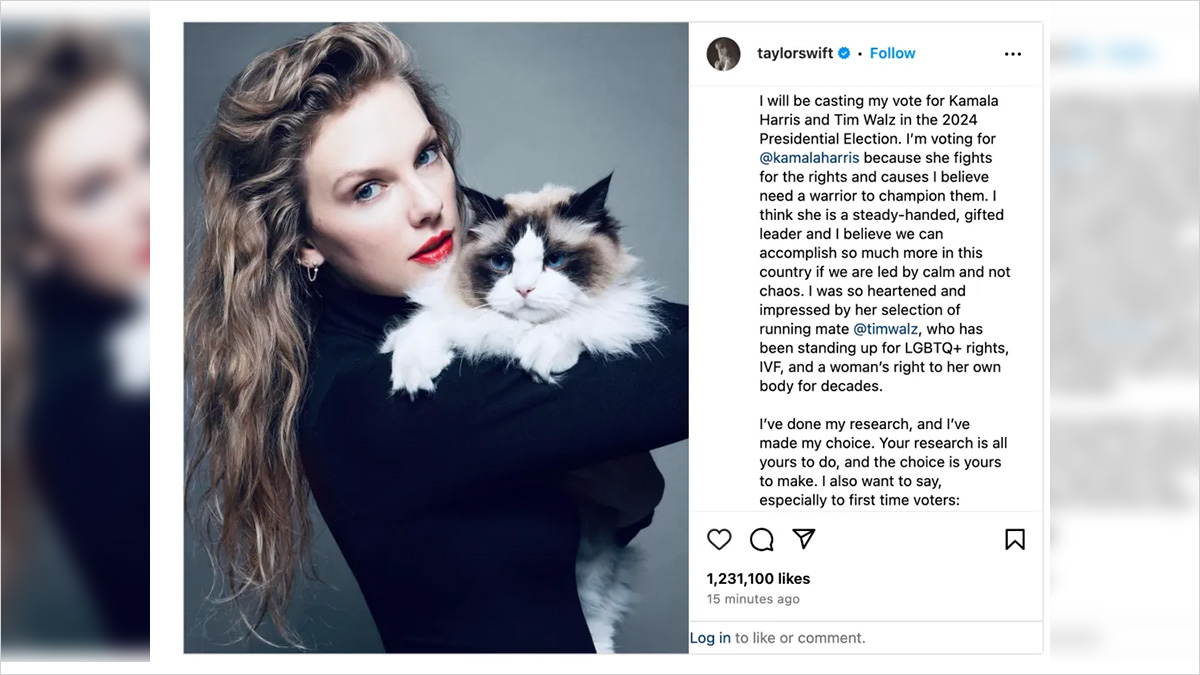

Taylor Swift endorses Kamala Harris’ 2024 presidential campaign, highlighting the growing influence of music in politics.
Music generates passion and emotion, so it’s little surprise that popular tunes have been featured in presidential contests since the days of George Washington and Thomas Jefferson.
But as a scholar of music’s role in American politics and patriotism, I’ve never seen music assume as much electoral importance as it has in recent months.
Taylor Swift Endorses Kamala Harris
Taylor Swift’s endorsement of Kamala Harris is headline news, as were the mere rumours that Beyoncé might perform at the Democratic National Convention. Donald Trump, too, has his pop culture supporters, including Kid Rock and Lee Greenwood.
In a tight race, music has the potential to make a big difference. Most voters today have already made up their minds, and the presidential race remains a statistical dead heat, according to polls. In this situation, I think music offers a deceptively simple, emotional hook that can inspire the party base without alienating those few undecideds in the middle.
When crowd size matters, getting your supporters to sing, scream and dance can cultivate an aura of electoral triumph.
Fired up, ready to go
Music had a starring role in this year’s dueling nominating conventions.
Beyond the expected fare of the national anthem and the background music that filled the voids between speakers, pop hits were used to transform each party’s typically tedious state-by-state roll call. When Florida’s 125 votes took Trump over the top, confirming that he would be the official Republican nominee, organizers played Kool & The Gang’s 1980 No. 1 hit, “Celebration.”
Over at the Democratic convention, celebrity emcee DJ Cassidy turned the relatively banal proceedings of the roll call into a dance party. As each state and territory was called to vote, a signature song burst forth to introduce, welcome and energize the crowd. Alabama’s call-out was Lynyrd Skynyrd’s “Sweet Home Alabama,” Eminem’s “Lose Yourself” announced Michigan, while California featured the music of native emcees Dr. Dre and Snoop Dogg.
And in a moment designed to go viral, Atlanta native and crunk rapper Lil’ Jon answered the call for Georgia with the guttural shout “Heyaaah … ” followed by the opening lyrics of his party anthem “Turn Down for What?”

Soon afterward, Axios posted a full Democratic convention roll call playlist on Spotify, and its 61 songs showcase a tactical musical advantage held by Democrats.
None of the artists featured at that convention have publicly objected to their songs being used. In contrast, dozens of musical artists have disavowed Trump’s use of their music at rallies. In 2024 alone, they include ABBA, Adele, Celine Dion, Foo Fighters, Jack White and the heirs of Isaac Hayes.
Rather than fulminate against these slights, Trumpworld seems to embrace the headlines they generate. The objections of these artists reinforce the candidate’s trademark outsider status, and are yet another sign that he and his supporters are scorned by the nation’s political and cultural elites.
Both candidates’ soundtracks claim very different ideological territory. Harris favours youth-oriented hits with a high proportion by artists of colour and women. Her selections send a message. Playing Chappel Roan’s “Femininomenon,” for example, signals both an inclusive, affirming message about gender fluidity while also suggesting to fans who know the song that it’s about time for a woman to be in charge.
Trump often features classic hits, including James Brown’s 1966 single “It’s a Man’s Man’s Man’s World,” which emphasize traditional masculinity. Rock anthems and patriotic hymns dominate the Make America Great Again playlist, such as Kid Rock’s “American Bad Ass” and Queen’s “We are the Champions,” though the British band has protested its use. Greenwood’s “God Bless the USA” has become an unofficial Republican hymn, and rally attendees routinely sing along.
Sonic stars and stripes
Simply put, I see the musical contest between Trump and Harris as a battle for vibes.
Each party’s base wants to hear an affirming, confidence-building musical message loud and clear. Whether it’s a current hit or a classic one, chart-toppers convey familiarity and popularity.
The fundamental question, however, is whether this soundscape of enthusiasm can fuel a victory.
Harris’ campaign notched a win after receiving Beyoncé’s permission to use “Freedom” as the candidate’s theme song. In contrast, the Trump staffer who used the same song in a video triggered a cease-and-desist letter. Trump’s team pulled the video and stopped using the contested track.
Harris’ embrace of Beyoncé’s political anthem connects the vice president to the pop star’s own biography as a tough, independent and successful woman of color. The song’s propulsive drumbeat tells a story of determination, using “freedom” to “break chains all by myself” and “keep running ’cause a winner don’t quit on themselves.” Harris would probably love voters to see her in this same light.
Yet Harris’ song choice is also surprising, in that it appeals to the raw patriotism of one of the nation’s defining values. American flags have long served as the obligatory backdrop of both national parties. But Republicans, particularly in recent decades, have gone into overdrive to claim patriotic symbols as their own, perhaps so voters see them as the nation’s true patriots.
I see Harris’ overt use of patriotic songs, whether it’s “Freedom” or the Civil War-era “Battle Cry of Freedom,” as a strategic reclamation of patriotism for the Democratic Party.
Political fandom
These playlists, pop star endorsements and battles over usage rights may show how presidential politics has become less a contest of ideas and more a form of passionate fandom that’s rooted in notions of celebrity, popularity and tribe.
Young voters, however, do seem to be discovering their political voice through music and social media. British singer Charli XCX’s “Kamala IS brat” endorsement may have given an early boost to Harris’ campaign, but some influencers declared its politicization as proof of brat summer’s early death.
Nonetheless, music has quickly become a weapon in the campaigns’ battle to win younger voters, with the demographic more tightly contested than it’s been in previous cycles. In this regard, Swift’s post-debate endorsement of Harris to her 283 million followers takes on more significance. The megastar could bring more young people into Harris’ camp, especially since her country music roots mean that Swifties span the ideological spectrum.
The strength of a democracy ultimately depends on the people exercising their power through the ballot box. If music gets more Americans to the polls, regardless of whom they vote for, Americans are more likely to have a result that they can trust.
For that reason alone, I’m happy to keep singing along.
Editor’s note: For more information about the endorsement, check out the in-depth article from The Rolling Stone by Charisma Madarang, “Taylor Swift Endorses Kamala Harris, Signs Post ‘Childless Cat Lady.’“
Written by Mark Clague, Professor of Musicology, Arts Leadership & Entrepreneurship, University of Michigan
This article is republished from The Conversation under a Creative Commons license. Read the original article.