














What makes talented musicians so good at what they do?
There’s plenty of evidence that people can be born that way. Research findings suggest that about half of musical ability is inherited. Even if that’s true, it doesn’t mean you must have musical talent in your genes to excel on the bass, oboe or drums.
And even if you’re fortunate enough to belong to a family that includes musicians, you would still need to study, practice and get expert guidance to play well.
As a music professor and conductor, I’ve seen the role that practice and experience play in propelling musicians toward mastery and success. There are some factors that help a musician get started – and heredity could be one of them. But musical skill is ultimately a complex interplay between lots of practice and high-quality instruction.
The role genes can play
Of course many great musicians, including some who are world famous, are related to other musical stars.
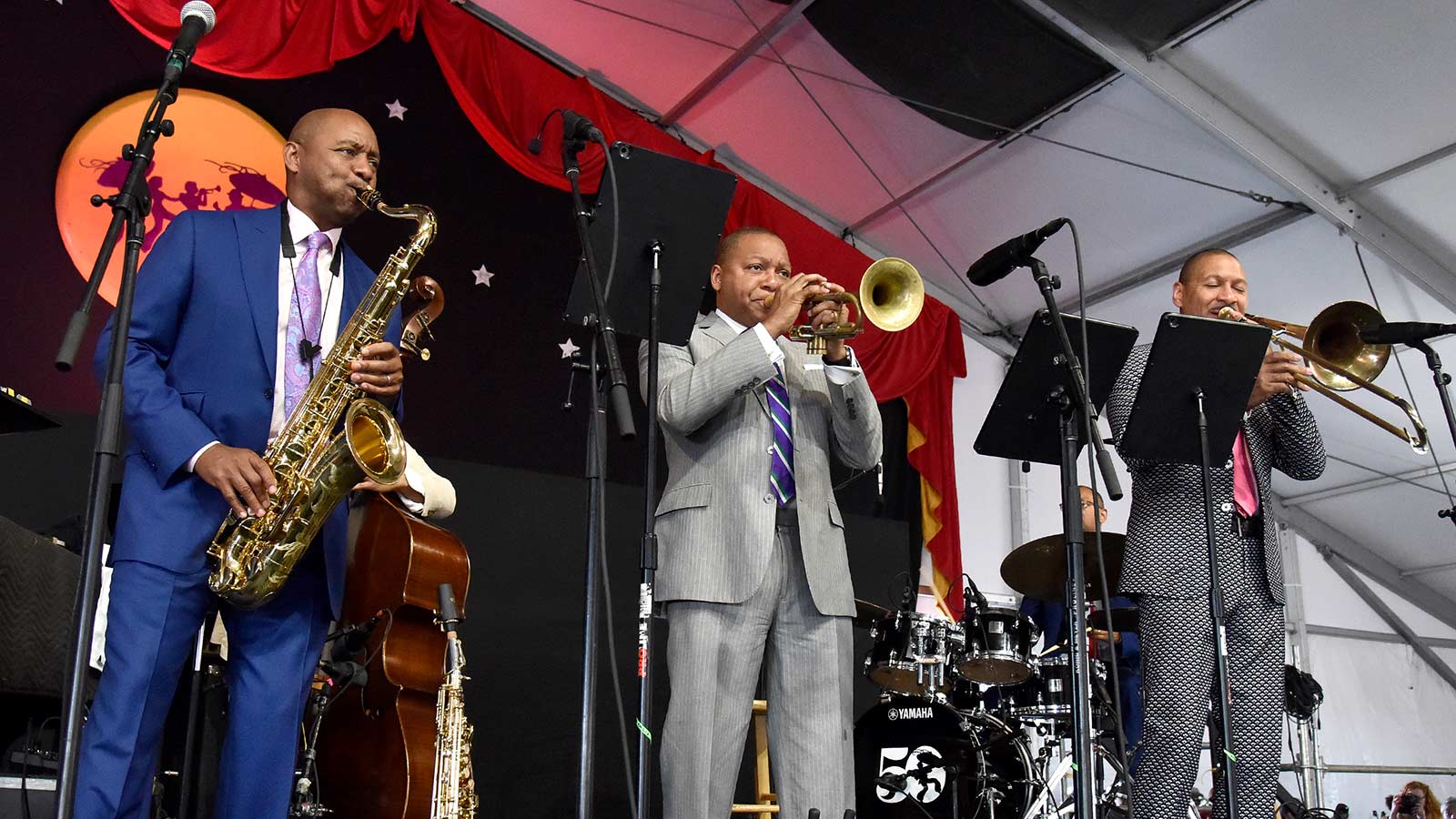
Liza Minnelli, the famed actress, singer and dancer, is one of the late entertainer Judy Garland’s three children. Jon Batiste – “The Late Show” bandleader, pianist and composer who has won Emmy, Oscar and Golden Globe awards – has at least 25 musicians in his family. Saxophonist Branford, trumpeter Wynton, trombonist Delfeayo and drummer Jason Marsalis are the sons of pianist Ellis Marsalis.
Singer and pianist Norah Jones is the daughter of Indian sitar player Ravi Shankar, though Jones had little contact with her renowned father while growing up.
Absolute pitch, also known as perfect pitch, is the ability to recognize and name any note you hear anywhere. Researchers have found that it may be hereditary. But do you need it to be a great musician? Not really.

Most people are born with some musical ability
I define musical ability as the possession of talent or potential – the means to achieve something musical.
Then there’s skill, which I define as what you attain by working at it.
You need at least some basic musical ability to acquire musical skills. Unless you can hear and discern pitches and rhythms, you can’t reproduce them.
But people may overestimate the role of genetics because, with very rare exceptions, almost everyone can perceive pitches and rhythms.
My research regarding children’s musicality suggests measures of singing skills are normally distributed in the population. That is, pitch ability follows a bell curve: Most people are average singers. Not many are way below average or excellent.
My team’s most recent research suggests that this distribution is true for rhythm in addition to pitch.
Not surprisingly, some musical skills are correlated.
The more training you have on specific musical skills, the better you’ll test on certain others. This is probably because musical experience enhances other musical abilities.
To sum it up, an emerging body of research indicates that practice doesn’t make perfect. But for most people, it helps a lot.

Violin teacher Ellen Kim says jelly beans make a great motivational tool for her students. (Stormi Greener/Star Tribune via Getty Images)
Lessons and practice are essential
What about people who say they they can’t keep a beat? It turns out that they almost always can track a steady beat to music. They just haven’t done it enough.
Indeed, the last time I gave a nonbeliever our lab’s test for rhythm perception, she performed excellently. For that and for singing, some people just need a little help to move past assumptions they lack talent: You can’t say you’re incapable of something if you haven’t spent time trying.
Some researchers and journalists have promoted the idea it takes 10,000 hours of practice or training to master a new skill.
Innate ability puts people at different starting lines toward musical mastery. But once you’ve started to study an instrument or singing style, skill development depends on many other factors. Getting lessons, practicing often and being in a musical family may make those more likely.
For example, Lizzo, a hip-hop superstar and classically trained flute player, had the luck to grow up in family of music lovers. They all had their own taste in music. Her success is a microcosm of why a well-rounded musical education for young people matters.
The singers in the choir I lead at Penn State have a range of experience, from a little to a lot. Yet soon after they join it, they develop the ability to pick a good key and starting pitch as they get to know their own voices.
Practicing more doesn’t change your baseline potential, it just changes what you can presently do. That is, if you practice a specific song over and over again, eventually you’re going to get better at it.
Jonathon Heyward, the Baltimore Symphony’s new conductor, who has no musicians in his family, has worked really hard to excel. He started taking cello lessons at age 10 and hasn’t stopped since, playing and practicing and studying.
Privilege can play a role
Socioeconomic factors can also enter the equation. While conducting research, I’ve seen high-income college students from high-income families, with more years of musical experience, perform better than their classmates who have lower-income backgrounds and had fewer opportunities.
Genes can give someone a head start. At the same time, having a quiet space where you can practice on an acoustic instrument or a digital workstation might make a more decisive difference for the musical prospects of most children. The same goes for having money for private lessons or access to free classes.
Even so, many of the best musicians, including jazz greats Louis Armstrong and Billie Holiday, grew up facing many hardships.
With the right conditions for practice and gaining experience, who knows where the next Liza or Lizzo will come from.
Written by Bryan Nichols, Associate Professor of Music, Penn State
This article is republished from The Conversation under a Creative Commons license. Read the original article.