





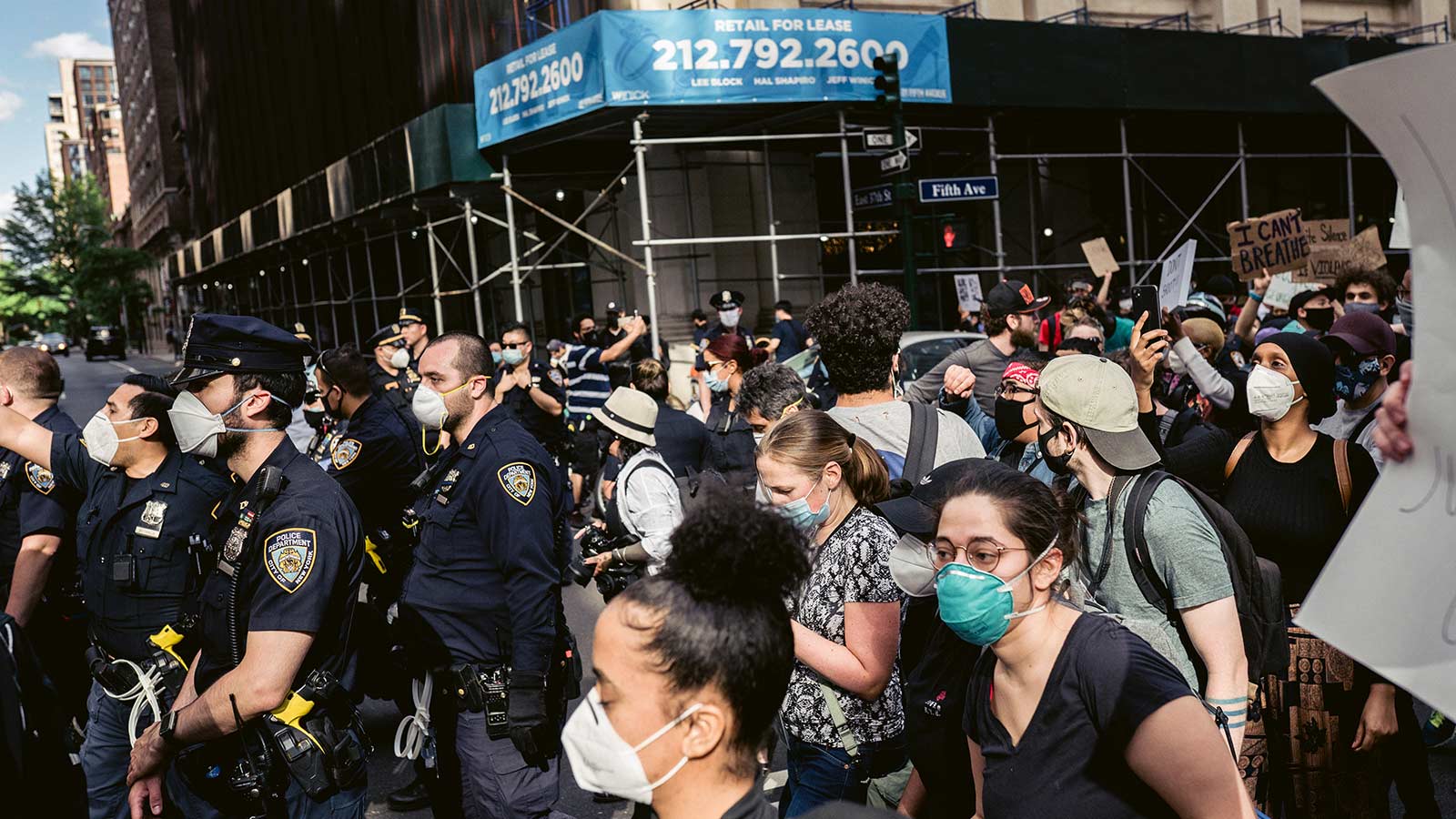

Before the deaths of George Floyd, Breonna Taylor, Philando Castile and Sandra Bland were propelled into the media spotlight, their names were Twitter #hashtags.
In 2020, Twitter was essential to the spread of historic Black Lives Matter protests against police brutality across the world. But Elon Musk’s takeover of Twitter has thrown the future of Black Twitter into question. Social media users argue that the takeover has already had an impact on the Black social media community.
For instance, not only do multiple sources report an almost immediate spike in the use of the N-word, but Musk has also allegedly mocked Black Lives Matter in general and the group’s apparel found at Twitter’s headquarters in San Francisco, California.
The impact of Musk’s takeover is so abundantly clear that Black Twitter held its own satire-infused funeral.
User tweets clearly take a humorous approach, a well-documented coping technique for the Black community. But as a Black professor who studies communication and police brutality, I am petrified when I envision the implications of Black Twitter’s demise.
It starts with a hashtag
A world without Black Twitter is a world void of robust, rapid and authentic information sharing on police brutality within the Black community. As a result, it is my belief that the community will be systemically silenced and exposed to increased levels of police-related violence.
Black Twitter refers to the digital community within Twitter that embraces and celebrates Blackness all while circulating topics, stories and images that directly relate to and affect the Black community. Black Twitter is not defined by geography or membership.
Instead, it refers to a culture and community co-created by Black Twitter members. Black Twitter is used to offer cultural critiques, and to discuss significant historical moments.
Pew Research has found African Americans who use Twitter are twice as likely (68%) to discuss issues of race online compared with their white counterparts (31%). In addition, 85% of those Black users believe social media to be an important tool in creating sustained social movements.

Finally, according to Nielsen, 19 million, or 28%, of Twitter’s 67 million users are African American. And about one in five African Americans are on Black Twitter.
A 2016 study found that education, amplifying marginalized voices and pushing for structural changes to policing were the main goals for Black Twitter users dedicated to BLM. My dissertation clearly shows that the Black community, especially Black millennials and Gen Zers, use Black Twitter as a primary source of information about police brutality.
I discuss this in greater detail on the Opinion Science Podcast and Emerson College’s Campus On The Common Podcast. Without Black Twitter, one of the Black community’s main information channels would not exist.
First with breaking news
For many social media users, Black Twitter is the first way they hear of stories involving police brutality.
In fact, I have found that hashtags have replaced breaking news headlines for some Black Twitter users.
“Honestly, I hear about most cases on Twitter,” one interviewee told me during my research. “It’s always on Twitter before it becomes main headline news. News will pick it up like a day or two after I’ve already seen it on Twitter.”
On Twitter, a hashtag is no longer just a name. Instead, it often blossoms into awareness campaigns that seek police reform. Hashtags are often the catalysts for mobilization, and this mobilization would be significantly slower in a world without Twitter.
Twitter is often used to document and upload videos of police brutality. For instance, the video of George Floyd’s death in police custody was first publicized on Twitter, and then mainstream news circulated the footage.
I like to think of Black Twitter as the fuel, while mainstream media are the wheels on the information highway.
Real images in real time
In my research, several interviewees indicated Twitter is the preferred message channel on police brutality because of its authenticity.
For many, Black Twitter avoids perceived racial biases of mainstream media outlets that rely on police sources for information. Instead, users are exposed to firsthand accounts often filmed by other Black users.
“I find Twitter to be most credible, especially the firsthand accounts and videos,” one interviewee told me. “There is something about seeing videos that makes it more real. There is less time for someone to flip a story.”
Another interviewee echoed similar ideas, stating, “I definitely prefer videos on Twitter over hearsay or the news. I don’t trust the news. But videos serve as solid evidence. I think that’s important because there are lots of cases where people are killed by police and we wouldn’t have any evidence if it weren’t for videos on Twitter.”
For some, like Elon Musk, Twitter may be a digital playground to boost their wealth and magnify their egos. But Black Twitter and the information it provides is literally a matter of life and death. From Pearl Pearson to Breonna Taylor to Tamir Rice to Philando Castile, the use of Twitter was essential in gathering evidence, gaining public attention and pushing for reforms.
In a world where cameras are always on and information is constantly being shared, police brutality still exists. Imagine what may happen when there are fewer places to make public those images and unvarnished stories.
Written by Deion Scott Hawkins, Assistant Professor of Argumentation & Advocacy, Emerson College
This article is republished from The Conversation under a Creative Commons license. Read the original article.