












TLDR: Explore how A1 AI could shape the evolution of humanity, and potentially influence the future of humans for thousands of years to come.
Some of the leading brains behind generative AI have warned about the risk of artificial superintelligence wiping out humanity, if left unchecked.
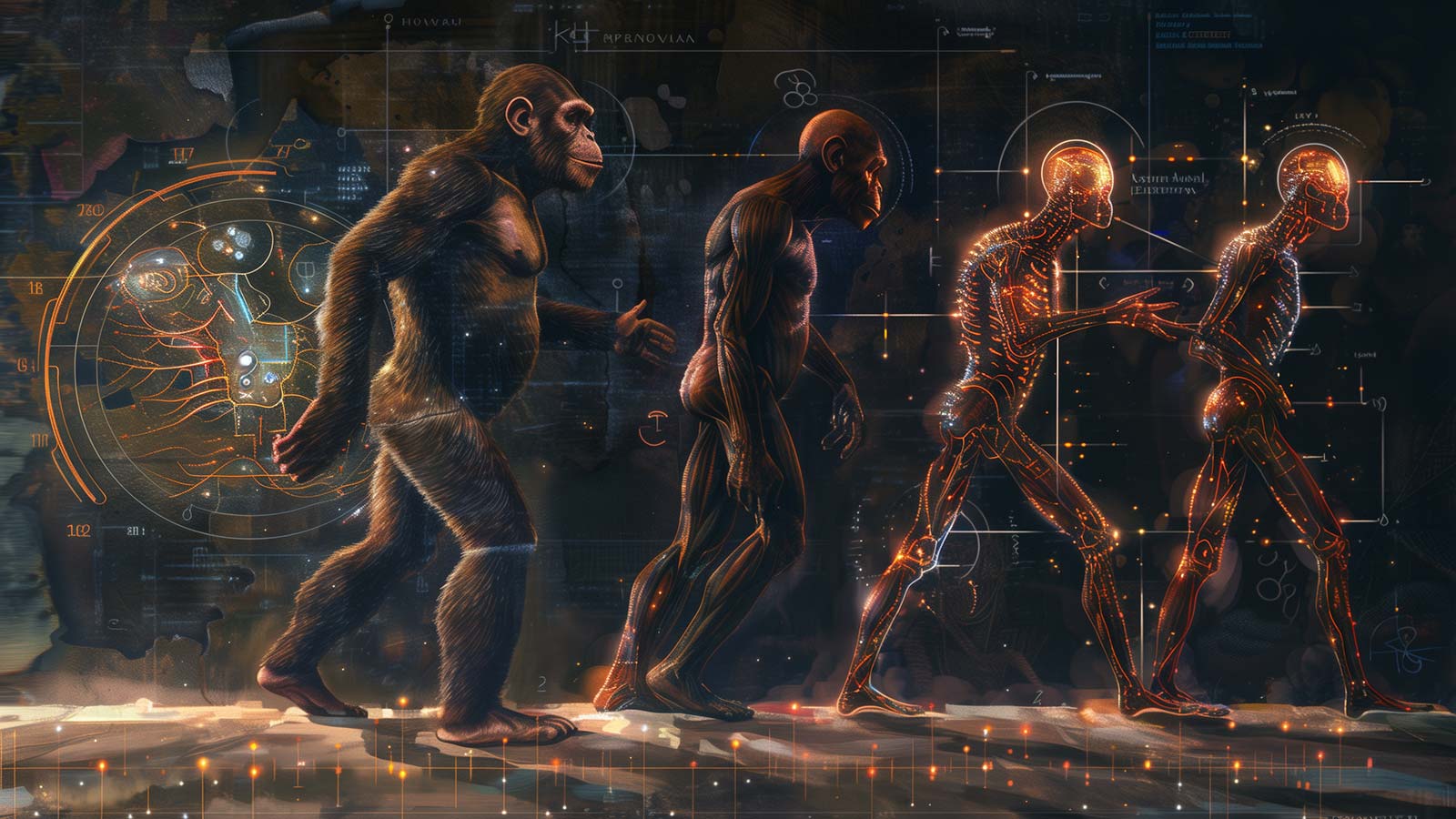
But what if the influence of AI on humans is much more mundane, influencing our evolution over thousands of years through natural selection?
In this episode of The Conversation Weekly podcast we talk to evolutionary biologist Rob Brooks about what AI could do to the evolution of humanity, from smaller brains to fewer friends.
Rob Brooks is Scientia professor of evolution at the University of New South Wales in Australia. Through his research on artificial intimacy between humans and AI chatbots, Brooks became interested in how human evolution might be shaped by the proliferation of AI. He recently published a paper exploring various scenarios, from AI’s potential influence on human intelligence, to brain size, to more direct intervention in fertility treatment.
For Brooks, the relationship between humans and machines, including AI, mirrors the symbiotic relationships that happen in nature, where one species is linked to or depends on another. Some of these relationships are mutualistic, with each benefiting the other, he says:
I think that most of our relationships with technology should be mutualisms because that why we have the technologies … A lot of the things that AI does for us at the moment are incredible computational heavy lifting [tasks]. It could be difficult calculations or it could be remembering people’s birthdays – there’s a kind of mutualism.
But sometimes that mutualism can morph into parasitism, where one harms the other. Brooks thinks smartphones have already reached this stage because of the amount of human attention they take up and the influence this is having on human relationships, particularly among young people. He believes it’s also reasonable to assume “that attention and time parasites in the AI ecosystem will influence human evolution”.
Listen to the full episode of The Conversation Weekly to hear a conversation with Brooks about the potential ways AI could influence human evolution, from human intelligence to our relationships and even our brain size. This episode also includes an introduction with Signe Dean, science and technology editor at The Conversation in Australia.
This episode of The Conversation Weekly was written and produced by Gemma Ware. Mixing and sound design by Eloise Stevens and theme music by Neeta Sarl.

Newsclips in this episode from BBC Newsnight, MSNBC and Channel 4 News.
Written by Gemma Ware, Host, The Conversation Weekly Podcast, The Conversation
This article is republished from The Conversation under a Creative Commons license. Read the original article.