



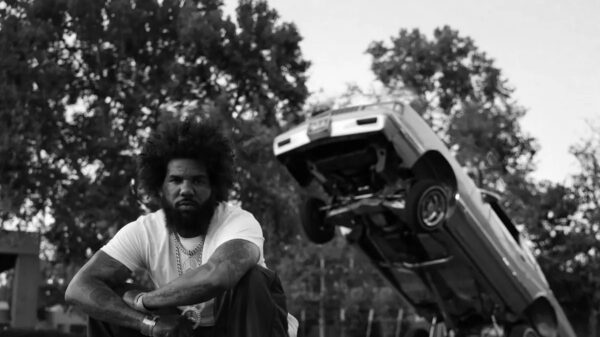









The Travis Scott concert in Melbourne, Australia on October 22 lived up to his reputation for chaotic performances. Fans, eager for a high-energy show, were met with unruly scenes both inside and outside the venue.
Reports described concertgoers clashing, throwing plastic bottles and dismantling barricades.
As some fans attempted to breach security barriers to enter the mosh pit, physical altercations with security guards erupted. One fan reportedly suffered a seizure after trying to bypass barricades.
These occurrences, at times, were reminiscent of the dangerous atmosphere at Scott’s past concerts, including the fatal 2021 crowd crush at Astroworld Festival in Houston.
Modern crowd psychology shows us collective behaviour is shaped by perceived group norms, and these norms can either foster safety or encourage chaos. This performance – contrasted with other recent big concerts in Australia – highlights the urgent need to rethink the roles of performers in crowd management.
Defiance is normalized
While performing, Scott often urges fans to lose control and embrace the chaos. This induces behaviours such as mosh pits, crowd surfing, and even at times, ignoring fans in distress.
Scott’s performances are characterized by his desire to have his energy reciprocated by the audience, which creates an environment where defiance is normalized.
Statements such as “forget security, this is for y’all” push fans toward risky behaviours, making these concerts highly charged and, at times, uncontrollable.
While this may foster excitement and adrenaline, it also sets the stage for unsafe crowd dynamics.

The 2021 Astroworld tragedy, in which ten people died and thousands were injured in a crowd surge, should have served as a wake-up call about the elevated risks at Scott’s performances.
Despite signs of crowd distress, Scott continued performing for nearly 40 minutes after Houston officials started responding to the mass casualty event. Despite visible signs of crowd distress, the show continued.
More than 300 injury lawsuits were settled between festival goers and Scott and concert promoter Live Nation. Plaintiffs argued the concert’s organizers failed to act swiftly to prevent the disaster once the crowd surge became life-threatening.
Though the Melbourne concert didn’t reach the same tragic levels, the chaotic scenes were reminders of the ongoing risks at a Travis Scott performance.
Incidents like the one in Melbourne – with security struggles, fan injuries and disorder – should serve as near-miss warnings. The same volatile energy persists in Travis’ concerts and could amount to risky behaviour, luckily not of catastrophic consequences in this case.
Different artists set different safety cultures
While Scott’s concerts are known for their chaotic energy, artists such as Taylor Swift present a stark contrast in terms of crowd dynamics and audience behaviour.
Swift’s recent Australian shows, which hosted record-breaking attendance numbers, ran smoothly.
The difference in audience behaviour isn’t just about the genre of music and the energy and culture that comes with it. It’s also about how the artist interacts with the crowd. Swift creates an atmosphere of excitement while maintaining a sense of order, often engaging the audience in a way that fosters respect for boundaries and safety.
Swift has a strong track record of prioritizing audience safety and wellbeing during her concerts.
In many shows, she stopped to address issues such as heat exhaustion or crowd distress, by encouraging fans to stay hydrated and to look out for each other.
At her Edinburgh show in June 2024, she paused the concert three separate times to assist fans who were struggling in the crowd.
‘Perceived contextual norms’ are at play
Crowd psychology emphasizes how individuals in large gatherings adjust behaviour based on the perceived norms of the group.
The Social Identity Theory of crowds explains that people align their behaviour with the crowd’s collective identity.
A shared social identity within a crowd increases the likelihood of people adopting collective norms – even if those norms encourage risk-taking. Perceived group norms can override personal caution in favour of behaviour that is seen as accepted or approved by the group.
Based on these theories, leaders influence group behaviour by reinforcing collective identity and norms.
In the case of music performers, artists can guide actions that align with the group’s sense of “us”. This can ultimately lead to shifts in behaviour towards safety or risk-taking.
What now?
The contrasting experiences between Scott’s and Swift’s concerts offers a crucial lesson in crowd management: the role of leadership and the norms set by performers.
We need to rethink the roles of performers in crowd management. Artists such as Scott wield immense influence over crowd dynamics, and this power should be harnessed more consciously.
The chaotic, high-energy nature of Scott’s performances is part of his identity. Fans attend his shows expecting that intensity.
The key difference lies in how the artist can create a high-energy environment without compromising fan safety. Encouraging fans to disregard security is an example of where defiance can stretch too far. The line between excitement and chaos becomes blurred. The messaging needs to shift to maintaining intensity but within boundaries that safeguard the audience.
Awareness around how crowd behaviour is influenced by artists and the group norms that they set can help walk the line between excitement and chaos.
Written by Milad Haghani, Senior Lecturer of Urban Analytics & Resilience, UNSW Sydney
This article is republished from The Conversation under a Creative Commons license. Read the original article.