










TLDR: Dcumentary-maker John Safran met with Proud Boys founder Gavin McInnes in New York while researching his new book, Squat, which uses Kanye West’s antisemitism and views of Hitler as an entry to a range of topics.
Gavin McInnes, founder of far-right “Western chauvinist” group the Proud Boys, told a BBC documentary that “the corrupt leftwing media” was responsible for the January 6 riot at the US Capitol, it emerged this week. The documentary also showed him saying he wants to “make America hate again.”
“The left are the violent ones,” McInnes told documentary makers. “We had one riot on January 6.”
Last year, Henry “Enrique” Tarrio, the Proud Boys’ former national chairman, was sentenced to 22 years in prison for his part in the Capitol attack. Attorney-General Merrick Garland said the group “played a central role.”
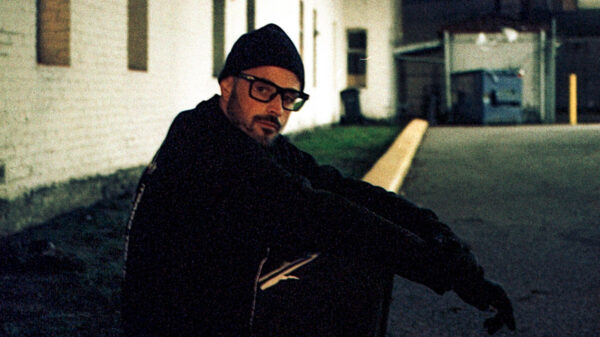
Jewish Australian journalist and documentary-maker John Safran met with McInnes in New York while researching his new book, Squat, which uses Kanye West’s antisemitism as an entry to a range of topics.
In October 2022, West posted an antisemitic message on X, the social media platform previously known as Twitter:
The Proud Boys founder “was not a fan of transgender people, feminists or Muslims,” Safran writes, “but he said he loved Jews, so much so that he met up with Kanye and tried to talk him out of promoting Hitler.”
The central premise of this at times barely believable (but, as Safran maintains, absolutely true) book is Safran – who has a history of performing outlandish, occasionally shocking stunts – breaking into one of West’s houses and squatting there for a week.
Safran employs his trademark mix of irreverence and sharp social commentary to create an entertaining — if sometimes frustratingly digressive — exploration of identity, religious hatred, conspiratorial thinking, and the toxicity of fame and celebrity culture.
Breaking Kanye West’s bubble
Dead of night. Rain pelting down. A solitary, slightly bedraggled figure laden with camping gear emerges from the thicket. He takes stock of his surroundings and sets off:

“I don’t need to scale a fence or wall to gain access. Instead, I need to jump down onto the brick patio. The drop is about my height if my head was sawn off.”
Safran is describing the moment he broke into Kanye West’s house.
Sneaking inside, our intrepid trespasser discovers most of the interiors are painted the same shade of blue. He spends a week squatting there illegally, sleeping in the rapper’s bed, rummaging through his cupboards and eating his pasta.
The house was actually a mansion — one of many properties owned by the eccentric recording artist now legally known as Ye. Located in Calabasas, one of the richest neighbourhoods in Los Angeles, it was totally abandoned. Weirdly, it was also wrapped in white plastic.
A disgruntled neighbour told Safran he thought the award-winning artist and trailblazing record producer wanted to fashion himself an enormous protective bubble.
Safran is unnerved by the scene. The rain striking the plastic sheets, the deserted rooms, the biblical scripture scrawled on the walls, and the vast, empty property all contribute to a feeling that something — or someone — might still be lurking nearby. But he rallies and decides to approach the eerie setting as an unexpected opportunity — a strange kind of writer’s residency.
He builds a makeshift workstation, sits down and starts to write.
‘A swastika on a sneaker’
Safran spent his adolescence listening to hip hop. As he wryly acknowledges, he “was possibly more into Public Enemy than the members of Public Enemy.” However, by the time West released his debut album, The College Dropout, in 2004, Safran’s musical palate had broadened.
He didn’t pay much attention to West, who has a track record when it comes to provocative and offensive behaviour, until he started making antisemitic statements in public.
West’s behaviour did not go down well with his business associates. In October 2022, the same month he made his inflammatory X statement, fashion house Balenciaga severed its ties with West, and Adidas ended the lucrative partnership that had played a pivotal role in elevating him to billionaire status.
As Safran recounts, it later emerged that during his decade-long collaboration with the German sporting giant, West “had allegedly drawn a swastika on a sneaker in a meeting with them and told a Jewish executive to kiss a picture of Adolf Hitler.”
Now, Safran writes, West
“wanted to get things off his chest publicly. He pushed the notion that Jews were cunning with money and greedier than non-Jews, tropes going back thousands of years.”
Things came to a head in December 2022, when West was interviewed on Infowars, the conspiracy theory platform hosted by Alex Jones. Wearing a black, eyeless balaclava with a bible on the desk, West began, as Safran says, “philosophizing to millions.”
Over the course of three hours, West made a series of disturbing remarks about the Nazis and the Holocaust. Even Jones — himself no stranger to performative outrage and antisemitic rhetoric — seemed genuinely taken aback.
In West’s estimation, the “Germans had a really cool leader one time.” That leader, he clarifies, was Adolf Hitler. He went on to assert that Jewish media outlets have “made us feel like the Nazis and Hitler have never offered anything of value to the world”. West was unequivocal on this point. “Every human being has brought something of value. Especially Hitler.”
Curious about Kanye’s Nazi flirtation
Safran’s grandparents left Poland, fleeing the Nazis, and settled in Melbourne soon after his mother was born in Uzbekistan. His previous books have covered racial violence (Murder in Mississippi, 2013) and political extremism (Depends What You Mean by Extremist, 2017).
So it’s not surprising that West’s statements piqued Safran’s curiosity. He is also worried about the possible implications:
“I mean, I dig his tunes, I like his lols and trolls, but he is still painting the Jews as maniacal. Some of his fans are going to take that and run with it.”
This explains why he booked a flight to Los Angeles. Safran’s vague idea was to somehow track West down and, in his own words, “suss out what was going on.” Specifically, he hoped to confront West and “start a conversation” about his antisemitism and admiration for genocidal maniacs.
Safran admits to being curious about West’s true intentions:
“Was Kanye’s flirtation with Nazism actually Nazism? Or was it more a creative impulse, like painting Hitler on your nails because you thought it would be funny?”
Ultimately, those questions go unanswered. Try as he might, Safran never actually manages to bag a meeting with West. But he does get the chance to talk to several members of his extended entourage, each offering their own insights and perspectives on the controversial artist.
Celebrity culture and extremist ideologies
McInnes tells Safran racism no longer exists in the United States – even though he lives in a country where a presidential candidate accuses Haitian immigrants of eating pets and a comedian jokes at that candidate’s event about Puerto Rico being a “floating island of garbage.” McInnes also tells him he “agrees with Kanye that Jews controlled the levers of power, but, unlike Kanye, he thought that was a good thing.”
Safran is perplexed. Encounters like this – and there are several – let him reflect on West’s potential motives and patterns of behaviour. They also invite him to consider how broader cultural, economic and political forces and attitudes have contributed to a resurgence in antisemitism – and other, similarly repellent forms of racial hatred in contemporary society.
Through his interactions, Safran begins to piece together the ways these forces intersect with celebrity culture and extremist ideologies, offering an glimpse into how such noxious views have gained renewed traction in our digitally mediated dumpster fire of a world.
Significantly, Squat opens on the steps of the Sydney Opera House on October 8 2023, the scene of a contentious pro-Palestine rally. It offers insightful observations about antisemitism and conspiratorial extremism, which are much needed at this precise historical and geopolitical moment.
Yet Safran’s style and tone – by turns circuitous and irreverent – at times jar and detract from the substance of the book. This is a pity, given the need for a serious, focused discussion of such matters at this historical and political juncture.
Written by Alexander Howard, Senior Lecturer, Discipline of English and Writing, University of Sydney
This article is republished from The Conversation under a Creative Commons license. Read the original article.