
















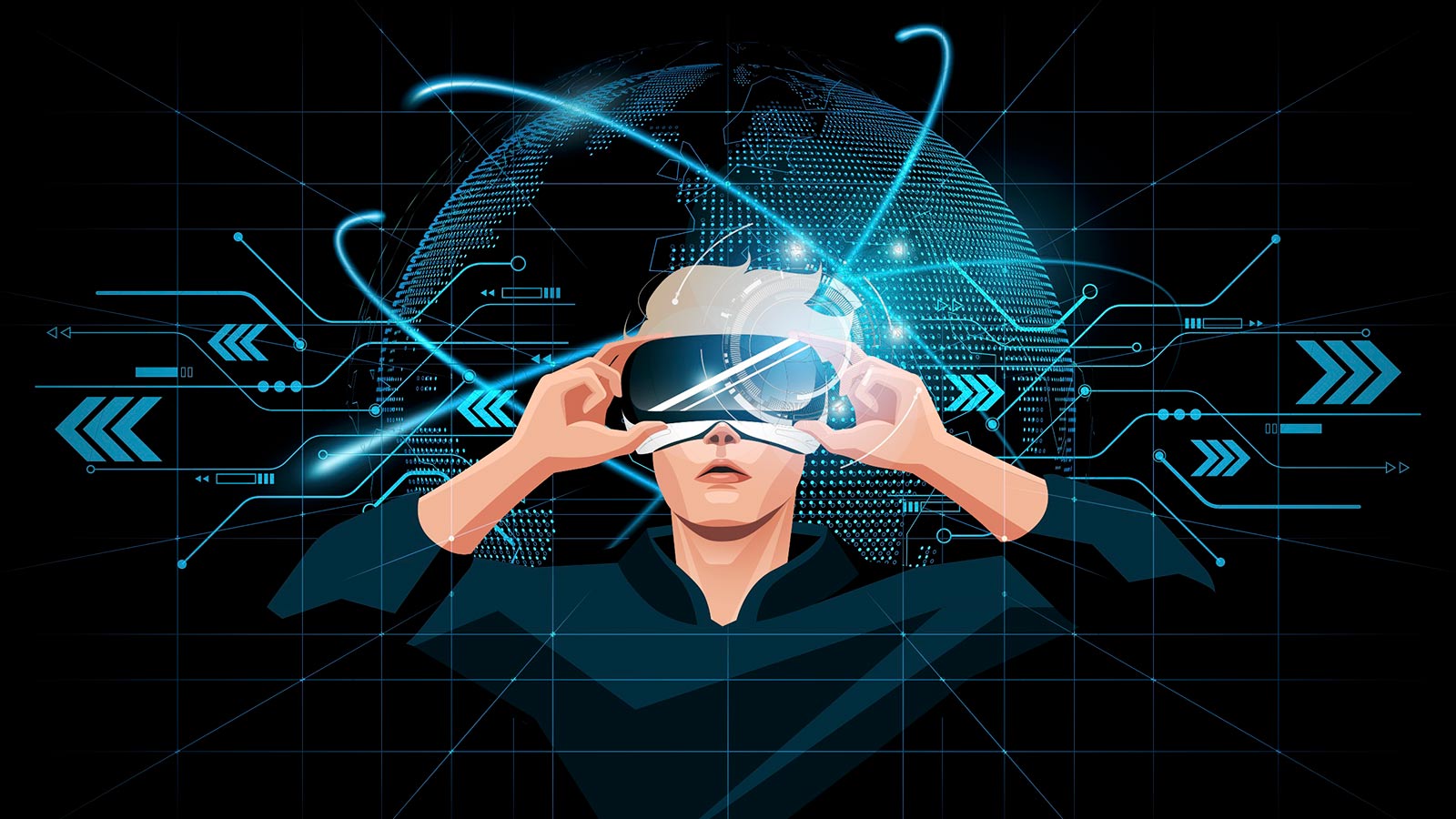

The metaverse can be defined as a set of virtual shared spaces that are indexed in the real world and accessible via 3D interaction. It is a term that has been rapidly gaining ground in the media landscape ever since Facebook founder Mark Zuckerberg announced the creation of the Meta Group.
While some people remain cautious or resistant to the idea, others see this technological evolution as an opportunity to develop new offers. Given tourism is a sector that moves forward largely in line with information and communication technologies, it is entirely relevant to look at how it could integrate this virtual universe.
So how could the metaverse take over tourism, a practice that requires physical travel?
Can tourism and technology work together?
There is a clear correlation between the development of tourism and that of technology. Indeed, from the computerised booking centres of the 1970s to the domestication of the Internet in the late 1990s, technology has always been used in tourism to develop new practices. The metaverse is part of this evolution of the Internet, which deploys increasingly immersive technologies to offer phygital experiences – i.e., that blur boundaries between the real and the virtual.
Whether it be for museums, national parks or heritage sites, the health crisis has also enabled many organisations to increase and sustain their use of technological tools to offer virtual reality tours. The Fly Over Zone application, as well as offering an exploration of World Heritage cultural sites, shows users what damaged sites would have looked like in their original state. Web giant Amazon launched “Amazon Explore”, allowing people to “travel the world, virtually”. This venture is an interactive live-streaming service, which they say allows you to discover new places from your computer. Although this service is still in its infancy, with a beta version it is likely that these virtual tours will progress to offer even more immersive formats.
When it comes to tourism, Asia is a forerunner, with proposals such as the Seoul Metaverse project, which aims to become the first major city in the world to enter the metaverse, with a tourist route reproducing the city’s main sites. But it is in France that we find one of the most successful projects with MoyaLand, a virtual tourism realm including a tourist office, museums, an airport and a historical centre where inhabitants and tourists can move around virtually via their avatars.
Other tourism stakeholders could follow suit, with 25% of people forecast to spend at least one hour a day in the metaverse by 2026, according to the American company Gartner. So how will people experience tourism in this virtual environment?
Using the metaverse to inspire travel

There are two main trends defining the tourism experience: the first is related to the process, with a transformation of the world into knowledge, the second is about the moment, with a focus on hedonism and feelings of success. While by definition, tourism requires physical travel, there is a contradiction in the tourism experiences offered by the metaverse. The metaverse cannot replace physical travel, but can create the desire to travel.
In the immersive reality of the metaverse, technological devices feed the user with sensations such as sight, hearing, touch and even smell. Besides acquisition costs, the use of these new devices calls into question the perception of the senses connecting humans to their environment.
The metaverse results from the interaction between a device, a user putting themselves in the shoes of a tourist, and other spectators. Although the experience is virtual, the senses are indeed put to work by stimulating certain situations that are desired but not accessible at the time. Through immersion, the virtual reality headset or haptic sensors allow us to experience things that were previously intangible and to reconnect with the senses.
Through an avatar, the metaverse user can embody a tourist by creating a virtual tour route, interacting with other avatars and consequently imagining how they feel, stimulating what Giacomo Rizzolatti calls mirror neurons.
Societal and environmental constraints
Whether imitated, reproduced or simulated, travel and holidays are touristic practices that provide a break from everyday life. They’re also an opportunity for some to see their loved ones or to engage in activities that are difficult to do in everyday life. Observing animals in a safari, discovering archaeological sites or practising a foreign language are activities that produce unique, essential bodily and spiritual sensations different from those produced virtually by metaverse devices.
Moreover, the metaverse, which is in itself a technological development of the Internet, is not yet complete. It requires financial investment and the construction of a regulatory framework to control user behaviour. For when Mark Zuckerberg expresses his desire to create a virtual and alternative world in which users can also travel, we must not lose sight of the fact that users’ data will be put to use. And while some people see the metaverse as a solution to avoid flying and move toward sustainable tourism, the digital pollution it will create could well work against this ‘virtuous’ form of tourism.
Although tourism in the metaverse will not be able to replace outdoor experiences, some tourism professionals could use it to promote sites that are not easily accessible or are ignored by tourists, who can discover them virtually.
Written by Naïma Aïdi, Doctorante en sciences de l’information et de la communication, rattachée au laboratoire Dicen-IdF. Tourisme et Smart Tourisme, Université Gustave Eiffel
This article is republished from The Conversation under a Creative Commons license. Read the original article.