














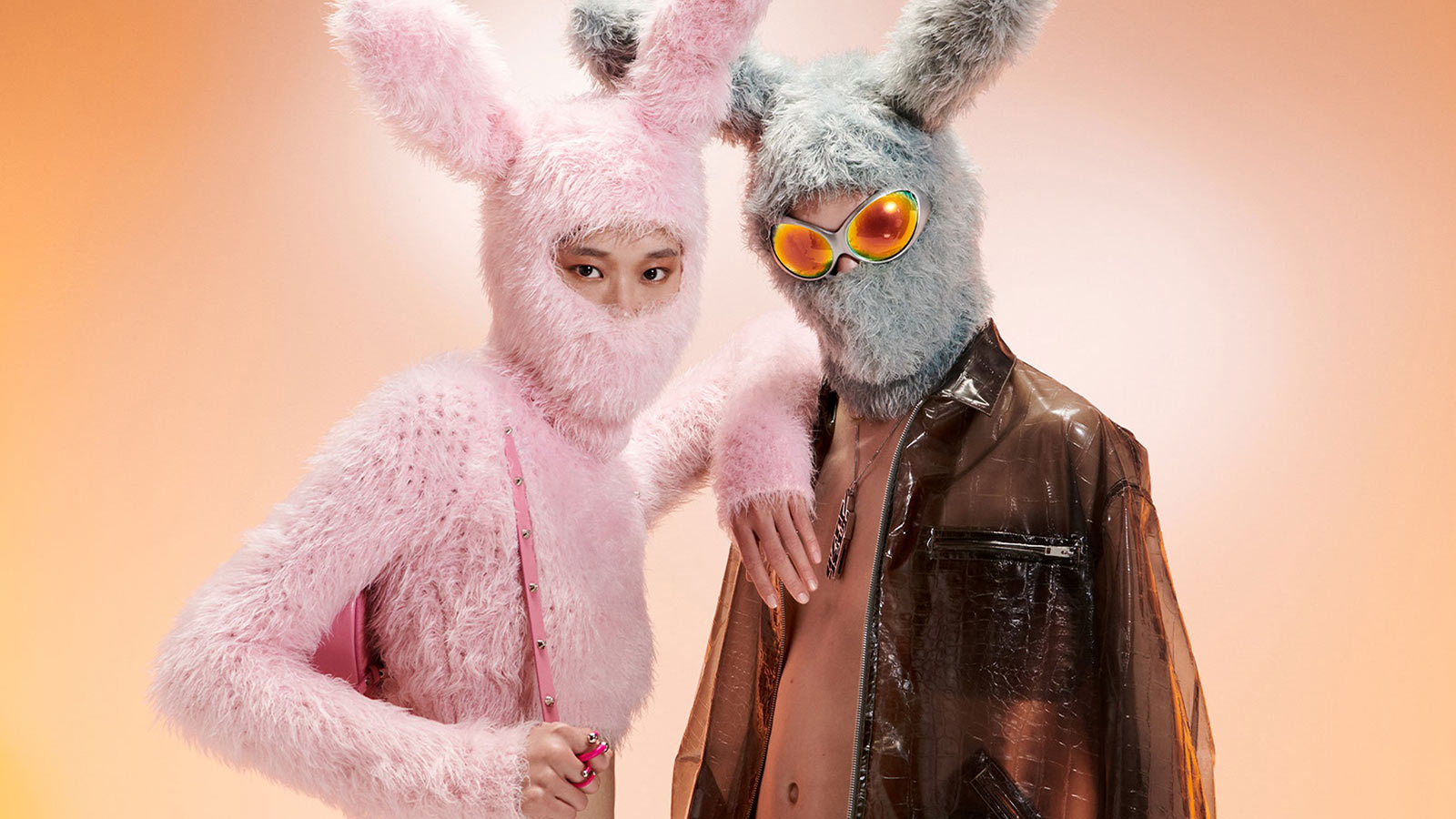

As China prepares to celebrate new year on January 22, luxury brands are gearing up for the year of the rabbit with an array of luxury rabbit-themed goods: a £29,000 gold and diamond-encrusted rabbit watch by Dior, perhaps, or an £850 floppy-eared hat from Burberry. Japanese streetwear brand Ambush has reportedly sold out of its £380 pink bunny balaclavas.
The target market? China’s 400 million-strong army of young consumers, who have the power to make or break foreign brands seeking their fortune in China.
Like their western peers, China’s “Gen Z” consumers are avid users of social media, but that is where the similarities end. This generation has grown up during China’s rapid economic development in the 2000s and 2010s, which is a marked contrast to their peers in the west, who came of age in the shadow of the 2008 financial crisis. As a result, they have been characterised as being more confident and better educated than previous generations.
Another notable characteristic of this generation has been its size, being one of the largest generations since the baby boomers in Europe and North America. The parallels between the two have been readily apparent with both enjoying significant cultural, economic and political influence, with China’s Gen Z being labelled as the next “baby boomers.”
As a result, China’s young adults are well placed to influence future decisions, which will be based on their world view. Questions about how they will use their influence have already been asked – and the answer can be seen in their habits as consumers.
China chic
One of the most notable signs of this has been in the rise of guochao (国潮), roughly translated as “national wave.” Brands from this movement have sought to combine Chinese traditions with modern designs. This emerged from Li Ning’s Wu Dao collection, showcased at New York’s Fashion Week in 2018. Li’s Taoist-inspired designs have marked a wider trend for Chinese consumers to embrace domestic brands.
Guochao’s success has been illustrative of several developments within China. Firstly, it shows how consumer habits have changed, with more younger consumers wanting to see their culture incorporated into consumer goods, favouring local brands over foreign ones.
This reflects a different view of Chinese identity among Gen Z and millennials for whom China has always been a strong nation that rivals the western world. Guochao‘s efforts to redefine the meaning of “Made in China” strikes a chord as it aims to move away from its association with cheap, poor-quality products that were the hallmark of the early days of China’s development.
As a result, the consumer habits of younger Chinese have not only shaped China’s perceived identity but has presented a notable challenge for foreign brands.

Another development that has illustrated the influence of younger Chinese consumers has been the popularity of traditional clothing, most notably the traditional long sleeved robe, the hanfu (汉服). The market for the costume has grown significantly and is expected to be worth US$1.85 billion (£1.54 billion) in 2022.
As with guochao, hanfu fever has also been driven by younger consumers, with TV period dramas and social media platforms playing a notable role in popularising the costume. This was demonstrated by how hanfu-related content has been viewed 47.7 million times on Douyin (TikTok). Young Chinese consumers have popularised a costume that had once been the preserve of a small number of enthusiasts.
In keeping with guochao, the popularity of the hanfu has also been illustrative of a wider effort to redefine China’s identity by tapping into vintage tropes. This has been typical of newly affluent and confident societies which seek to reshape their identity into one that is in keeping with their perceived status – most notably South Korea at the height of its cultural influence and Japan during its long postwar economic boom.
A tougher customer
The most obvious challenge posed by young Chinese consumers has been in how they favour domestic brands over foreign ones. This has often been interpreted as a form of “consumer nationalism”, most notably in the boycotts against Nike and Adidas in 2021 over their decision not to use cotton from Xinjiang province. The fact that neither brand has fully recovered its position in the Chinese market illustrates the potency of this.
Coincidentally, it was this backlash that would see Chinese brands such as Anta and Li Ning Co outpace their western rivals) for the first time since their entry to the Chinese market. In this way, shopping has become another outpost of politics.
This consumer nationalism is a reflection of a broader disenchantment among young people with the west, revealed in the way many have begun to perceive nations – most notably the US – as foes. Such a change was noted by a 2022 study from the University of Oxford, which found that Chinese people born after 1990 are more likely to hold negative views of the US.
It’s important to note that rather than being the result of top-down anti-western state propaganda, this antipathy is largely driven by western anti-China sentiment as promulgated, for example, by former president Donald Trump during his term of office.
This is likely to place greater pressure on the Chinese Communist Party (CCP) to take a more assertive stance towards the west. And a future politburo made up of millennials and Gen Z may also result in a more confrontational China. In both business and politics, foreign concepts – be they fashion items or western-style democracy – no longer have the same appeal that they enjoyed with previous generations.
Written by Tom Harper, Lecturer in International Relations, University of East London
This article is republished from The Conversation under a Creative Commons license. Read the original article.