









TLDR: Consumers are increasingly turning to ‘Buy Canadian’ movements amid global boycotts of US goods. Explore how these consumer actions are impacting brands and politics.
As politicians around the world scramble to respond to US “liberation day” tariffs, consumers have also begun flexing their muscles. “Boycott USA” messages and searches have been trending on social media and search engines, with users sharing advice on brands and products to avoid.
Even before Donald Trump announced across-the-board tariffs, there had been protests and attacks on the president’s golf courses in Doonbeg in Ireland and Turnberry in Scotland in response to other policies. And in Canada, shoppers avoided US goods after Trump announced he could take over his northern neighbour.
His close ally Elon Musk has seen protests at Tesla showrooms across Europe, Australia and New Zealand. New cars have been set on fire as part of the “Tesla take-down”, while Tesla sales have been on a deep downward trend. This has been especially noticeable in European countries where electric vehicles sales have been high, and in Australia.
This targeting of Trump and Musk’s brands are part of wider boycotts of US goods as consumers look for ways to express their anger at the US administration.
Denmark’s biggest retailer, Salling Group, has given the price label of all European products a black star, making it easy for customers to avoid US goods.
Canadian shoppers are turning US products upside down in retail outlets so it’s easier for fellow shoppers to spot and avoid them. Canadian consumers can also download the Maple Scan app that checks barcodes to see if their grocery purchases are actually Canadian or have parent companies from the USA.
Who owns what?
The issue of ostensibly Canadian brands being owned by US capital illustrates the complexity of consumer boycotts – it can be difficult to identify which brands are American and which are not.

In the UK, for example, many consumers would be surprised to learn how many famous British brands are actually American-owned – for example, Cadbury, Waterstones and Boots. So entwined are global economies that attempts by consumers to boycott US brands may also damage their local economies.
This complexity is also present in Danish and Canadian Facebook groups that are dedicated to boycotting US goods. Consumers exchange tips on how to swap alternatives for American products.
The fact that Facebook is a US-based company only demonstrates how deeply embedded consumer culture is in US technologies. European businesses often depend on American operating systems and cloud storage while consumers rely on US-owned social media platforms for communication.
Even when consumers succeed in weeding out American products, if they pay using Visa, Mastercard or Apple Pay, a percentage of the price will nonetheless be rerouted to the US. If a touch payment is made with Worldpay, the percentage could be even greater.
These American financial services show just how embedded US businesses are in retail in ways that consumers may not appreciate. In practice, an absolute boycott of US business is almost unimaginable.

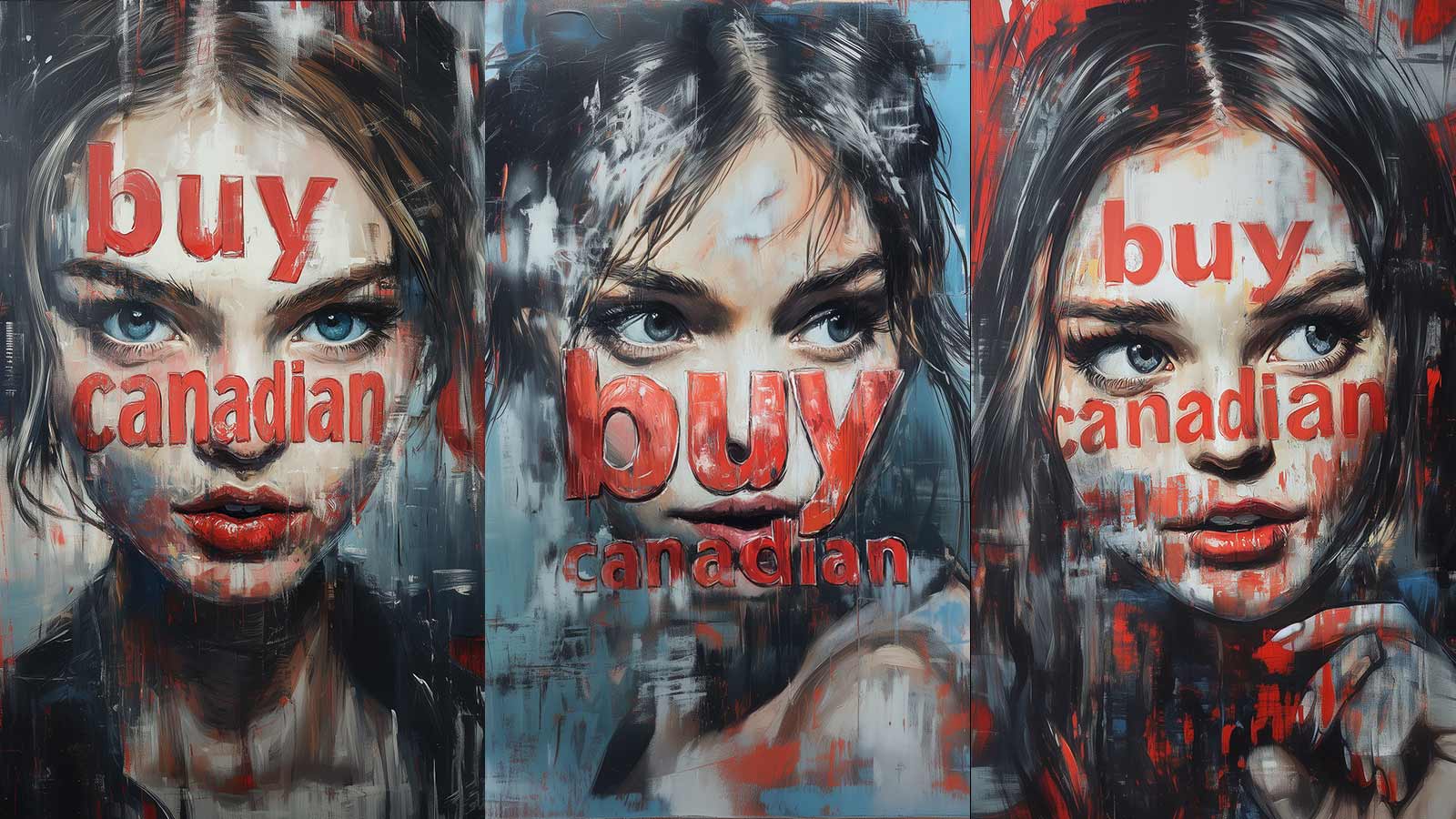
Generated by Midjourney
All-American brands
But American branding is not always subtle. In addition to brands directly connected to the US administration – such as the Trump golf courses and Tesla – many other companies have always been flamboyantly American. Coca-Cola, Starbucks and Budweiser are just some examples where their American identities and proudly on show.
As such, it’s possible that consumers will increasingly avoid blatantly American brands. They may be less concerned about the complexities and contradictions of a more comprehensive boycott.
Consumer actions where the goal is political change are known as “proxy boycotts” because no particular company is the ultimate target. Rather, the brands and firms are targeted by consumers as a means to an end.
Do boycotts work?
A classic example of a proxy boycott took aim at French goods, particularly wine, in the mid-1990s. This was in response to president Jacques Chirac’s decision to conduct nuclear tests in the Pacific. The large-scale consumer boycotts contributed to France’s decision to abandon its nuclear tests in 1996.
In Britain, for example, French wines in all categories lost market share as demand fell during the boycott. At the time, it cost the French wine sector £23 million (about £46 million today).
These boycotts are a reminder that the interplay between corporations, brands and consumer culture are inevitably embedded in politics. The current political impasse demonstrates that consumers can participate in politics, not just with their votes, but also with their buying power.
Trump clearly wants to demonstrate American strength. The “liberation day” tariffs, which were higher than most observers expected, bear this out. But many US corporations will now be worrying about how consumers in the US and around the world might respond. Trump could see a mass mobilization of consumer power in ways that will give the president something to think about.
Written by Alan Bradshaw, Professor of Marketing, Royal Holloway University of London and Dannie Kjeldgaard, Professor of Consumption, Culture and Commerce, University of Southern Denmark
Embedded videos selected by HipHopCanada.
This article is republished from The Conversation under a Creative Commons license. Read the original article.