





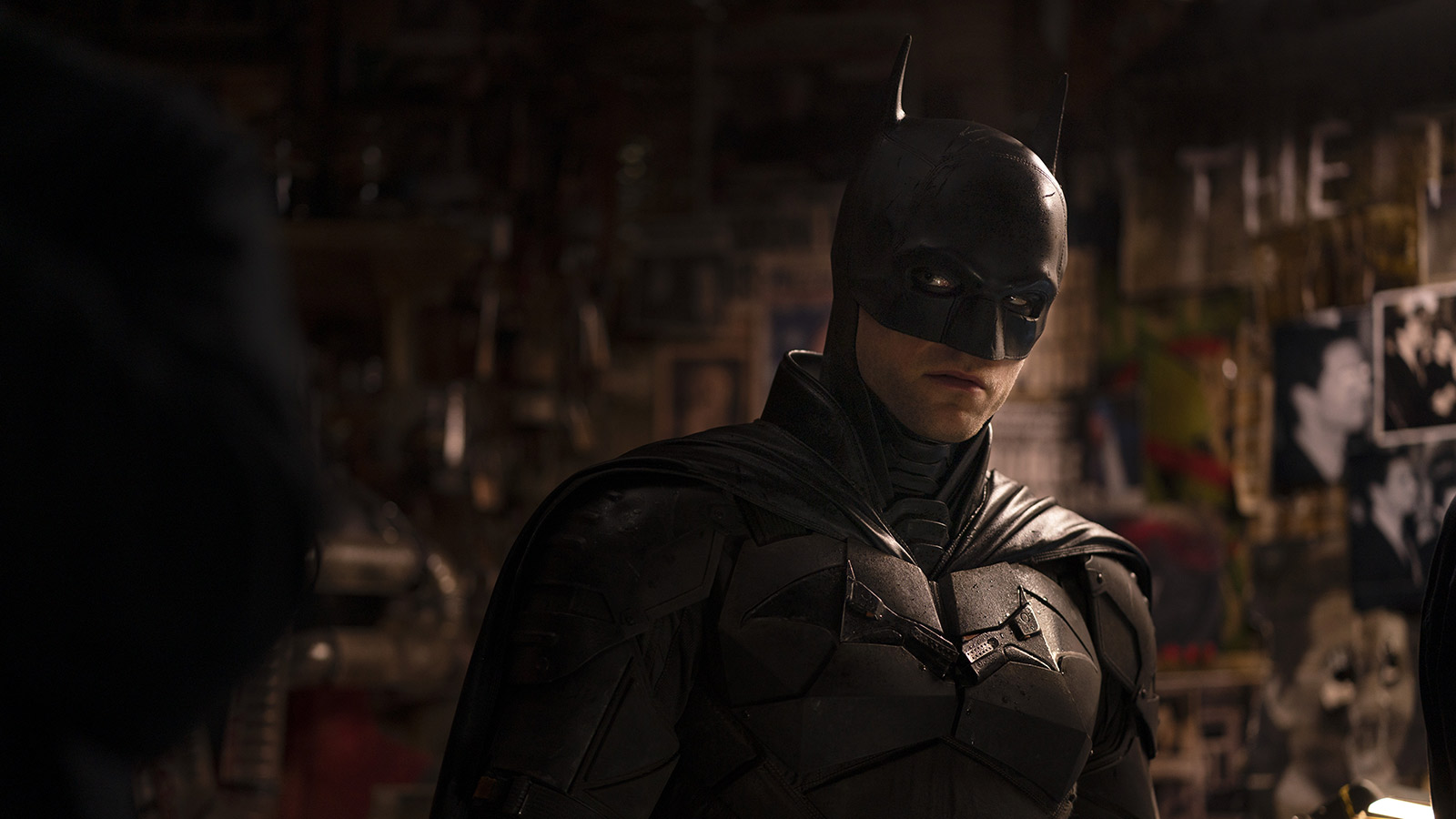

A billionaire who dresses up as a bat to strike fear into the hearts of evildoers is back on the streets of Gotham. This time Robert Patterson is in the batsuit in the sixth film featuring the caped crusader in the last decade alone.
Batman has been on screen in numerous iterations since the 1940s but audiences seem to not have had enough quite yet. The Batman sold US$8 million (£6 million) worth of tickets worldwide on the first day of sale and earned US$128.5 million on its opening weekend.
From the campy 60s Batman to the darker later versions, each Batman film is a curious cultural artefact reflecting the time in which it was made. It is maybe how they have changed with the times, allowing for an idiosyncratic vision of the Dark Knight by each director, that offers plenty of variety within a single franchise and keeps audiences interested.
The two Batman serials released in 1940s cinemas followed in the filmed tradition of other comic book heroes of the time, such as Flash Gordon and The Phantom. They were episodic adventures that spoke to contemporary second world war paranoia about Japanese spies and new technology.
Equally episodic were the big and small screen adventures of Batman in the 60s. The Batman series was closely tied to its era, featuring references to pop culture, and appearances by pop stars. It also had the camp sensibilities that were developed in 1950s comics.
While the more tongue-in-cheek TV series is lambasted by fans who prefer a more serious Batman, this was in keeping with a comic where the caped crusader fought oversized gorillas, found himself turned into a giant or covered in zebra stripes. This is when the superhero received his first feature length film. Released in 1966 between the end of the first series of Batman on TV and before the start of the second, the film shared the same cast, writer and director as many of the episodes.
Back on the big screen
Batman returned on screen in the 80s and 90s shaped by the distinct visions of different directors.
Tim Burton was the first director to show Batman (this time Michael Keaton) as a brooding, dark millionaire with a tragic origin story that spurs him on to seek justice and vengeance. Batman (1989) and Batman Returns (1992) showcase the director’s interest in the “violent and graphic nature of certain fairy tales”. Audiences would find out the origin of the Penguin in the sequel, which was like something out of the German children’s story Struwwelpeter – an orphan thrown into the sewers, to be raised by escapees from an abandoned zoo.
Burton’s films also reflect a generation when Batman comics were drawn by idiosyncratic creators such as Frank Miller and Marshall Rogers, who the film’s writer credits as influences. And Batman’s production design in turn influenced contemporary Detective Comics.
The late 80s and early 90s were also a period where cinema adopted the chiaroscuro (high contrast lighting) and fashion of pop videos, which is reflected somewhat in the Bat-films of this period. The writer Kay Dickinson noted the “MTV aesthetic” in Batman Forever.
You can see this influence on Burton’s films with prominent sequences scored by Prince and Siouxsie and the Banshees. One song by Prince is used in full in Batman for a pseudo musical number featuring the Joker.
In contrast, Burton’s successor leaned back towards the camp and bright colour scheme of 1966. Joel Schumacher’s Batman Forever (1995) and Batman and Robin (1997) starring Val Kilmer and George Clooney respectively, were considerably more “garish, neon-coloured, in your face” than the previous two films. This perhaps goes hand in hand with greater LGBTQ+ visibility in 90s cinema and, before the more po-faced Batfilms of the 21st century, gave Batman and Robin a “defiantly queer victory lap”.
However, many fans consider the 1997 sequel as “the worst film of all time”. One critic called it “so bad as to be utterly incoherent”. Because of this, the franchise would follow a similar pattern to contemporary Bond movies, in which a “silly but entertaining” film was followed by a gritty reboot as Christopher Nolan seized the reigns.
A grittier 21st century Bat
Christopher Nolan’s Batman trilogy (2005-2012) brought a degree of realism to his vision of The Dark Knight, while still being somewhat “demented” when portraying familiar villains. This was a period when superhero films would reflect contemporary concerns about the “threat of terrorism or the financial crisis”.
Not wishing to lose this quality, the first three films featuring Ben Affleck’s Batman kept a hint of darkness while also interacting with more colourful DC Comics characters in Batman v Superman, the Suicide Squad and the Justice League. However, the overall look and tone of these films were designed to contrast with the “broadly appealing pop sensibility” of contemporary Marvel films, with director Zach Snyder’s vision suggesting “negative, bleak, or cynical outcomes (make) more authentic fiction”.
The Batman director Matt Reeves has a reputation for juggling a sense of realism with a comic book aesthetic. All the gadgets and gear is there but, as one critic notes, Reeve’s take is more of a “70s crime drama than a soaring and transporting blockbuster”.
So it seems this iteration is a contemporary remix, which sits somewhere between the pop sensibilities of certain instalments, and the neo-noir of others. Patterson has also been praised for playing a Batman “with an appealing vulnerability, a well-meaning philanthropist buckling under the weight of white guilt” – a Batman for our times.
Written by Alex Fitch, Lecturer and PhD Candidate in Comics and Architecture, University of Brighton
This article is republished from The Conversation under a Creative Commons license. Read the original article.