













The global appreciation of West Africa’s Afrobeats music has grown significantly in the last decade. Afrobeats stars are touring the world, racking up record sales, winning awards and collaborating with big-name international artists.
In fact, seven of the nine African artists nominated for a 2022 Grammy Award – one of the world’s most sought after music awards – are West African. Most of these make music driven by Afrobeats sounds. Afrobeats is a broad, generic term for African contemporary popular music with rhythmic and harmonic influences of West Africa’s highlife and Afrobeat traditions and Euro-American funk and hip-hop.
For the 2022 edition of the Grammy Awards, Nigeria’s Wizkid is nominated twice – for best global music album and best global performance. Wizkid won his first Grammy Award in 2021 for the video of Brown Skin Girl, a track he made with US superstar Beyoncé.
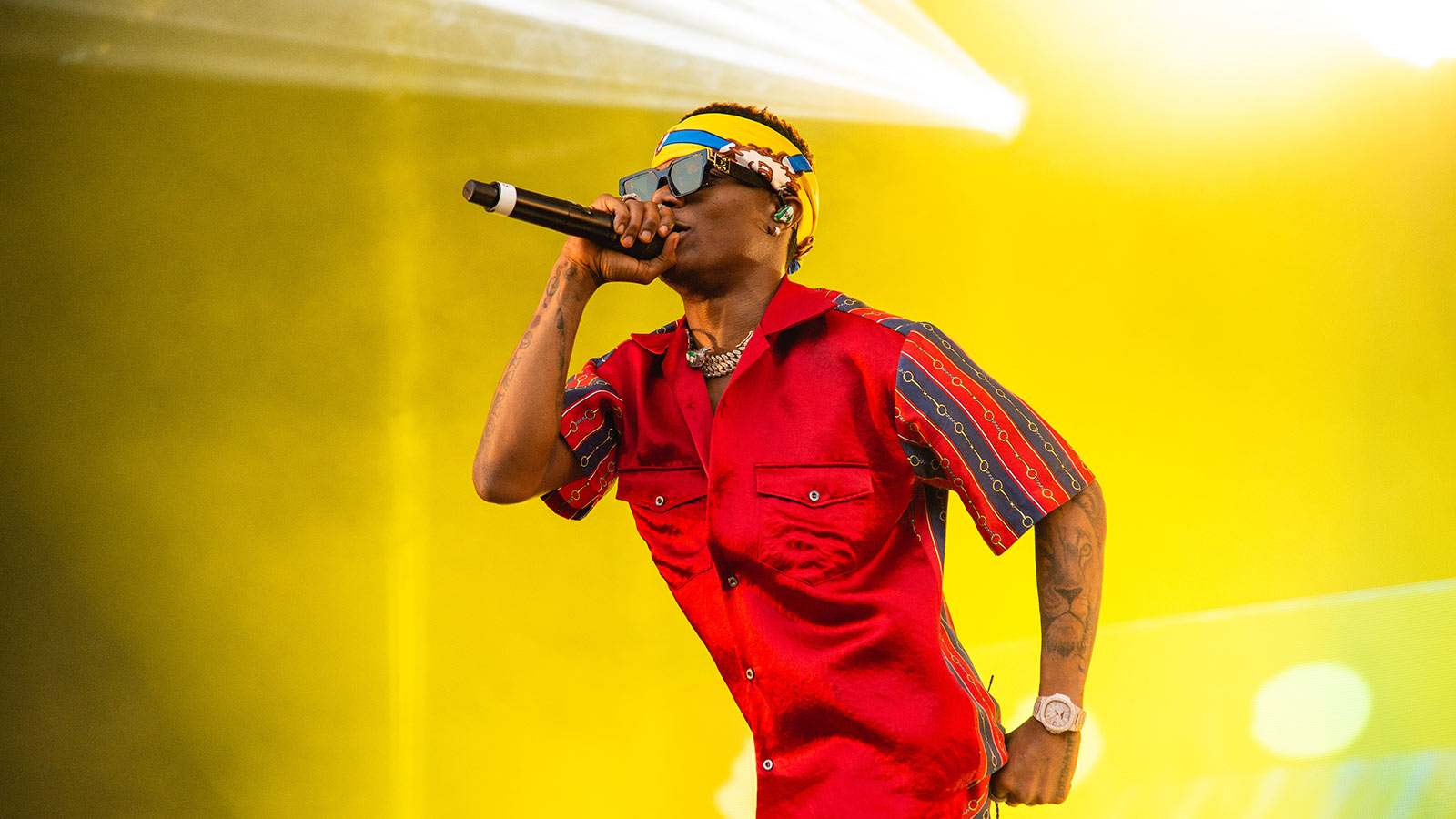
The 31-year-old stands out as a leading Afrobeats artist from Nigeria whose music has already made a huge sway on the charts of many countries. Wizkid boasts over 32 hits, more than 70 music awards, 50 singles and four albums, as well as sold out concert performances across Africa, Europe and America. As a result, he commands a fan base of more than 30 million combined followers on Twitter, Facebook and Instagram.
His songs straddle the rhythmic texture of Nigerian pop that connects with West African diaspora communities across the globe. And when it comes to his career, he set his eyes firmly on America and strategically propelled himself to global fame.
Career
Wizkid was born Ayodeji Ibrahim Balogun on 16 July, 1990 in Surulere, Lagos State, Nigeria. He started singing and recording music at the age of 11 in a group called the Glorious Five. He joined Empire Mates Entertainment record label in 2009.
The songwriter, singer and performer worked hard in the early days of his music career in Nigeria’s highly competitive industry. In one of his hit songs, Ojuelegba, he narrates his experience at Mo’Dogg studio in Lagos, where he toiled for a better life. He became famous in Nigeria in 2011 after the release of his debut album titled Superstar. The album opened up many more live performance opportunities.
As a young star who foresaw his music traveling beyond Nigeria, Wizkid seized every opportunity to make connections across the music world. For instance, when US R&B star Chris Brown (also famous for allegations of sexual violence against women) performed in Lagos in 2012, Wizkid was with him on stage and subsequently collaborated with Brown on the song African Bad Gyal.

Unlike some other Nigerian popular musicians, Wizkid understood the power of transnational collaboration and worked hard to align his music within the structure and texture of American hip-hop and R&B. In a 2019 interview, he is quoted as saying he did not make music just to be an African superstar.
In 2016, transnational appreciation of his music grew after his collaboration with Drake, the Canadian singer and rapper. It is a popular opinion among Nigerian music analysts and journalists that Wizkid’s collaboration with Drake marked the genesis of his global appeal.
He has since collaborated with top-notch American stars such as Beyoncé, Akon, Lil Wayne, Rick Ross and Nicki Minaj.
Sexism
Wizkid’s music career has not been without controversy. Like many of his contemporaries in the industry, he rose to fame amid worries over objectifying images of women in some of his lyrics and music videos. I have argued elsewhere that sexual objectification of women has been a useful strategy for publicity, and serves as a means of enhancing his social status and commercial viability in the Nigerian popular music industry.
Wizkid is particularly accused of emphasising and objectifying female bodies in the songs In My Bed and Expensive Shit. The public outcry against sexist messages in his music culminated in the banning of In My Bed in 2015, by the Nigerian Broadcasting Corporation. Despite this, his local and international appeal continued to grow.
Pop’s promised land
Wizkid has won more prestigious local and international music awards than any of his Afrobeats peers. He has more than 100 nominations in different categories of music awards. Some of his big wins include Artist of the Year at the 2021 Apple Music Awards, two BET Awards for Best International Act, three Soul Train Music Awards, an MTV Europe awards for Best African Act, three Billboard Music Awards – and that 2021 Grammy.
For Africa, especially Nigeria, America is the popular culture promised land. To make it in America is to conquer the pop world. And a US Grammy is the most cherished music award. Following the global spread of West African migrants that consume and promote Afrobeats, the music will continue to gain more listeners across the world as more people yearn for new sounds from Africa. Likewise, the demography of its global consumers on YouTube and Spotify grows as top record labels – such as Sony and Universal Music – sign up and promote more Afrobeats artists.
Propelled by the growing spread of Afrobeats, Wizkid has achieved global fame through a strategic set of music goals throughout his career – and has boosted his image by courting controversy and big name collaborators, infusing Western pop with African flavour in the process.
Written by Samson Uchenna Eze, Lecturer, University of Nigeria
This article is republished from The Conversation under a Creative Commons license. Read the original article.