









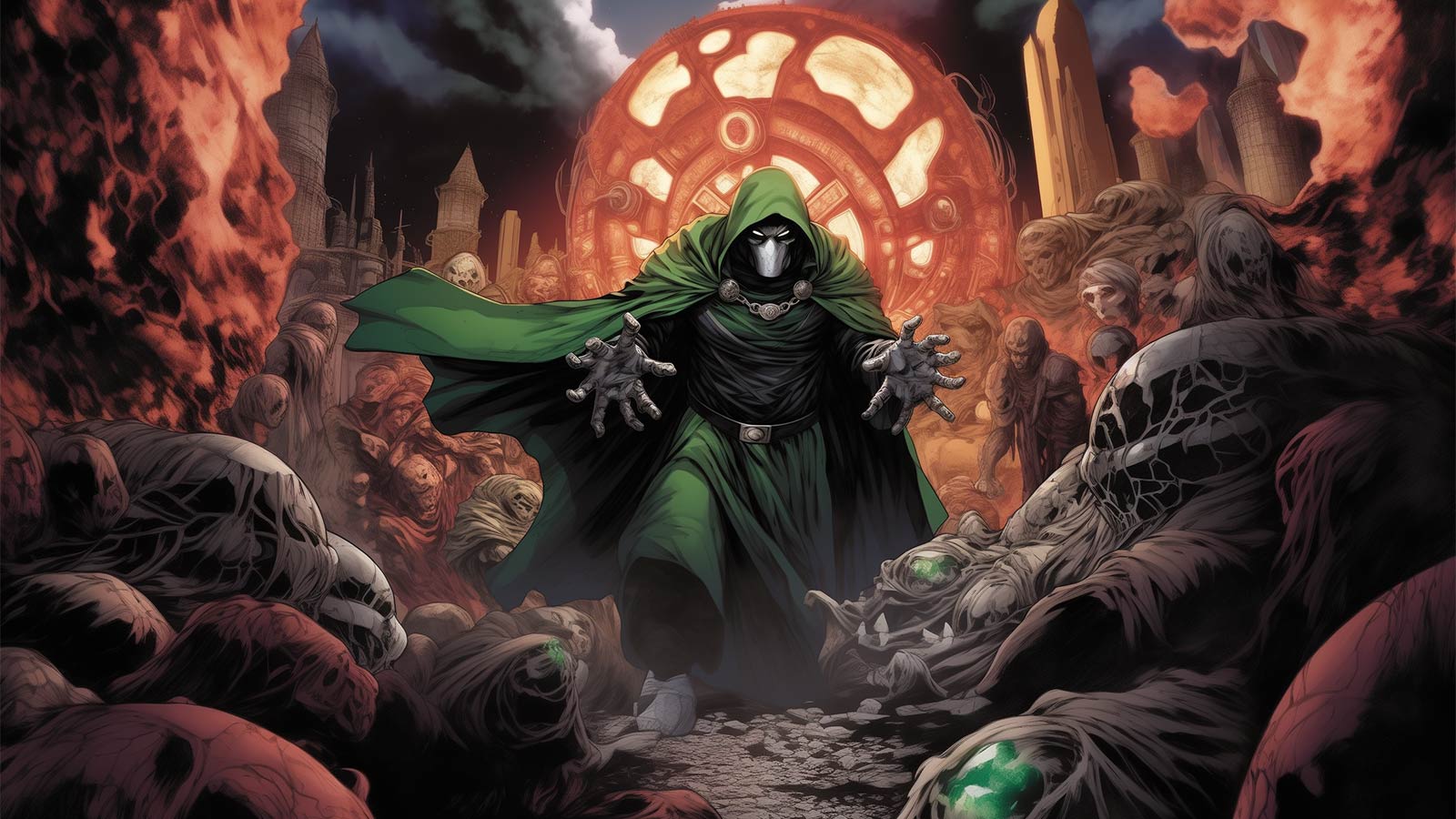

The multiverse, the idea of different universes that exist at the same time, has been a plot device on screen and in comic books for years. The success of the recently released Deadpool & Wolverine, which has already earned US$1 billion (£778,180,000) at the box office, and the excitement around Iron Man actor Robert Downey Jr’s imminent return to the Marvel Cinematic Universe (MCU) – this time as villainous Doctor Doom – show the phenomenon is unlikely to go away anytime soon.
You could track it back to Sliding Doors (1998), which cut back and forth between two different realities, showing the ways a woman’s life diverged due to happenstance. Or you could go further still, with It’s a Wonderful Life (1946) which showed a different, darker, reality if James Stewart’s character, George, had died in childhood. Or even Dickens’ A Christmas Carol, where the Ghost of Christmas Yet To Come shows Scrooge an alternate, bleaker reality where he doesn’t change his ways.
On TV, an episode of The Twilight Zone first dealt with parallel worlds in 1963 – while, in a 1967 episode of Star Trek, Leonard Nimoy played an evil version of Spock from an alternate reality, signified mainly by his facial hair.
As Marvel fans know, Downey Jr’s familiarity as Tony Stark/Iron Man means it’s overwhelmingly likely that his new role as Doctor Doom will mean the two worlds (or multiverses) colliding in some way. But we don’t know yet how the return of Downey Jr to the MCU will lead to him playing a villain.
Perhaps in this alternate universe, Tony Stark became evil because of different choices taken in his life. Or perhaps he will be playing an entirely different character – Doctor Doom masquerading as Iron Man to shock or beguile the characters that trust him.
Doom is traditionally a Fantastic Four villain, so may first appear in that forthcoming movie. As Mark Hibbert, the author of Data and Doctor Doom (2024) suggests, it wouldn’t be out of character for Doom to “swap bodies with the original Tony Stark” and “travel backwards in time to before he died fighting Thanos”.
Doom often surrounds himself with robot doppelgangers (as seen on stage at San Diego Comic-Com, when Downey’s casting was announced), so it’s not a complete surprise that this character would look like another character.
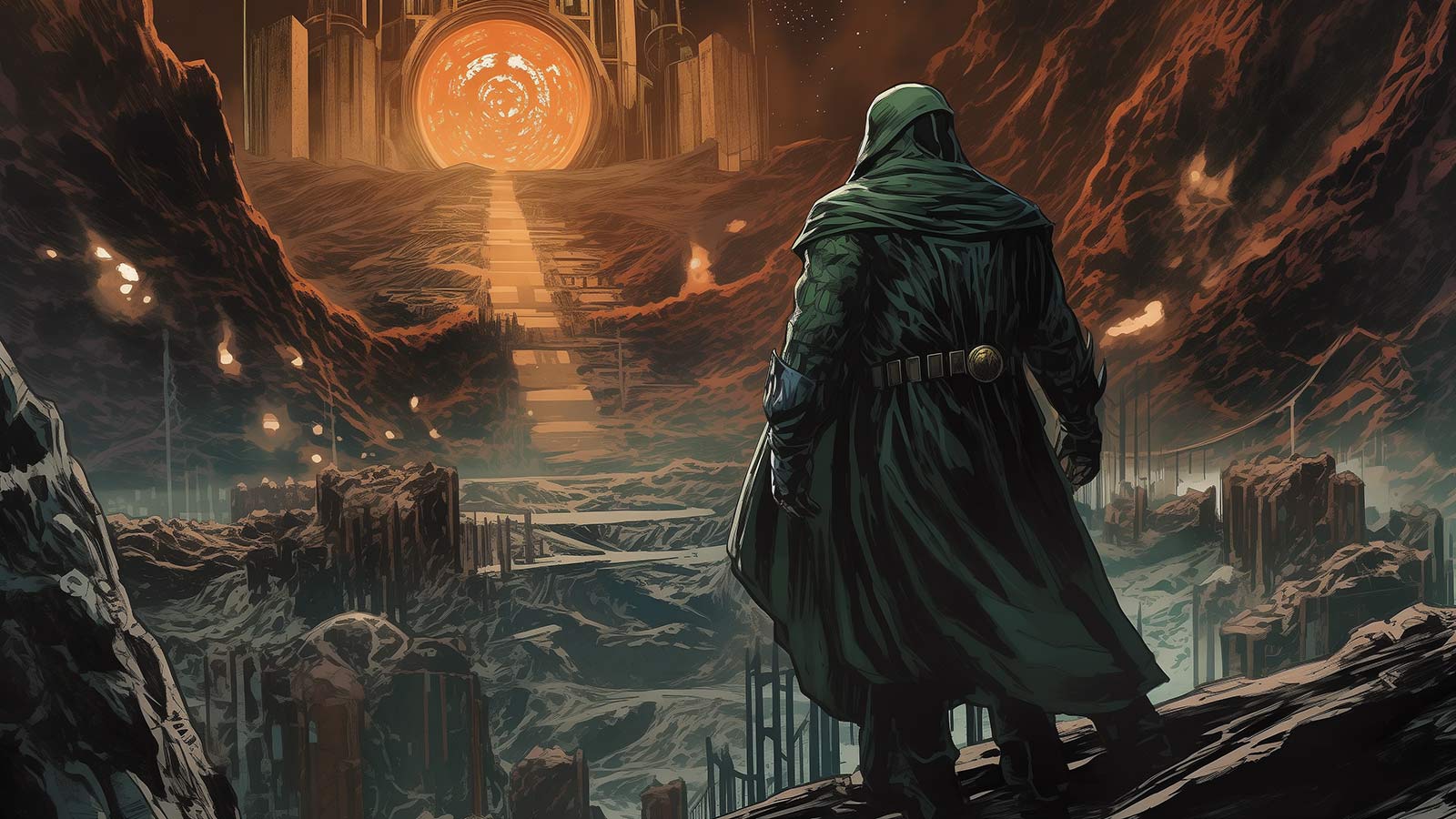
Generated by Midjourney (ArtificialThots)
Multiverse narratives and dark storylines
Multiverses hold the potential for infinite narrative freedom. This means gaining access to all possibilities, and alternatives to the mistakes of history – but multiverse stories seldom seem to work out that way.
The trope is found in various genres and media, from British comics such as Bryan Talbot’s Luther Arkwright saga (1978-2022), to novels including Adrian Tchaikovsky’s The Doors to Eden (2020) and Michael Moorcock’s Eternal Champion series (1962-2012), which coined the term.

Stepping into the multiverse is generally discomfiting and unnerving at best, and downright dangerous and homicidal at worst, as in Sarah Pinsker’s 2017 novella And Then There Were (N-One).
Travelling the multiverse leads to colonization in Stephen Baxter and Terry Pratchett’s The Long Earth series (2012). It enables corporate greed and eco-violence on an unprecedented scale in M.R. Carey’s Infinity Gate (2023). As Carey’s protagonist Essien Nkanika discovers, in the multiverse, strangeness and familiarity are twisted together, producing a feeling of sickening pressure and emotional dread.
Those who visit parallel worlds usually come back traumatized and changed – sometimes even becoming the monsters they once hunted, or tried to escape.
Often the alternate world is conveyed as an uncanny experience – Sigmund Freud’s term for the familiar made strange, an effect which “arouses dread and creeping horror”. How could it not? There is the danger of meeting another version of yourself – the ultimate doppelganger.
This notion signals the collapse of the idea of a single self, when the multiverse traveller finds themselves suffering a profound sense of otherness and displacement. These parallel worlds connect to ours in discomfiting ways, showing us our own world replaced and dislocated, where familiar landscapes hide unfamiliar threats. This theme is explored in Brian Crouch’s 2016 novel Dark Matter and the 2022 TV adaptation, where a parallel world doppelganger can steal your life.
It’s unsurprising that superheroes lend themselves so well to this scenario. These characters are already divided selves, with superhero identity frequently opposing the alter ego – think powerful Superman versus weak Clark Kent, brash Spiderman versus timid Peter Parker, obsessive and proactive Batman versus idle Bruce Wayne.
Deadpool & Wolverine also comments on the phenomenon of the same actor playing different characters in the same multiverse. In the movie, Chris Evans plays two characters. This is first used for surprise, then humour, and finally to inflammatory effect.
This isn’t a new phenomenon. DC Comics got there first in 1961, when The Flash met a doppelganger from an alternative reality. On TV, Brandon Routh played both The Atom and Superman in a 2019 episode of Batwoman, that also featured multiple Clark Kents.
The cartoon series Rick and Morty (2013-present) often returns to the plot of the characters facing evil versions of themselves from other dimensions, while their domestic life features two versions of Morty’s mother now living in the same house.
The multiverse brings new twists and turns to comic book sagas on screen and in print, and allows reboots to be folded into the same narrative (as seen in Spider-Man: No Way Home, 2021) which helps a film studio, reuse, revive and advertise their back catalogue.
Since cinema-goers are currently voting with their feet for this narrative style, we should expect to see many more multiverses to come. But don’t be surprised when the consequences of visiting these parallel worlds turns increasingly dark.
Written by Alex Fitch, Lecturer and PhD Candidate in Comics and Architecture, University of Brighton and Julia Round, Associate Professor of English and Comics Studies, Bournemouth University
This article is republished from The Conversation under a Creative Commons license. Read the original article.