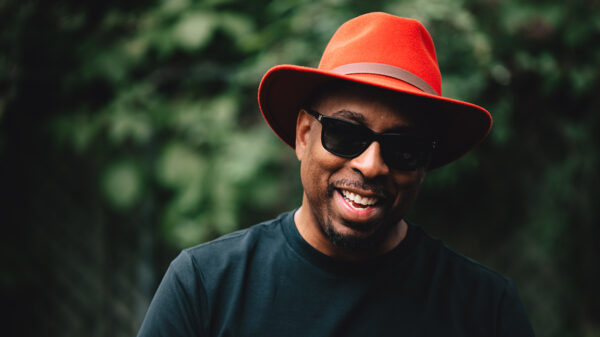








Usually when a rap artist comes out with a new album, it’s released by a record label as part of their career as an entertainer. For Dr. A.D. Carson, a professor of hip-hop at the University of Virginia, his latest album – “Owning My Masters (Mastered): The Rhetorics of Rhymes & Revolutions” – represents a capstone in his academic career.
Published and released in October 2024 by University of Michigan Press, the album and digital archive features two volumes of hip-hop music, an annotated timeline, several videos and a digital book. The album – originally submitted to Clemson University in South Carolina as Carson’s doctoral dissertation – has been mastered. In the following interview with The Conversation U.S., Carson explains the significance of the project and what it means for hip-hop in the world of academe.
‘Owning My Masters’ seems like a deep play on words. Is it?
Yes. The Latin word “magister” was used to describe a master or teacher in ancient Rome. I earned a master’s degree before enrolling in my doctoral program, so I own that. People probably know that the final step in the process of composing an album is called mastering. In that process, a master version of the recording is created. This is what gets duplicated and released on streaming services, vinyl or whatever way you receive music.
It’s not always guaranteed that an artist owns the rights to those recordings, but I own all of my music.
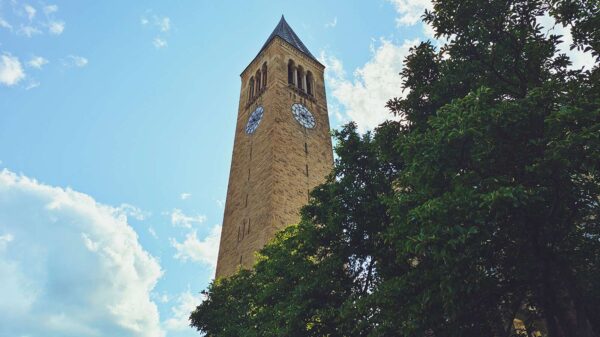
Also, the album was written in South Carolina at Clemson University, which is located on a former plantation owned by the slaveholding U.S. politician John C. Calhoun. Buildings there are named for people who had owned, enslaved and trafficked people; fought in the Civil War to preserve the right to traffic people; and lynched Black people. Earning a terminal degree from a place with that kind of reprehensible history seemed like a way to figuratively own those so-called slave masters and so-called masters and teachers.
Who is your audience for this album?
I’m always thinking about multiple audiences. For lovers of hip-hop, the album demonstrates the power and promise I feel listening to albums that have influenced me. For academics, I believe it is the future of research. Academic credentials have been used by folks to perpetuate the idea that expertise looks and sounds a certain way, and this project infiltrates that system to disprove that idea.
If you’re interested in learning about hip-hop, academia and how arguments are made, the album can be instructive, challenging, entertaining and educational.
The album had to pass through a doctoral dissertation defense committee and then academic peer review. But before then, I posted drafts on SoundCloud to get feedback from regular folks who use that site to listen to new music.
What kind of themes does the album address?
My Ph.D. is in rhetorics, communication and information designs, so it’s also about rap rhetorics – including emphasis on the local and how hip-hop can preserve information like histories and counter-histories.
Since I had moved to Clemson, and was feeling anxiety about leaving home in Illinois, I wrote “Dissertation (Part 1: The Introduction)” early on in the process. And because I lived in that South Carolina college town, “See the Stripes” is a song about Clemson’s history and its present. The song and its video moved through Clemson’s communities, but then, as protests were happening on campuses across the world, it found national and global audiences with whom the subject matter resonates. When students were finally able to get Calhoun’s name removed from the honors college in 2020, they acknowledged their work was continuing efforts since “See the Stripes.”

More generally, the album is about form and content. With its form, it demonstrates knowledge production using hip-hop creative and compositional practice. The contents interrogate ideas of home, history, historical imagination, citizenship, political contradictions, race and humanness.
The album is presented in chronological order from the time I arrived on campus in 2013 until I finished my coursework and submitted the 34-song project to my dissertation committee.
How would you measure its success?
I would say earning a Ph.D., earning tenure and having the album count as my academic work qualify as success. Those are things that sound kind of selfish, but I think are incredibly significant for hip-hop and for the ways we think about expertise and success in the culture.
To me, success is being able to make a living creating challenging and thought-provoking music that doesn’t have to abide by traditional notions of success like sales charts or commercial music awards. I also measure success by the inquiries and applications of students who want to do similar kinds of critical thinking and making. When those people are able to launch and sustain careers, that’s a measure of success in my eyes as well.
Why haven’t we seen more albums in academia?
Change in academia comes at a glacial pace, it seems.
Audiences associate expertise, especially regarding subjects that are considered academic, with how people have demonstrated their understanding of the matters in writing, like traditional theses, dissertations, books and essays. I believe this is connected to the histories in the U.S. that link credibility with formal education and literacy. This is difficult to separate from the history of Black folks being legally prohibited from learning to read.
While music has long been one of the ways information is recorded and passed from one generation to the next, in my experience, music itself is still not taken as seriously as a form of scholarship as writing books or essays about music.
These previously excluded forms of scholarship can change the ways people regard academia. In my mind, music sits alongside other scholarly forms that emphasize academic prose. I believe universities should make space and resources available for students to explore it the same way. More generally, I think citing more albums as scholarship – the same way journal articles and academic monographs are cited – would also be transformative.
Interview with A.D. Carson, Associate Professor of Hip-Hop, University of Virginia
This article is republished from The Conversation under a Creative Commons license. Read the original article.