







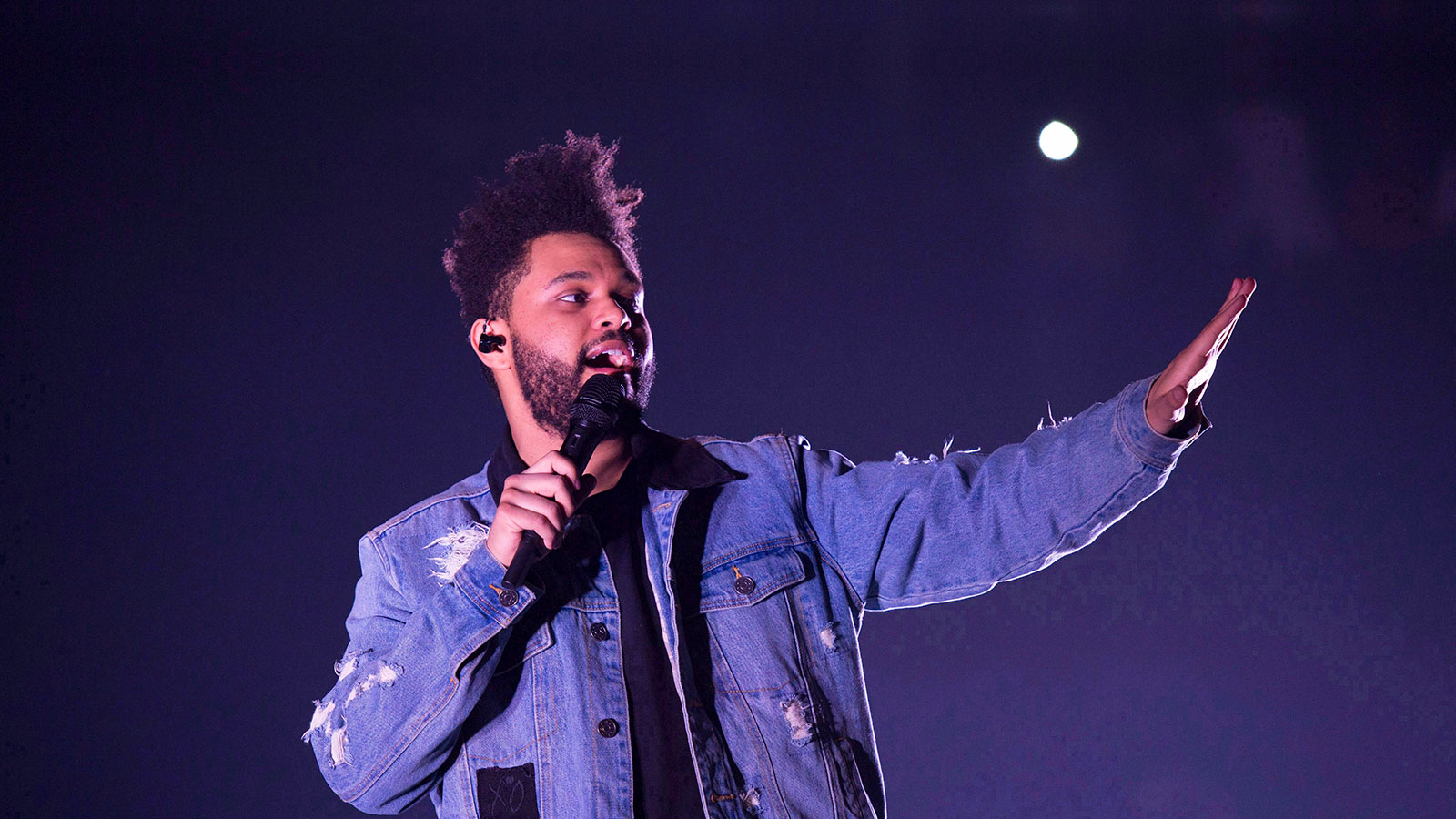
Current trends in male singing offer strikingly different visions of what it means to be a man. Consider, for instance, spectacular falsettists like the Weeknd, who will headline the 55th Super Bowl halftime show on Feb. 7, and the reassuring choruses of sea shanties currently trending on TikTok. What can these singing styles tell us about being a man in 2021?
During the ongoing coronavirus pandemic, our longing for an embodied connection has grown intensely, and ShantyTok offers collectivity through group singing in a time when we are all isolated. The ShantyTok trend started with a Scottish postman creating harmonies with his own tenor voice in “The Wellerman,” a 19th-century song created by merchant seamen longing for the arrival of the Weller company man who would bring supplies.
Taking advantage of TikTok’s collaborative possibilities, an American teen joined in, doubling the melody two octaves lower. Between them, Nathan Evans and Luke the Voice carved out the upper and lower ends of the conventional male range, making space for innumerable others to join in.
The sea shanty tradition is embraced as wholesome, and nostalgic for simpler times, like a sonic equivalent of “dad bod.” However, many of these songs originated in slaving ships, and the Wellerman’s “sugar, tea and rum” were commodities gained through plantation labour and part of the triangular slave traffic. In professional sports likewise, Black athletes’ labour can be exploited, and athletes are “owned” by their teams.
Participating or watching
Sea shanties are musically appealing, with simple melodies, triadic harmonies and lots of repetition that invites participation, even upon first hearing. The pleasures of group singing involve dissolving into a collective.
Falsetto singing, on the other hand, signals rupture, and the transcendence of restrictive boundaries. The technical demands of falsetto singing represent the heights of individualism, placing the listener squarely in the position of passive spectator.
Historically, men who sing high have portrayed heroic, noble and powerful characters on the opera stage. The appetite for high voices paired with men’s bodies drove the castrati phenomenon. These opera stars were male singers who had been surgically prevented from going through puberty, resulting in a high vocal range combined with an adult’s build and lung capacity. Remarkable singers like Farinelli played roles such as Julius Caesar, to acclaim that seems strange at this later point in history.
Popstars at the Superbowl

The Super Bowl is the modern world’s largest spectacle, and the halftime show is the most viewed musical performance in any given year. While English football is notorious for fan singing, including shanties like “Sloop John B,” American football presents music as a spectacle to be watched instead. The halftime show has been central to enhancing the appeal of the National Football League beyond its American, male fan base.
Up through the 1990s, the show featured local music and ensembles like marching bands. All shows before 1991 involved a team of performers, often presenting a medley of regionally themed material.
The first pop superstar act was New Kids on the Block, a pop ensemble whose sound and image offset the manhood offered by burly team players engaging in a violent contact sport on the field. Aiming to appeal to international audiences of all ages and genders, the group’s performance was framed by a children’s choir singing “We Are the World” and “It’s a Small World.”
Strikingly, NKOTB performed “Step by Step,” rather than their more familiar hit “Hangin’ Tough,” even though this song’s theme, complete with unison chanting in a low range, would seem more in line with football manhood.
Still, their success paved the way for more superstar performers, including Michael Jackson, U2 and the “Nipplegate” incident with Janet Jackson and Justin Timberlake in 2004. This infamous event was followed by safe, legacy acts like Paul McCartney, the Rolling Stones and The Who.
The vocal prowess of falsetto
American football revolves around strength, power and dominance in the context of a team of men, yet this year’s halftime entertainer will present a singer famed for his soft, floating voice. The Weeknd’s virtuosic display follows a long line of Black male falsettists: Maxwell, Prince (who ditched his falsetto to perform at the 2007 Super Bowl) and Marvin Gaye.
This style comes from African American gospel singing, exemplified by Sam Cooke’s soaring voice trying to break free of earthly constraints and everyday indignities.
Yet the Weeknd’s vocal agility has a parallel in the prowess of football’s skilled position players. The gravity-defying receptions of wide receivers, along with the acrobatic manoeuvres of running backs, get the most play on post-game highlight shows. These spectacular feats are enabled by the grunt work of linemen, who are paid less and regarded less than the stars they support. Just as seamen’s singing helped them work together in rhythm, the timing, execution and teamwork of largely anonymous linemen is essential, if unglamorous.
These versions of manhood need not be in competition: they show us clearly that there are many ways to be a man. The inclusion of a falsettist within the macho world of American football may indicate that we are ready for a fuller range. We need the fragile and the strong, the chorus and the star, the lineman and the touchdown maker, to embrace all kinds of men.
Written by Jacqueline Warwick, Professor of Musicology, Dalhousie University and Steven Baur, Associate professor of musicology, Dalhousie University
This article is republished from The Conversation under a Creative Commons license. Read the original article.