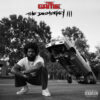









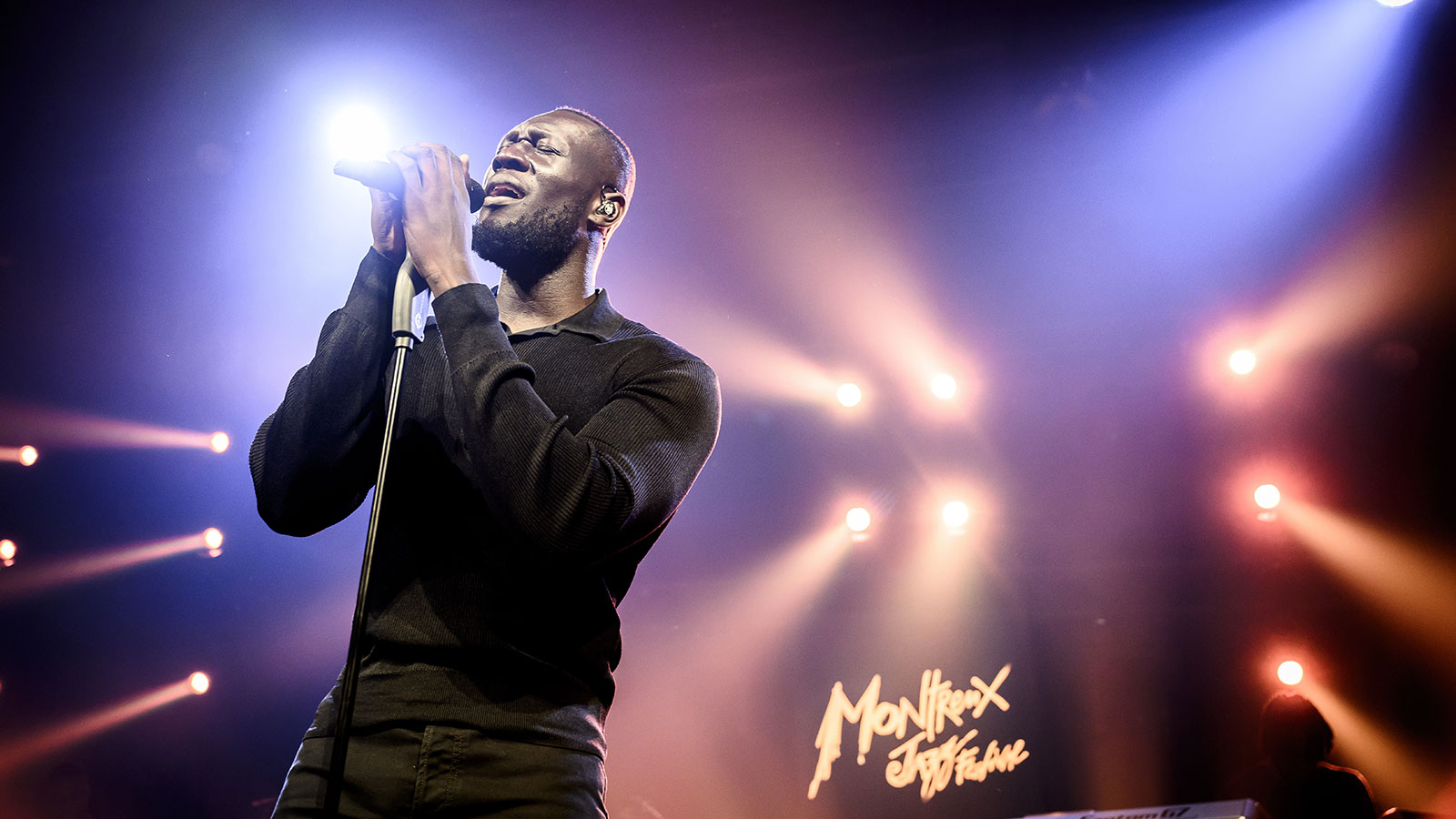

From the beginning of his career, Stormzy has unapologetically shared his spiritual journey as a central part of his artistry. On his latest album, This Is What I Mean, Stormzy fuses his spiritual worldview with the day to day issues that are most important to him.
Songs such as Give It To The Water and Holy Spirit continue his conversations about faith in his music.
Stormzy is not alone in making art at the crossroads of popular culture and religion. Other contemporary examples include artists such as Dave and Chance the Rapper. Despite the decline in commitment to organised religion in the UK, religious symbols, ideas and themes remain present in popular music.
The decline of Christianity
Between 2011 and 2021, the number of people in England and Wales stating they have “no religion” increased from 25% to 37%. Recent census data also shows that for the first time, less than half the population now describe themselves as Christians. This change could be interpreted as reflecting a lack of commitment to spirituality in society, or disenchantment.
Disenchantment is a term popularised by the sociologist Max Weber. It describes the western world predicted to exist once science and rationality dissolve the need for spiritual and religious beliefs. An enchanted worldview, meanwhile, is open to the existence of a spiritual realm.
The decline in commitment to organised religion does not necessarily equate to a rise in atheism, nor does it automatically indicate an aversion to religion.
In This Is What I Mean, Stormzy works through his spiritual journey without adopting an evangelistic tone. This may carry an appeal to those who are not committed to a tightly organised church but have a curiosity about, or sensitivity to, spiritual matters.
The age of authenticity

Stormzy grew up attending church – his mother was a Pentecostal minister in Streatham, London. He has no hesitation in bringing his team together for prayer before their shows and his songs (though often dealing with everyday issues) contain quotations from the bible.
In Blinded by Your Grace Stormzy (speaking of his relationship to God) states, “it’s not by blood, and it’s not by birth, but oh my God, what a God I serve”. He is indicating that he has been “adopted” by God, a direct reference to John 1:13.
Many of the musicians and singers Stormzy uses come from a church background and he readily uses gospel choirs in his performances. All of these choices reflect the enchanted worldview from which he operates.
But it would be a mistake to assume that Stormzy is positioning himself as a representative of the church because of his overtly Christian spirituality. Instead, through his artistry, Stormzy acknowledges the tension between his spiritual commitment and his own self-confessed shortcomings. In Holy Spirit, he sings, “although I’m far from perfect, I need you [God] to hold me close”.
Stormzy could be considered a representative of what philosopher Charles Taylor has termed The Age of Authenticity. This is the idea that “everyone has their own particular way of being human and you can either be true or untrue to that”.
In an age of authenticity, people seek to find greater spiritual depth than can be offered in a disenchanted world. Instead of conforming to the models imposed by others, each person expresses their humanity (and spiritual commitments) in the way they choose.
The very title of Stormzy’s album, This Is What I Mean, can be interpreted as a reflection of this expressive age of authenticity.
His lyrics about faith are often conversational. “If you knew the burdens, the burdens are so heavy”, he sings on Holy Spirit, “but Lord, you made me ready, to carry all my burdens”. This testimonial style of writing reveals a very personal spiritual journey that Stormzy happens to be sharing with the world through his music.
Cynics may suggest that the continued focus on spiritual issues is similar to the trajectory of some American rappers. Although his behaviour does not appear to be in keeping with the spiritual values he professes, Kanye West has met with much commercial success in his gospel music ventures, indicating that there is a market for this type of music.
But there is nothing to suggest that Stormzy has ulterior motives for foregrounding the spiritual aspects of his music.
Spirituality in a post-Christian era
This Is What I Mean enters UK pop culture at a time when gigs and personal listening through streaming services have become new sites for spiritual experience.
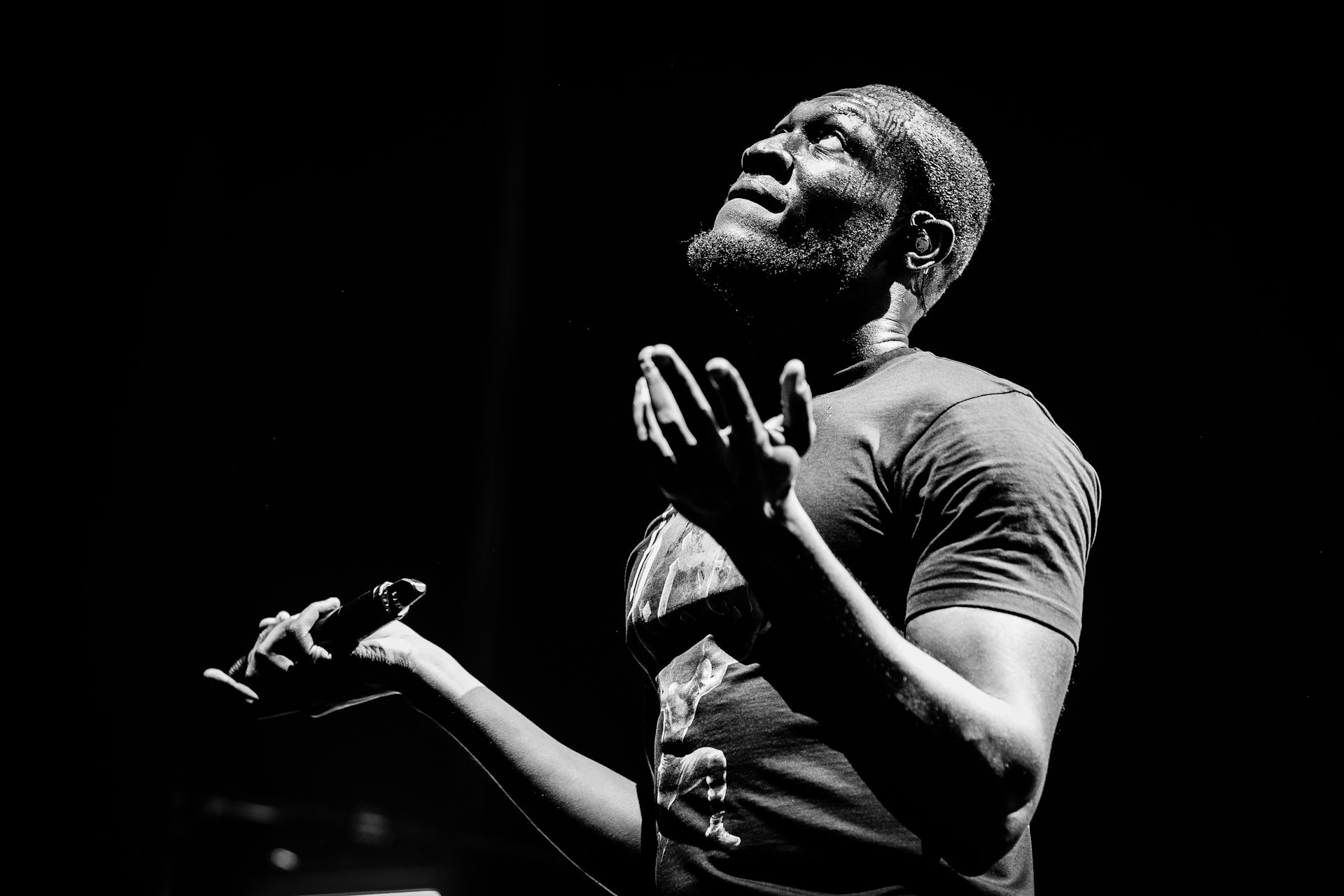
Stormzy looks to the skies as he performs in Amsterdam in February 2022. (Ben Houdijk)
The UK is firmly in an era of post-Christianity where belief in God is no longer a default. Instead, multiple avenues for belief are available. Stormzy’s album offers an opportunity (without being preached at by a specific church or religious organisation) to consider an alternative to the disenchanted worldview.
Written by Matthew A. Williams, Lecturer in Music, University of York
This article is republished from The Conversation under a Creative Commons license. Read the original article.