













Following the global success of down-under comedies What We Do in the Shadows and Flight of the Conchords, Antipodean humour has quickly become associated with the deadpan and self-deprecating. Natalie Bailey’s 2024 directorial debut Audrey is a welcome – albeit more barbed and prickly – addition to the genre.
Tightly paced, with an excellent script by Lou Sanz, Audrey is clearly influenced by PJ Hogan’s 1994 hit Muriel’s Wedding. Like that Australian classic, Audrey revels in the absurd. It pokes fun at domesticity and family life, while simultaneously acknowledging them as a source of profound disappointment for many women.
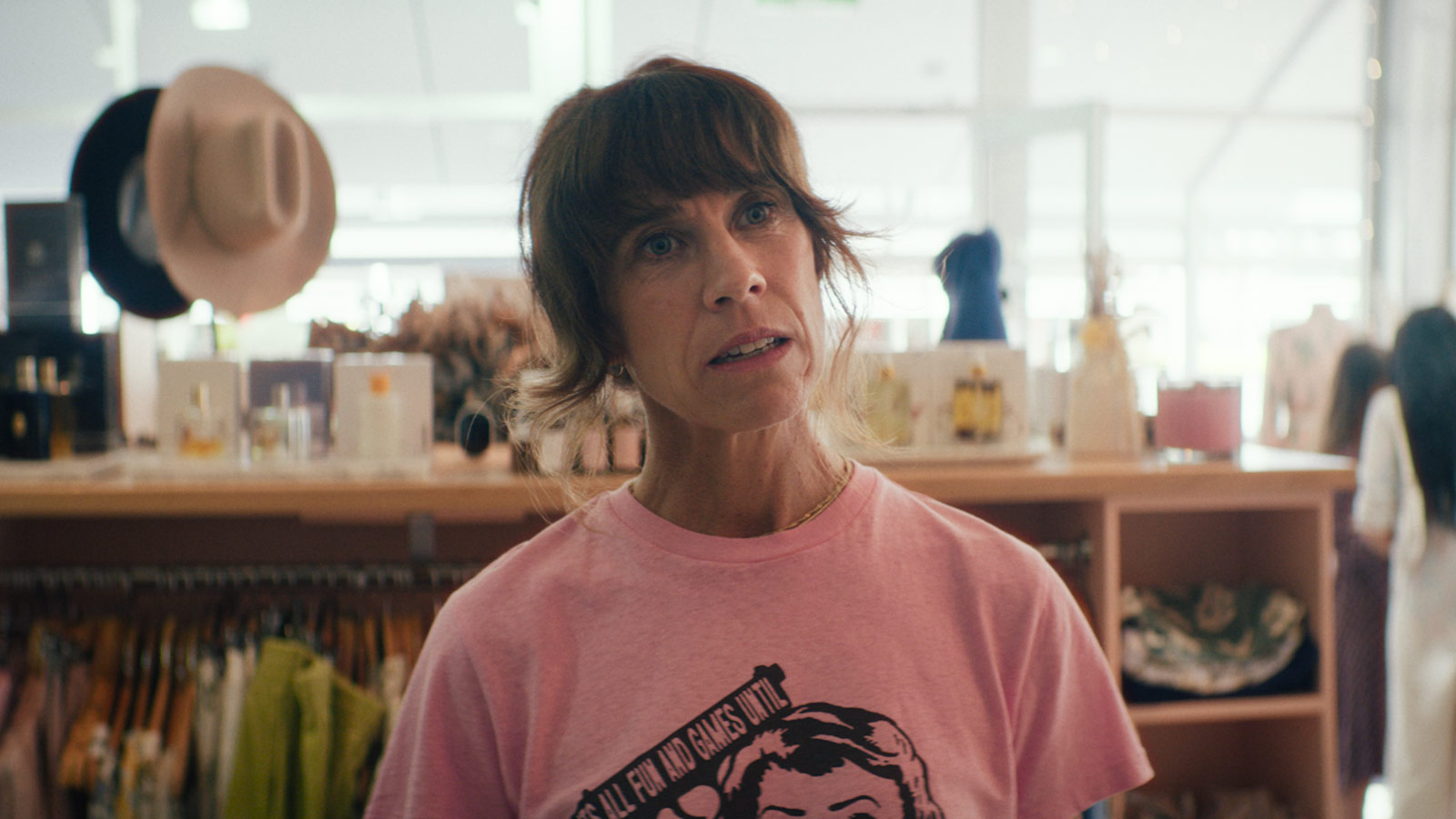
The film stars marvellous Kiwi actor/writer/director/producer Jackie van Beek as Ronnie Lipsick, a washed-up TV actress and self-proclaimed mother of the year. Once mildly famous herself (“I had a two-episode arc on Neighbours”), Ronnie’s life now revolves around cultivating the acting career of her “very, very special” eldest daughter Audrey (Josephine Blazier).
This comes at the detriment of her mopey handyman husband Cormack (Jeremy Lindsay Taylor) and sharp, sarcastic younger daughter Norah (Hannah Diviney). Norah, who has cerebral palsy and uses a wheelchair, is reliant on a largely unreliable family.
Audrey is bratty, spiteful and selfish
The first 20 minutes establish the titular Audrey as bratty, spiteful and selfish. She blackmails her father after catching him in flagrante with a sex toy, capitalises on her sister’s disability, and self-righteously proclaims she’s going to Nepal with her equally awful musician boyfriend “to do something amazing with our white privilege”.

When Audrey falls off a roof and goes into a coma, life gets better for the Lipsick family.
So perhaps it’s unsurprising that when Audrey faceplants off the roof of the family home during a teenage sulk, and falls into a coma, the Lipsicks find their lives taking a turn for the better.
With Audrey out of the picture, Ronnie assumes her daughter’s place in a teenage acting masterclass. Cormack gets his mojo back while working for a boutique film studio specialising in “niche marital aids for Christian couples”. Even Norah benefits, as her parents now have more time for her and more money for her to pursue wheelchair fencing.
Although played for laughs, like all good black comedies, the unexpected plot point raises morally ambiguous questions. In this instance, the questions are about modern motherhood, family life and regret.

Writer and disability activist Hannah Diviney plays Norah (centre), Audrey’s sarcastic younger sister.
The high expectations of motherhood
Sociologist Sharon Hays famously said contemporary motherhood is governed by an “ideology of intensive mothering” that requires women to be self-sacrificing and all-in. Intensive mothering is expensive, time-consuming and usually framed as straight, white and middle-class.

The film parodically displays many of the familiar hallmarks of modern motherhood. It opens with Ronnie kitted out in high-end active wear, juggling housework with her home acting coach business, which she began after giving up her career to prioritize Audrey’s.
At first glance, Ronnie might be mistaken for the fetishised “yummy mummy” or the neoliberal “mumtrepreneur“. But van Beek’s slightly desperate and manic performance quickly subverts these expectations.
Rather than propping up an idealized version of motherhood, the film joins the ranks of other “mom-com” shows that mine maternal failure for comic relief. This is becoming an increasingly common trope in popular culture, wherein mothers’ dissatisfaction, disappointments and failings are often reduced to laughs.
Audrey, however, resists this via its use of a much darker comedic tone that encourages us to linger on these taboo topics.

Audrey forces us to question the high cost of motherhood, and if it’s always worth it.
Maternal regret
The removal of the spoiled daughter throws the parents’ pressures into sharp relief. This is underscored by an exuberant montage cutting between a comatose Audrey and her surviving family members joyously living their best lives. A guilty Ronnie asks Cormack: “Isn’t it nice, just you, me and Norah? Isn’t that bad?”
While maternal regret is a taboo topic, popular productions such as HBO’s series Big Little Lies and Netflix’s film The Lost Daughter have helped normalise this previously unspoken phenomenon. Despite obvious differences in tone and form, Audrey also provocatively asks whether life might be better without one’s children around.
It’s no spoiler to reveal Audrey eventually wakes. From here, the film leans into familiar horror tropes, pitting the monstrous mother head-to-head with her sadistic, evil child. There’s a poisoned lemon tree, dead birds and psychedelic intercuts of stage actors wearing animal heads.
The increasingly surreal ending refuses a moral resolution. This suits the film perfectly. The alternative would compromise the film’s deliciously dark humour and risk silencing the shocking possibility that a mother might not just regret having children, but might actually be worse off as a result.
While Audrey may be too much for some viewers, others will no doubt welcome it as an important addition to the spate of texts featuring regretful mothers – served up with a distinctly Antipodean flavour.
Audrey is in cinemas from November 7.
Written by Rachel Williamson, Senior Tutor in English, University of Canterbury
This article is republished from The Conversation under a Creative Commons license. Read the original article.