










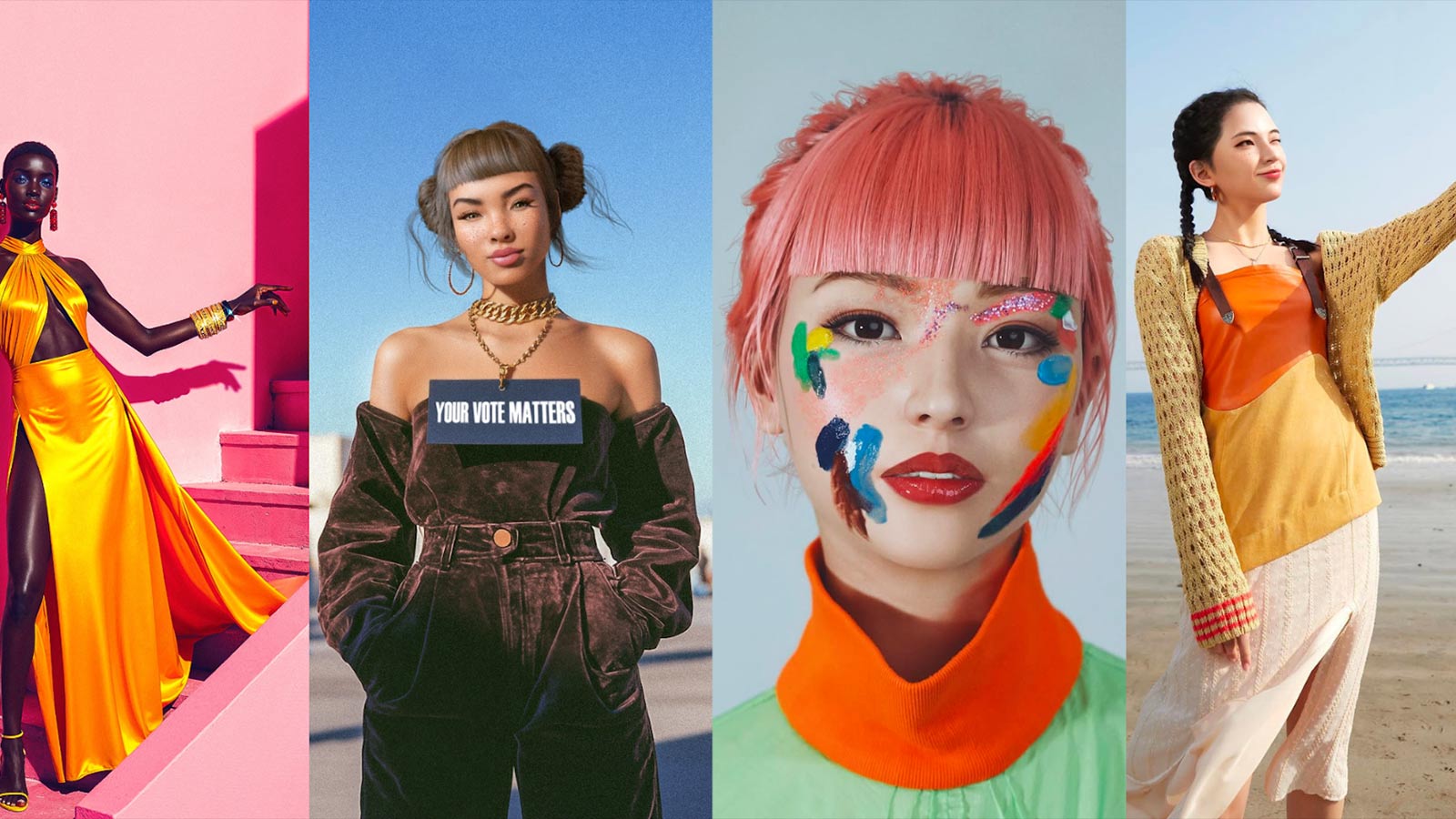

TLDR: AI-generated influencers are gaining popularity, but many are designed as young women of colour by marketers outside their racial identities. This raises ethical concerns about digital identity, cultural exploitation, and authenticity in social media.
You probably know what an “influencer” is — people with large, highly engaged social media followings who have the power to sway beliefs and purchasing decisions.
But you might not have yet heard of virtual influencers.
They’re like human influencers … but they’re not human. They’re characters brought to life by CGI and AI, designed to target demographic groups from a first-person perspective.
Virtual influencers are becoming more popular and prevalent every day. A full-blown industry has sprung up around them — an industry with agencies and companies dedicated to creating and managing them, with some of the top personas earning millions annually.
But our guest today has noticed a troubling pattern — many virtual influencers are crafted as young women of colour. And their creators are often men with different racial identities who work at marketing agencies.
Jul Parke is a PhD candidate at the University of Toronto’s Faculty of Information specializing in social media platforms, digital racism, virtual influencers and AI phenomena. She is currently a visiting scholar at New York University.
Parke’s doctoral research explores what motivates companies and creators to produce these virtual, racialized women, which she says is a new form of commercializing gender and racial identity in digital spaces.

As we enter the era of AI proliferation, it seems virtual influencers are here to stay. There are at least 200 digital personalities out there today, and platforms like Facebook, Instagram and TikTok are rolling out new tools that will enable everyday users to craft their own virtual personas.
Given the absence of laws for non-humans, the rise of virtual influencers on social media raises a whole host of urgent ethical questions about authenticity online.
Resources
Virtual influencers mentioned in this episode include: Miquela, Shudu, Rozy, imma and Bermuda
Virtual Influencers – Identity and Digitality in The Age of Multiple Realities by Esperanza Miyake (Routledge, 2024)
Instagram Visual Social Media Cultures by Tama Leaver, Tim Highfield, Crystal Abidin (Polity Press, 2020)
The Influencer Industry: The Quest for Authenticity on Social Media by Emily Hund (Princeton University Press, 2023)
“Racial Plagiarism and Fashion” by Minh-Ha T. Pham (QED: A Journal in GLBTQ Worldmaking, Fall 2017)
Race After Technology: Abolitionist Tools for the New Jim Code by Ruha Benjamin (Polity, 2019)
When Chatbots Play Human, NPR (February 9, 2025)
Glitch Feminism: A Manifesto by Legacy Russell (Verso, 2020)
Written by Ateqah Khaki, Associate Producer, Don’t Call Me Resilient, The Conversation and Vinita Srivastava, Host + Exec. Producer, Don’t Call Me Resilient | Senior Editor, Culture + Society, The Conversation
This article is republished from The Conversation under a Creative Commons license. Read the original article.