
















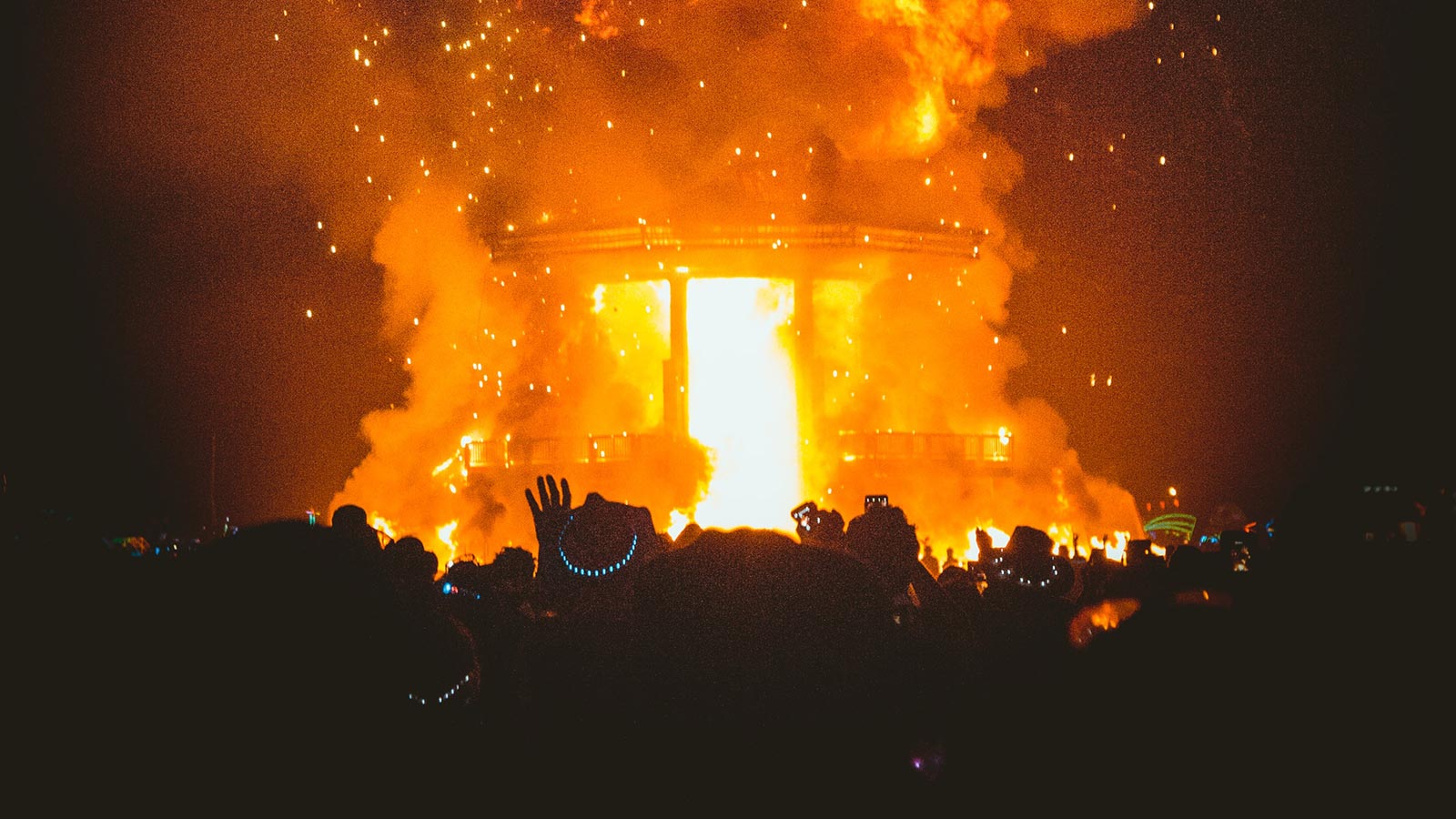

Climate activists lined the road to this year’s Burning Man festival in Nevada to call out the “privileged mindset” of the Silicon Valley types who flock there – and the waste involved in creating a temporary city in the desert.
Only a couple of days later, disaster struck. Unprecedented rain – 20 mm in 24 hours – turned the desert into mud, trapping the 70,000 festival goers.
As you might expect, the internet went wild with schadenfreude. But there’s a deeper issue here. This is not the first – and won’t be the last – outdoor festival upended by unprecedented weather. It was only a month ago when the World Scout Jamboree in South Korea was crippled by intense heat and typhoons, forcing its abandonment. Last year’s Splendour in the Grass festival in northern New South Wales turned into a mudpit after unprecedented rains.
Outdoor festivals are a summer rite of passage for many. Warm weather makes them possible. But summer’s when we often see the wildest weather too. As climate change loads the dice, we’ll see more festival disruptions, more often.
Summer may no longer be the right time for festivals
The biggest music festivals are usually held in summer months: Glastonbury in the United Kingdom and Tomorrowland in Belgium are held in the northern hemisphere summer, in late June and late July respectively. America’s Coachella festival takes place in April, but it’s in a desert where daytime temperatures over 30℃ are the norm.
As the world heats up, summer may soon be too risky for festival organizers. Creating large festivals is expensive and logistically challenging. Wipeouts from extreme weather events pose major financial risks.
When we go to festivals, we leave behind our houses and easy access to water. Many people camp in tents with relatively little protection from the elements.
During heatwaves, it’s particularly important to stay out of the heat and sun in the middle of the day and to stay hydrated. This isn’t always possible at festivals. Many of us underestimate the effect of heat on our bodies.
Extreme rainfall is very challenging for organizers. Managing tens of thousands of muddy, stuck people is hard – especially if it’s too difficult to bring supplies in. That’s why Burning Man organizers had to call on their attendees to conserve food and water.

If you have tens or even hundreds of thousands of people exposed to the heatwave or rainfall, it can pose a risk to their health. Evacuating large numbers of people is logistically very challenging.
As the climate changes, we can expect more frequent and more severe extreme weather. This will make the job of festival organizer much harder.
Organization matters
Well-organized festivals are much safer. If organizers think ahead and put contingency plans and adequate infrastructure in place, the chaos from extreme weather events can be much better managed.
For instance, during the trouble-stricken Scout Jamboree in Korea, there were real concerns over the intense heat, given children are more vulnerable.
But the heat shouldn’t have been a surprise. The event was held at the height of summer – albeit in a year of record breaking heat. So organizers should have anticipated heat and put in place better strategies to manage extreme weather. A simpler solution might have been avoiding the middle of summer.
What are we likely to see in the future?
Extreme weather hitting festivals isn’t new. The legendary 1969 Woodstock festival in New York State was also a mud pit.
What is new is the increased frequency and intensity of these events. Climate scientists have warned of these effects for decades. Now they’re arriving.
As we heat the planet, we’re getting more frequent, intense and longer-lasting heatwaves across the world. We also know we’re seeing more and more intense short-duration downpours which cause flash flooding.
It stands to reason we can expect to see more upheaval and health concerns at outdoor festivals.
What can be done? Expect to see festival dates move to shoulder seasons rather than midsummer. Some locations may no longer be viable. Last year’s Burning Man sweltered, with temperatures of 40℃.
If festival organizers don’t want to move date or location, the minimum response they’ll need is to actively plan to manage extreme weather and ensure key infrastructure like water and toilets are able to cope with heat or floods.
If the world keeps pumping out greenhouse gas emissions at high rates, we could see some summer festival locations get much hotter – rising 4–8℃. That’s because land areas in summer are expected to heat up quicker than the global average. Those higher temperatures would make it impossible to safely host a festival.
Written by Andrew King, Senior Lecturer in Climate Science, The University of Melbourne
This article is republished from The Conversation under a Creative Commons license. Read the original article.