













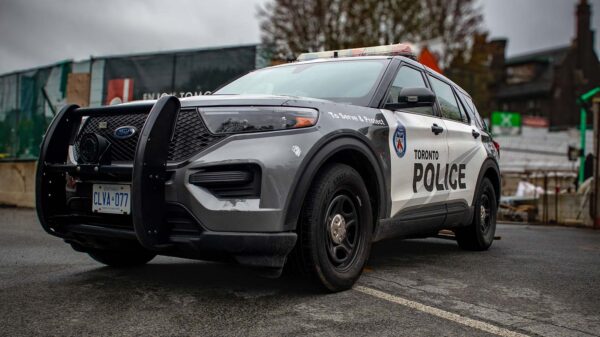

A damning new report on racial profiling in Montréal suggests the city and its police force have given up on fighting the problem.
An update to a 2019 study, the report — authored by three independent researchers hired by the Service de police de la Ville de Montréal (SPVM) — found that rates of racial profiling were either the same or higher than four years earlier, with Black, Indigenous and Arab people still particularly susceptible to being stopped by police.
As such, the report points to problems not just with the SPVM, but with the city administration that has long promised to curtail racist policing practices.
The problem of racial profiling can be traced to the beginnings of policing in North America, but it has nevertheless acquired more public attention in the last 10 to 15 years.
Montréal’s history of racial profiling
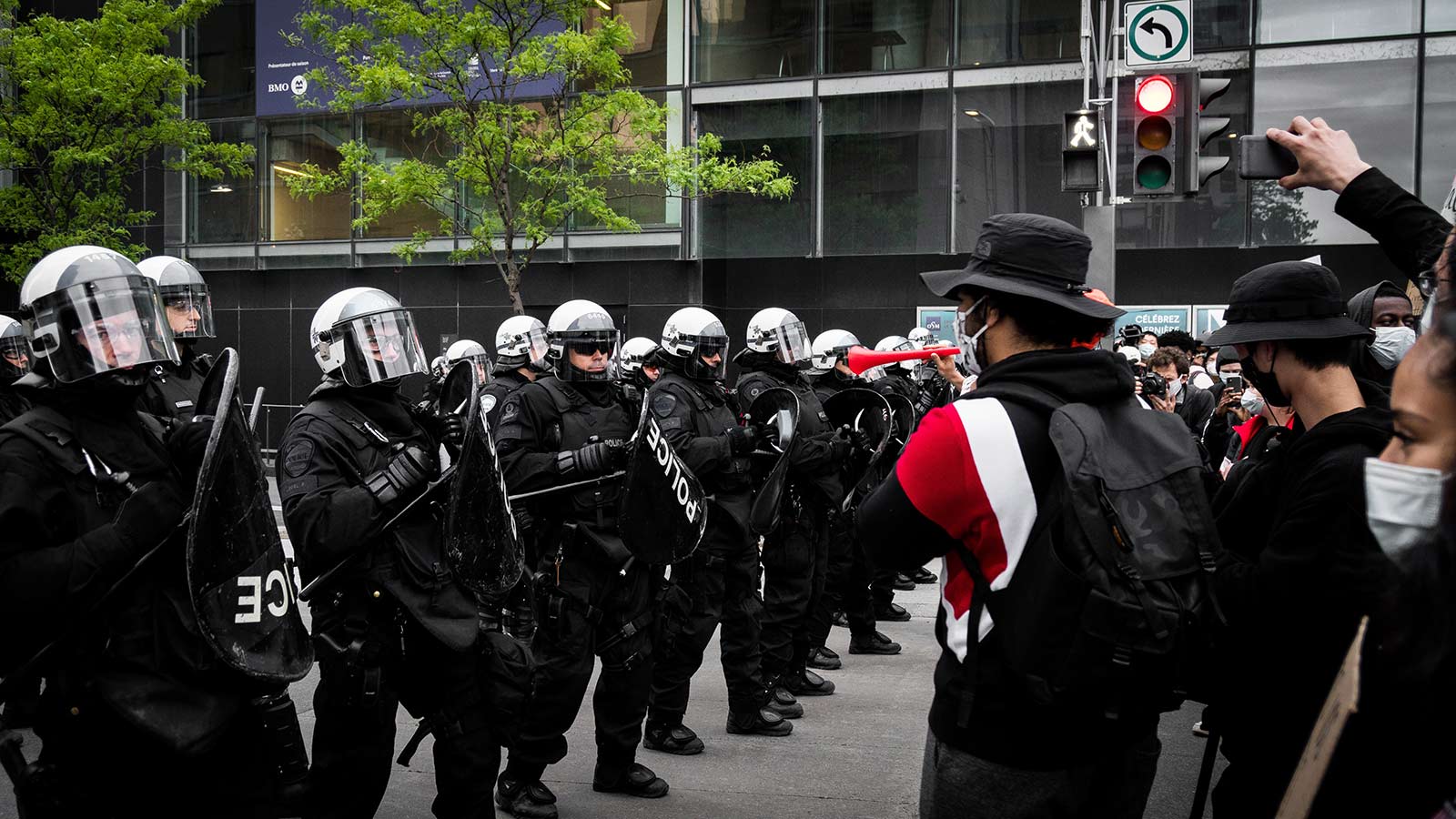
In Montréal, a city with a long history of protests against police racism and violence, the police killing of Fredy Villanueva in a city park in 2008 sparked widespread demonstrations. It did so in part because it occurred in the midst of a campaign of incredibly racist policing in an area in the city’s north-east.
An internal report by the SPVM revealed that police had stopped as many as 40 per cent of young Black men in the north-east neighbourhoods of Saint-Michel and Montréal-Nord in 2006 and 2007.
A lengthy and damning report on racial profiling by the Québec Human Rights Commission followed in 2011, while a series of shorter reports appeared over the next five years.

While these protests and reports challenged the SPVM, the task of combatting racial profiling ultimately belongs to the governments that oversee the police, especially the city of Montréal.
The city’s first major response to the increasing criticism of the SPVM was to hold a major public consultation on racial profiling in 2017. The consultation provided a venue for a wide range of community organizations, activists and researchers to call for police reform. Among these demands were calls to strengthen police oversight and discipline, abolish arbitrary police stops and partially transfer police spending to community-based safety initiatives.
The city balked at these demands, but took the unprecedented step of calling on the SPVM to produce an analysis of police stops by racial group, a key indicator of racial profiling. The SPVM agreed to the demand and soon hired the three independent researchers to provide a report.
Action soon?
In a sense, the city kicked the can down the road. Concrete action, Montréalers were told, would await a more detailed assessment of the problem, but there would be action soon.
In the meantime, a new city administration took power as Valérie Plante was elected mayor and her Projet Montréal won a majority of seats in the November 2017 election. Following the election, Plante said combating “social and racial profiling” would be a priority of her administration.
The analysis of police stops promised in 2017 was finally completed in 2019. Known as the Armony Report, the study found that Black and Indigenous people were more than four times as likely than white people to be stopped by police, while Arab people were twice as likely to be stopped.
Looking at gender, the report also found that Indigenous women were 11 times more likely to be stopped than white women. With the assessment complete, it was time for the city to act. Rather than listening to community demands, however, the Projet Montréal administration invested its hopes in a new police stops policy.
The policy, introduced in July 2020, stipulates that police stops must not be discriminatory and must be based on “observable facts” that justify the stop. The policy was widely criticized at the time as it simply reiterated the anti-discrimination provisions of the Canadian Charter of Rights and Freedoms.
Many (including myself) also observed that police could always find “observable facts” to justify a stop motivated by other, discriminatory criteria.
Backing the police
Since 2020, Plante’s administration has repeatedly touted the police stops policy as a strong antidote to racial profiling. For example, Plante cited the policy in February 2023, when she was called to testify in a class-action lawsuit against the city and the SPVM for racial profiling.
Pointing to the policy, she testified that her team was “very proactive and works very hard on racial profiling.” This narrative, already disputed, was fully discredited when the updated report on racial profiling was released in June 2023.
It found Black people are now 3.6 times more likely to be stopped by police than white people (a modest decline from 2019), Arab people are 2.6 times more likely to be stopped (a modest increase), and Indigenous people are now six times more likely to be stopped (a major increase).
If anyone was expecting a mea culpa from the city about its meagre efforts to combat racial profiling, they were disappointed. Plante, who said she was shocked by the 2019 report, has yet to comment publicly on the new findings.
Her colleague Alain Vaillancourt, the city Executive Committee member responsible for the police, simply said he supports the city’s police director and feels “comfortable” with his plan to change the “culture” of the SPVM.
The city’s response to racial profiling seems to have entered a new phase. After delaying action in 2017 and implementing a toothless new policy in 2019, the city seems content to leave the problem in the hands of the police director and abdicate its role in overseeing the police on behalf of the population.
In a city with a long history of protest against police racism and violence, this stance is unacceptable.
Written by Ted Rutland, Associate professor, Geography, Planning and Environment, Concordia University
This article is republished from The Conversation under a Creative Commons license. Read the original article.