















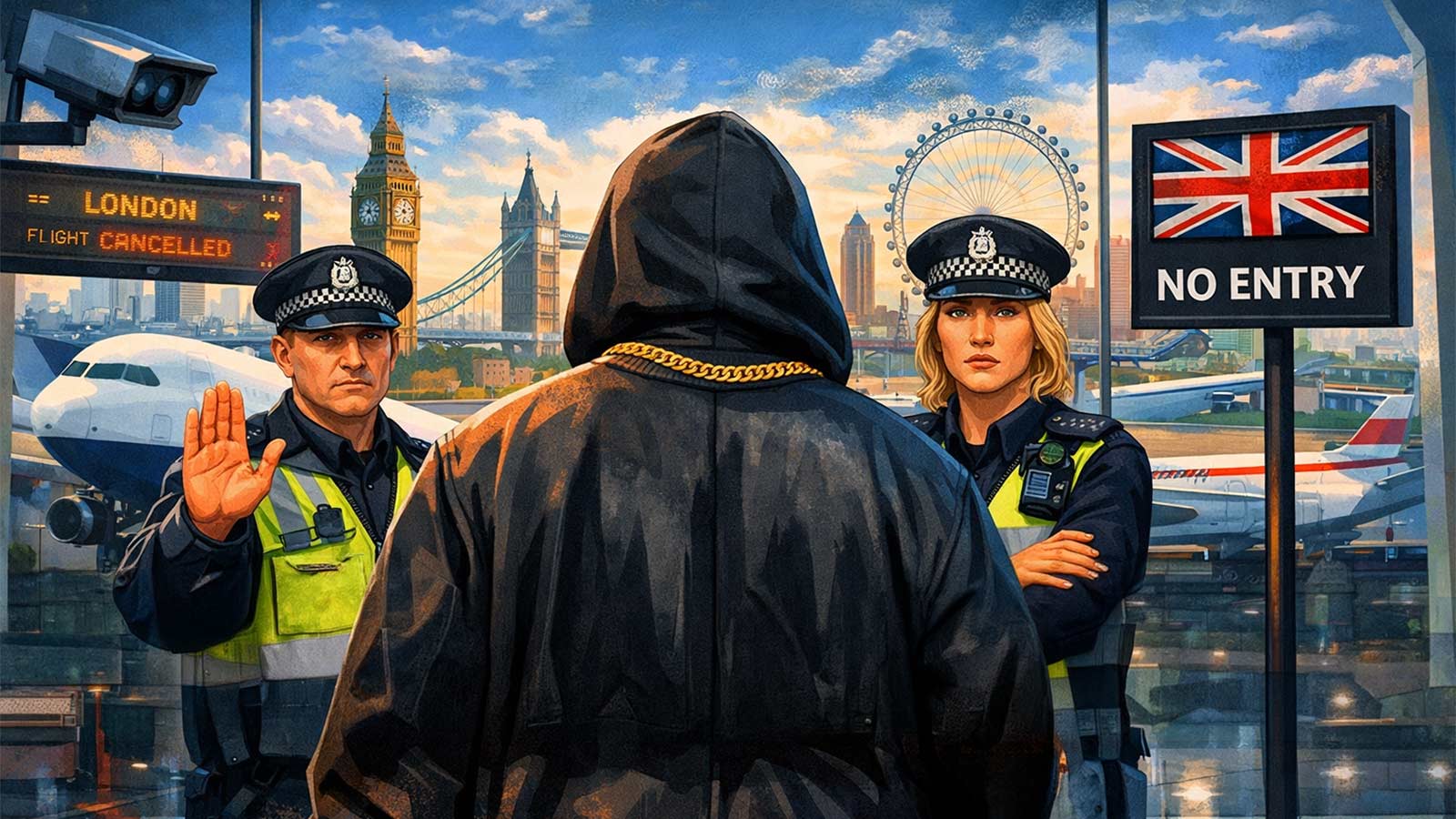
TLDR: Kanye West has been banned from entering the UK, raising questions about how immigration laws allow officials to refuse entry when someone’s presence is considered not conducive to the public good. Jonathan Collinson from the University of Sheffield explains how these powers work and why they remain controversial.
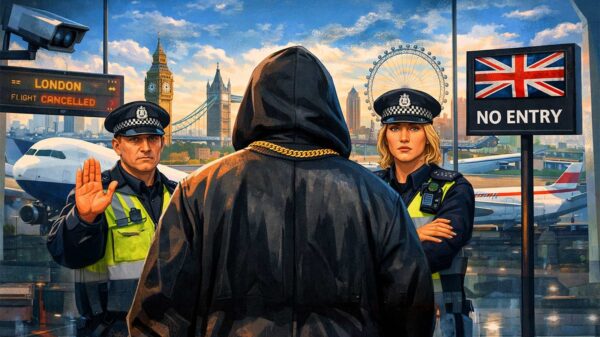
The UK government has prevented Kanye West, legally known as Ye, from entering the UK on the grounds that his presence would not be conducive to the public good. The rapper has become notorious for a sustained range of antisemitic comments, expressing admiration for Hitler and releasing a song titled Heil Hitler.
The prospect of his performing in front of 150,000 people at London’s Wireless music festival drew condemnation from government ministers, festival sponsors, Keir Starmer and the Campaign Against Antisemitism. Following the government’s confirmation that West would not be allowed to enter the UK, the festival was cancelled.
Any foreign national wanting to visit the UK needs permission to do so, either in the form of a visa or an electronic travel authorization (ETA). Both can be refused for several reasons. The UK’s immigration rules require that people who have previously breached immigration law, or been convicted of a criminal offence in the UK or overseas, are barred from entry.
They rules also include wide discretionary powers for the home secretary to exclude individuals from the UK on the basis that their presence is “not conducive to the public good because of their conduct, character, associations or other reasons.” These are the powers that have been applied to West.
According to the Home Office, these powers are usually invoked in relation to “national security, unacceptable behaviour (such as extremism), international relations or foreign policy, and serious and organized crime.” In 2024, 15 people were excluded from the UK under these powers.
The home secretary only needs to be satisfied that the underlying behaviour has occurred on the balance of probabilities, and will follow guidance in making the decision.
This guidance was first introduced in 2005 in the context of the “war on terror.” However, the guidance also points to a wider application to disrupt a range of criminal behaviour including organized crime, football hooliganism, breaking immigration rules and corruption.
We only know that the government has excluded West on the broad basis that his “presence would not be conducive to the public good.” It is likely that the home secretary, Shabana Mahmood, relied on his “producing, publishing and distributing material … to express views which … foster hatred which might lead to inter-community violence in the UK.”
Immigration law in the UK is based on the use of wide discretionary powers and the guidance is “indicative rather than exhaustive.” This means that the home secretary can go beyond the guidance to justify exclusion and is not bound to its precise wording.

The guidance does not require that someone has incited violence to be banned, only that they have fostered hatred. Given the extremity of West’s previous public comments, it is arguable that being given a stage at a high profile music festival would contribute to the normalisation of antisemitism. In recent years, the UK has seen a rise in antisemitic violence.
Who else has been banned from entering the UK?
West is not the first high profile artist to be barred under these rules. In 2015, Tyler, the Creator was barred from entering the UK. Then home secretary Theresa May said that he had made “statements that may foster hatred, which might lead to intercommunity violence in the UK.” This related to songs which May argued “describes violent physical abuse, rape and murder in graphic terms which appears to glamourize this behaviour.”
In response, the artist said: “The paper saying I am denied entry to the UK clearly states that these songs were written from [the perspective of] an alter ego – which means they obviously did some research on these songs that they’re detaining me for … You could watch any interview and see my personality, see the guy I am. I wouldn’t hurt a fly.”
The government does not routinely name those whom it has excluded from the UK. Popular lists of celebrities barred from the UK are mostly populated by people with past criminal convictions, including American businesswoman Martha Stewart. They would likely have been barred on criminality grounds, rather than on the “not conducive to the public good” test.
Exclusions based on the “not conducive to the public good” test are generally related to reprehensible statements and behaviours, often of a political or religious nature. These have included people from across the political and ideological spectrum, including far-right campaigners, Israeli politicians and head of the Nation of Islam, Louis Farrakhan, whose 15-year ban was overturned after a high court appeal.
Exclusions on the basis of corruption and criminality are often less newsworthy, but are invoked in most cases.
The idea that someone’s presence in the UK is not conducive to the public good is present in other immigration powers. The power to strip someone of British citizenship, such as Shamima Begum, arises where “the deprivation is conducive to the public good.” However, to justify citizenship stripping, the misconduct must be “seriously prejudicial to the vital interests” of the UK. Denying a foreign national entry can occur for less serious misconduct.
In general, giving such broadly worded powers to the home secretary is controversial. What views and conduct are sufficiently contrary to the public good and justify exclusion from the UK is an inherently political decision. Any broadly worded executive power has the potential to be abused.
For West to challenge his exclusion in the courts would require it to be found that the home secretary has misunderstood the scope of her very broad legal powers, or else made a decision so irrational that no reasonable decision maker could have come to it. This is an extremely high legal bar to surmount, and courts would be likely to give a great deal of deference to the home secretary’s decision.
Written by Jonathan Collinson, Lecturer in Law, University of Sheffield
This article is republished from The Conversation under a Creative Commons license. Read the original article.

5 Ways to Support HipHopCanada:
- Submit Your Music
- Follow Canadian Fresh (HipHopCanada’s Spotify Playlist)
- Follow us on Instagram
- Follow us on X (Twitter)
- Like us on Facebook