





TLDR: Boxcutter, presented by Game Theory Films, captures the Toronto hip-hop spirit. Director Reza Dahya breaks it down in this raw Q&A about the film’s unfiltered, local energy.
There’s something about Boxcutter that hits different. It’s not flashy. It’s not trying to do too much. But it’s intentional, and that’s what makes all the difference.
Directed by Reza Dahya (aka rez DigitaL), a former radio host turned filmmaker with deep roots in the city’s music scene, Boxcutter reads like an open mic confession and a backyard cypher all at once. Set over a single day in Toronto, the film traces the journey of Rome, a factory worker with dreams bigger than his barcode scanner. His grind is quiet but relentless. And the city? It doesn’t just serve as a backdrop, it’s also the co-star.
A Cinematic 16-Bar Love Letter to the 6ix
“Toronto is full of amazing talent… it’s almost criminal how under appreciated it’s been,” rez told me in a sit-down conversation amid the film’s SXSW buzz. That sentiment bleeds into every frame of Boxcutter. From the clatter of streetcars and skyline cranes to the subtle nods to Regent Park and Parkdale, the city is captured in its rawest form. Where most film sets would clear the construction cones, Boxcutter leans in.
The love letter to Toronto isn’t just visual, it’s cultural. It’s in the slang, the side-eyes, the way people dap each other up. The cast is full of local artists, most of whom aren’t trained actors, but that’s exactly what makes it work. “They’re already vulnerable in their music,” the director shared. “My job was just to make the set feel like home.”
And it does. The film doesn’t sanitize Toronto’s hip-hop culture for export. It puts it on wax, as is.
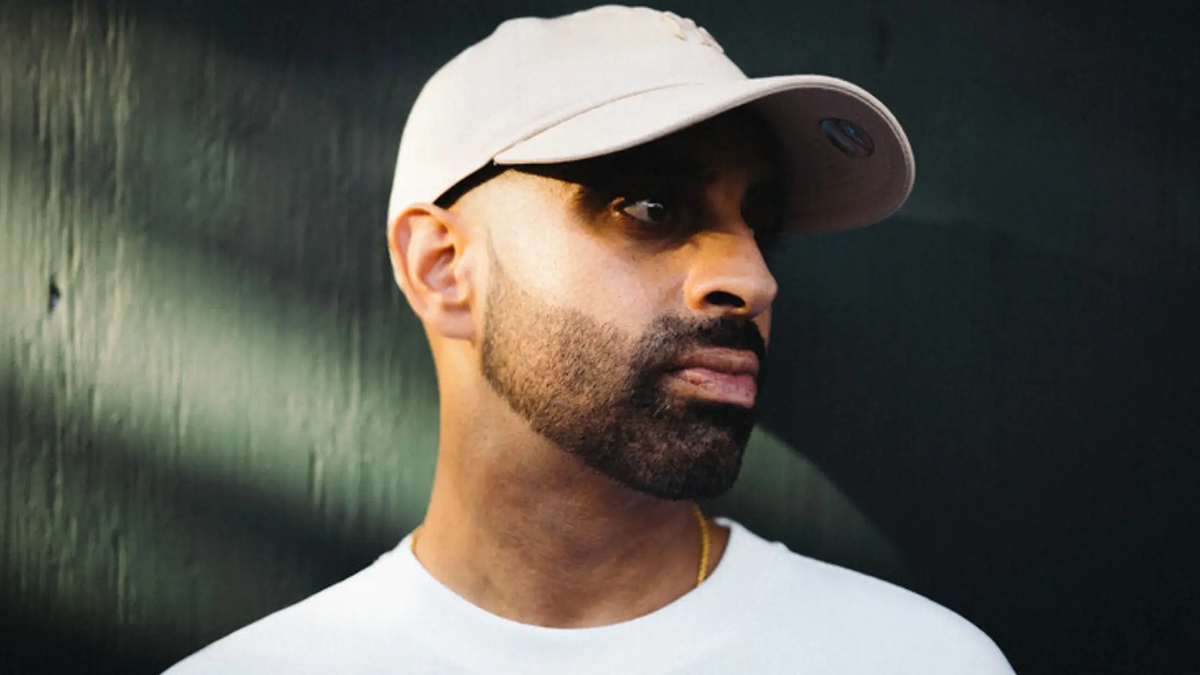
Boxcutter director Reza Dahya (Photo: Reza Dahya)
Boxcutter Bars & Bigger Battles
But don’t get it twisted, there’s no rap battle or stage performance here. You never actually hear Rome’s music and that decision is deliberate. The ambiguity invites the audience to project their own dreams, their own struggle, into his story. The spirit of a J. Cole record hovers over Rome’s character: self-doubt meets quiet ambition. Think Friday Night Lights energy, but rerouted through the TTC. The title Boxcutter itself? More accidental than allegorical. “We never changed it, it just stuck,” the director laughed. Sometimes, the most honest art happens by accident. The name Boxcutter feels sharp, visceral, dangerous, like the city’s edge. It’s a working title that just works.
The Real 6ix Sense
There’s humour too, but it’s local. Hyperlocal. Some jokes hit harder at a Scarborough house party than they might in Montreal or L.A., but, of course, that’s the point. “Even if you don’t get the joke, you still feel the culture,” rez explained. And that’s what makes Boxcutter stand out from the usual “urban” indie flicks. It doesn’t try to universalize Toronto, but rather it challenges the world to catch up. In fact, the film’s “final boss” isn’t some label exec from New York. It’s a Toronto producer. “Back in the day, the dream was to get your music to someone in the States,” the director shared. “Now? Everything we need is at home.”

Reza Dahya with cast members (from left to right) Zoe Lewis, Soko Negash, Ashton James, and Viphusan Vani (Photo: Robby Klein / Getty Images)
A Tape for Dreamers
If Boxcutter were a mixtape, it wouldn’t just be packed with bangers. It would be full of soul. It’s for the hip-hop heads that stayed after the show, chopped it up with the artists, and took the long bus ride home wondering if their own shot was still out there. It’s for every kid from Jane & Finch, Malvern, Rexdale, and Weston who wrote bars on the back of a school agenda. At its core, Boxcutter is about self-belief. About fumbling your dream, but showing up again anyway. Whether you’re from Toronto, Halifax, or a small town in Alberta, you’ll recognize the feeling. This isn’t just a film. It’s a timestamp, a statement, and a reminder that the 6ix has always had something to say. Now, Boxcutter serves as a movie that says it for us.

We got to catch up with the director and creator himself to unpack the vision behind Boxcutter. It’s a raw, day-in-the-life journey that captures the soul of Toronto without filters or apologies. From casting real artists to embracing construction zones and streetcar noise, rez breaks down why authenticity was non-negotiable, and how Boxcutter became a cinematic love letter to a city finally stepping into its spotlight.

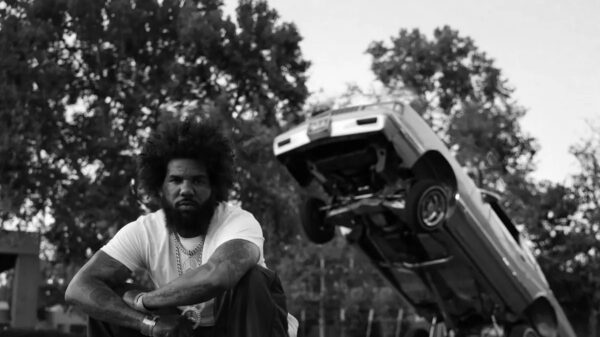
Scene from Boxcutter (Photo: Reza Dahya)
Boxcutter Interview
HipHopCanada: Our first question for you would be, your film has been described as a love letter to Toronto. Can you unpack what that phrase means to you and how you consciously wave or wove the city’s identity into boxcutter?
Reza Dahya: Okay, so a love letter to Toronto, what that means. Let me answer that in two sections. So, what does a love letter to Toronto mean to me? Well, I just think that Toronto is a city full of amazing talent. And I’ve just felt that over the years, it’s almost criminal how under-appreciated it’s been. That’s changed in recent years. I would say that the city definitely has a global kind of voice now, you could say. And we were fighting for that for so long back in my days, like in music, in the early, the mid 2000s and the 10s and all that.
So, the love letter part to me is just a matter of trying to shed light visually, as well as sonically, to what’s going on in the city. Because as the city and the artists in the city have become more global, there’s some traces of the city in music videos and stuff like that. But there isn’t really a strong visual element to echo the growth of the city musically. So, I would say on that level, there’s that.
And then I would also just say, it’s a love letter in the sense of, put it this way: in the film, the final goal, the final boss, or whatever you want to call him, the producer that Rome’s trying to get to, he is a Toronto-based producer. Back in the day, this movie, the goal or the final boss would have been an American producer… someone from New York is in town, and I got to get him the music, or her music. So, to be able to say that we’re in this space now where, no, we have everything we need at home, that’s another form of just showing love and saying, “hey, we have everything we need at home, we need to focus on ourselves as much as we can.”
And then what was the second half of your question, man?
HipHopCanada: How did you consciously wove the city’s identity into Boxcutter?
RD: So, the city’s identity, I mean, look, it’s ever-changing, right? And I think that is what is woven into the film. You know, we took care to—it’s funny—most productions, if there’s construction or streetcars in the background, they usually clean that up so things like that don’t appear. And I think we just leaned into everything, you know? So, if there’s pylons in the back, I’m like, “yo, leave those there,” or “you know what, put them in there.” Because that’s how it feels to be at home, there’s construction everywhere, right?
And same with the streetcars. If there’s streetcars in the shot, that’s probably going to be in the movie because I want that feeling of the constant motion. You’re walking around Toronto, that sound of the streetcar is omnipresent, like you’re always experiencing that sound, you know? So, just kind of leaning into stuff like that really allowed us to infuse that feeling of Toronto that’s a little more tangible, like you can touch it a little bit, you know?

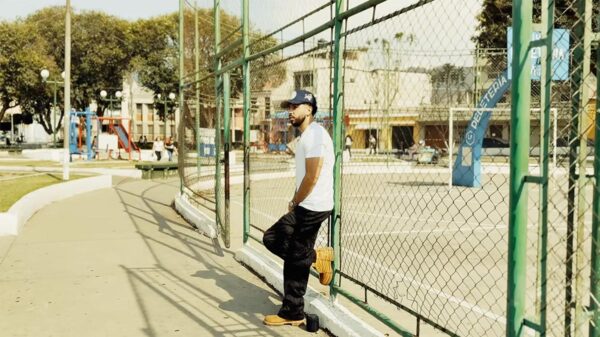
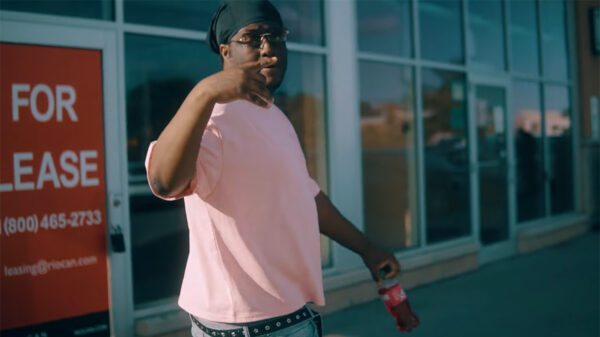
Scene from Boxcutter (Photo: Reza Dahya)
HipHopCanada: Boxcutter leans heavily into the authentic Toronto hip hop culture, even casting people from the local scenes. What was it like guiding non-actors or real artists to perform on set? Yeah, it was fun, man.
RD: I mean, you know, the thing about artists, they’re creatives, right? And so they have to be vulnerable in their work. So, the process for me as a director, like directing them, is just trying to find their entry point to vulnerability that they already know because of their music, and how to just do that on a movie set. None of these actors were asked to do anything outside of their wheelhouse. They were cast because they already fit a certain vibe or look or style or whatever.
So, it was really just a matter of like, “yo, man, we’re all family here, look at the surroundings, we’re not some big, huge production, it’s just us having fun and doing the thing.” So making them feel comfortable, and just allowing them to be themselves, you know?
HipHopCanada: So the title Boxcutter, to me, at least is visceral, why this specific object? And how did you use it symbolically to shape the film’s tone or emotional arc?
RD: Thank you, man. But you know, this answer is probably going to disappoint you, though, because the title is technically still a working title. We never changed it. It was kind of just there as a placement. And I was kind of open up to the very last minute to change it. And we never thought of anything better. So, we kept it. There is a bit of a tie in because Rome, our lead character, works at a factory, opening boxes, like, that’s his job, right? There is an element of connection there, but technically speaking, there isn’t some big metaphorical reason why it’s there. You could probably dream one up, but it wasn’t designed that way.

Scene from Boxcutter (Photo: Reza Dahya)
HipHopCanada: How did you balance logistical challenges like weather or permits with capturing the spontaneous energy of the city streets?
RD: Yeah, I mean, that was tough, man. I mean, you know, we got rainy days, you know. Yeah, the rainy days killed me. I was so sad, I was like, “man, this is just supposed to be one hot summer day, it cannot be raining right now,” you know? So it’s funny because in the movie the weather was kind of intermittent. We added this to the Adlib line where like Rome’s walking and he looks up at the sky and he goes, “yo, the weather’s going crazy today,” you know, just to kind of cover our bases.
If one scene was overcast and then the next scene was sunny, you know? So we kind of just prayed, man. We just prayed for the sun. We did have the budget for one rain day. So there was definitely one day where the rain was just too, too heavy and we were able to push that day. But there were a couple of days where it was definitely overcast. It definitely was drizzling.
Shouts to our cinematographer, James Klopko, he had to fake the sun a couple of times and we just pushed through and we waited a couple of times. One morning, the streets were too wet. You could see puddles on the street, you know? So we just waited, we didn’t get to shoot as much, but we waited until the afternoon and we just got what we had to do. People were flexible and we just made it work.