











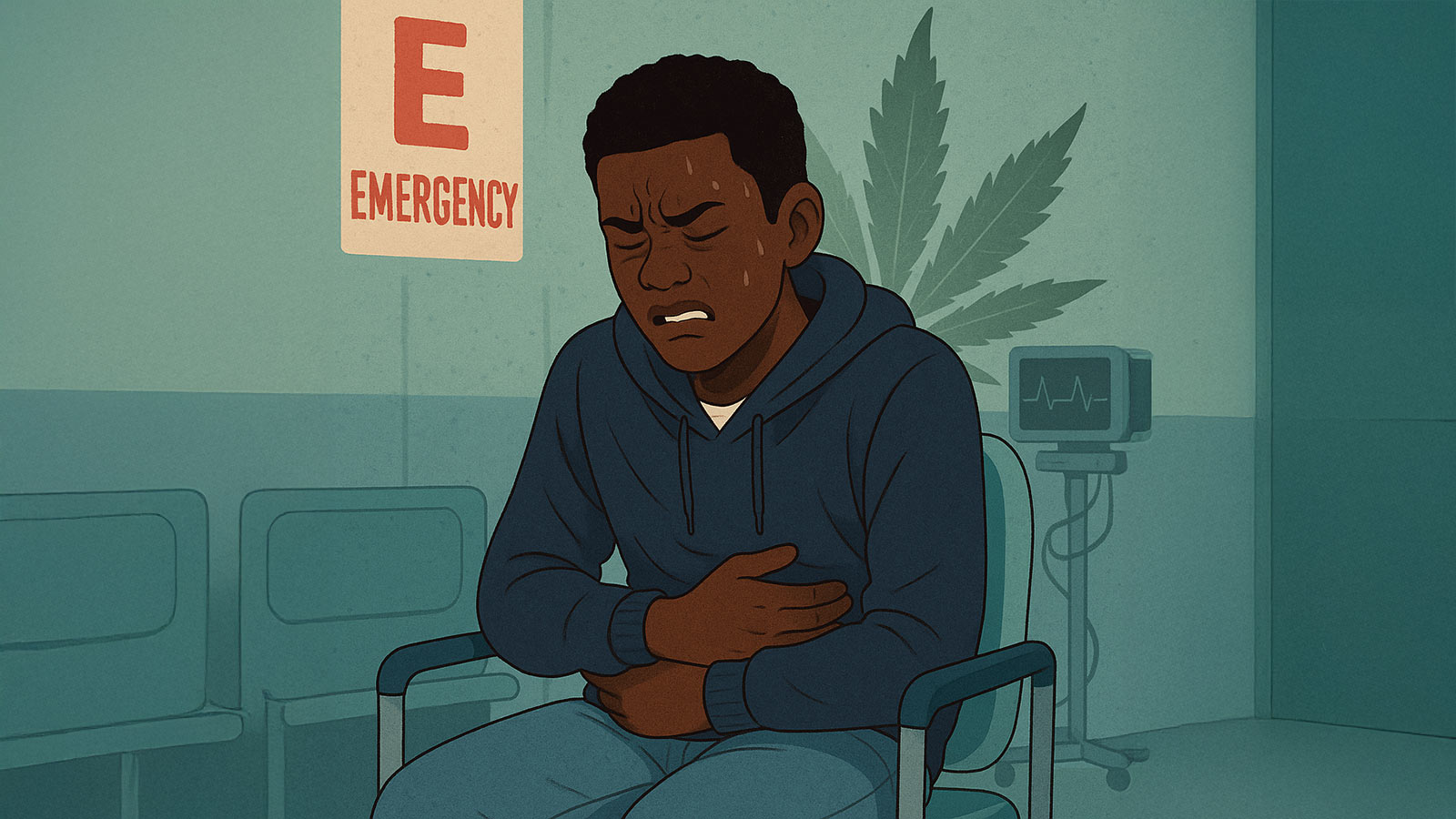

TLDR: More Canadian youth are landing in ERs with vomiting from cannabis use — a dangerous condition called cannabis hyperemesis syndrome.
As cannabis use among youth rises in Canada — and THC potency reaches record highs — emergency departments are seeing a surge in cases of a once-rare condition: cannabis hyperemesis syndrome (CHS).
Characterized by relentless vomiting, abdominal pain and temporary relief through compulsive hot showers or baths, CHS is increasingly affecting adolescents and young adults. Yet few people — including many clinicians — know it exists.
As public health and substance use researchers, and authors of a recent review on CHS in youth, we are struck by how misunderstood and misdiagnosed this condition remains.
A silent side-effect of heavy cannabis use
Canada ranks among the highest globally for youth cannabis use, with 43 per cent of 16-19-year-olds reporting use in the past year. Usage peaks among those 20–24 years, with nearly half (48 per cent) reporting past-year use.
This rise in regular, heavy use coincides with a 400 per cent increase in THC potency since the 1980s. Strains with THC levels above 25 per cent are now common. As cannabis becomes more potent and accessible, clinicians are seeing more cases of CHS, a condition virtually unheard of before 2004.
What is CHS?
CHS unfolds in three phases:
Prodromal phase: Nausea and early morning discomfort begin. Users increase cannabis consumption, thinking it will relieve symptoms.
Hyperemetic phase: Intense vomiting, dehydration and abdominal pain follow. Hot showers or baths provide temporary relief — a hallmark of CHS.
Recovery phase: Symptoms resolve after stopping cannabis entirely.
Diagnosis is often delayed. One reason is because CHS mimics conditions like gastroenteritis or eating disorders, leading to costly CT scans, MRIs and gastric emptying tests. One telltale sign — compulsive hot bathing — is frequently overlooked, despite its strong diagnostic value.
Why CHS is dangerous for youth
Youth face unique risks. The brain continues to develop until about age 25, and THC exposure during this critical window can impair cognitive functions like memory, learning and emotional regulation. Heavy cannabis use is associated with heightened risks of anxiety, depression, psychosis and self-harm.
Some youth use cannabis to self-medicate for mental health concerns and increase their use when symptoms of CHS appear, mistakenly believing cannabis will help. Others are reluctant to disclose their use due to stigma, fear of judgment or legal consequences.

In our recent review, we found that CHS is frequently misdiagnosed as bulimia nervosa because of the vomiting and unintended weight loss. But unlike bulimia, CHS-related vomiting is involuntary and not motivated by body image concerns. A clue is that those with CHS often return to normal eating and bathing patterns during symptom-free periods, which is not typical for an eating disorder.
A burden on the health system and individual
CHS doesn’t just take a toll on youth — it strains the health-care system. Emergency department visits for CHS have spiked in recent years, with a study in Ontario showing a significant rise after cannabis commercialization following legalization in 2018. Repeated ER visits, missed school or work and emotional distress compound the burden. In rare cases, CHS can lead to kidney failure due to severe dehydration and electrolyte imbalance.
Unfortunately, anti-nausea medications like ondansetron often fail. Studies have shown temporary relief from topical capsaicin or low-dose haloperidol, but no acute treatment consistently works unless cannabis use stops.
What can be done?
The most effective long-term solution to treating CHS is cannabis cessation. For youth who use cannabis to cope with anxiety, quitting can lead to withdrawal symptoms and distress. This makes harm reduction strategies critical: gradual reduction plans, mental health supports and non-judgmental conversations between providers and patients.
Clinicians should systematically screen youth presenting with cyclic vomiting for cannabis use and hot bathing behaviour. Youth are more likely to disclose cannabis use when asked in an empathetic, stigma-free way.
Public health campaigns can play a major role. We need honest, accessible education — in schools, clinics and online — that explains what CHS is, how to recognize it and how to seek help. In our view, the addition of CHS content to youth health curriculums, pediatric training programs and cannabis use screening tools is overdue.
A preventable crisis
CHS is a preventable but growing consequence of chronic cannabis use in young people. As legalization continues to reshape social norms and access, it is essential to ensure that youth — and those who care for them — are informed about the full spectrum of cannabis-related health risks.
This story was co-authored by Morgan Seabrook, an undergraduate research assistant at the Human Environments Analysis Laboratory at Western University.
Written by Jamie Seabrook, Professor, Department of Epidemiology and Biostatistics; Professor, Department of Paediatrics; Professor, Brescia School of Food and Nutritional Sciences, Western University and Jason Gilliland, Director, Urban Development Program; Professor, Geography & Environment, Western University
This article is republished from The Conversation under a Creative Commons license. Read the original article.