





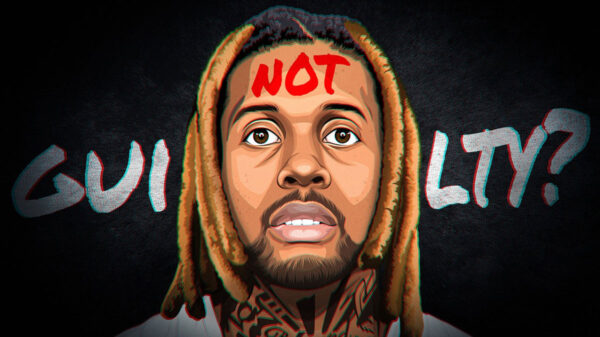





TLDR: On day 32 of the Diddy trial (Friday, June 27), lawyers blasted the government’s case in a bold closing argument, challenging the credibility of witnesses.
We were back in the main court room for the last stretch of Sean “Diddy” Combs’ blockbuster federal trial as it entered into a crucial phase on Day 32, as his defence team delivered a compelling closing argument that challenged the heart of the government’s case.
Portraying the prosecution as overreaching and riddled with inconsistencies, the defence sought to convince jurors that Diddy’s flamboyant lifestyle has been unfairly twisted into the narrative of a criminal conspiracy.

Diddy’s legal team leaves the courthouse (Photo: Remi Louis Harris / HipHopCanada)
Two Trials: Defence Says Prosecutors Are Reaching Beyond the Evidence
At the core of the defence’s message was the argument that this case is really “two trials.” One is grounded in genuine evidence and witness testimony. The other, they claimed, is a story crafted by prosecutors, built on assumptions, speculation, and an effort to portray Diddy’s personal lifestyle and choices as criminal acts. The defence argued that the government has stretched the facts to fit a narrative of a criminal conspiracy that simply doesn’t exist.
“This isn’t about justice,” the defence declared. “It’s about money.”
They stressed that not a single witness testified to knowingly being part of any criminal enterprise. Instead, the defence portrayed the prosecution’s case as an example of government overreach, fuelled more by sensational details and shock value than by solid, concrete evidence.
Under federal law, specifically the Racketeer Influenced and Corrupt Organizations Act (RICO), prosecutors must prove the existence of an “enterprise” acting as a continuing unit with a common purpose. In United States v. Turkette, 452 U.S. 576 (1981), the Supreme Court ruled that an enterprise must be separate from the pattern of racketeering acts and that members must knowingly participate in the enterprise’s affairs.
The defence argued that without testimony showing witnesses were knowingly involved in such an enterprise, the government simply hasn’t met this legal burden.
Defence Puts Witness Credibility Under the Microscope
A significant part of Diddy’s defence strategy focused on challenging the credibility of the government’s key witnesses—and they executed it with precision.
Jane, known only by her pseudonym in court, was portrayed by the defence as someone drawn to a flashy, luxurious lifestyle, eager to showcase it on social media. The defence emphasized that she is still living in a house paid for by Diddy, raising questions about whether her accusations were motivated more by financial interests than by truth.
The defence didn’t hold back, delving into personal details such as Jane’s child support disputes and even referring to her lawyer as “crappy” in front of the jury—an aggressive tactic aimed at undermining her credibility and that of her legal team.

Cassie Ventura was also a focus of the defence’s critique. They argued that her $30 million civil lawsuit demonstrated a significant financial motive and highlighted timeline inconsistencies in her testimony regarding her relationship with Diddy, suggesting her narrative did not consistently align with documented facts.
Throughout the trial, the defence’s overarching message was clear: these witnesses may not be as reliable as the prosecution claims. Based on jury reactions observed in court, it’s a strategy that seemed to have resonated with some jurors.
Prosecutors Push Back in Rebuttal
In a fiery rebuttal, prosecutors urged the jury to keep sight of their main allegation: that Diddy “didn’t accept ‘no’ as an answer.” They argued that Combs used his power, wealth, and influence to manipulate and control the people around him.
They described an alleged “Army of Assistants,” who, in the government’s view, helped carry out Diddy’s illegal activities. Prosecutors also stressed that being a celebrity doesn’t give anyone a free pass from the law, no matter how lavish the lifestyle.
Still, despite the prosecution’s forceful closing, the defence’s arguments seemed to land with some courtroom watchers, who noted that much of the government’s case leaned heavily on interpretation and inference rather than solid, direct evidence.

Diddy’s mother Janice Combs leaves the courthouse (Photo: Remi Louis Harris / HipHopCanada)
No Smoking Gun
One of the defence’s main themes throughout the trial has been that there’s no single piece of hard evidence directly tying Diddy to a criminal conspiracy.
- None of the witnesses testified that they were knowingly participating in racketeering or sex trafficking.
- Alleged “freak offs” were described by the defence as consensual sexual activities, not forced encounters.
- Witnesses the prosecutors subpoenaed testified that they were dancers, not escorts, and denied ever being paid for sex acts.
- The defence argued that much of the prosecution’s case relies heavily on speculation about text messages and assumptions about the nature of certain relationships, rather than any actual solid proof.
This absence of clear-cut evidence has been a cornerstone of the defence’s strategy—and it’s a point that could weigh heavily on the jury as they deliberate Diddy’s fate.

Photo: Remi Louis Harris / HipHopCanada
Highlights from the Prosecution’s Rebuttal
During their rebuttal, prosecutors presented a strong narrative aimed at portraying Diddy as someone who used his power and influence to manipulate and control the people around him.
- They argued that Diddy “didn’t accept ‘no’ as an answer,” describing him as a figure who leveraged wealth and status to dominate personal and professional relationships.
- Prosecutors described an alleged “Army of Assistants” who they claimed helped Diddy carry out illegal activities and cover up misconduct.
- They insisted that celebrity status does not shield anyone from accountability, regardless of how extravagant a public persona might be.
- The prosecution asserted that the testimony against Diddy was genuine and not driven by personal gain, maintaining there was no motive for witnesses to lie.
- They claimed Diddy tightly controlled Cassie’s music career, positioning him as the ultimate decision-maker over her professional trajectory.
- Prosecutors alleged that Jane was directed by Diddy to hire escorts, presenting it as further evidence of his influence and control.
- They highlighted texts where Jane expressed reluctance about “hotel nights,” suggesting these messages demonstrated Diddy’s manipulative behaviour.
- Regarding Capricorn Clark, prosecutors countered the defence’s argument about a lack of evidence, stating that “you don’t need a gun to commit kidnapping.
Opinion & Analysis: Inconsistencies That May Help the Defence
From being inside the main courtroom throughout my time covering the trial, it’s clear to not just me that the defence capitalized on multiple inconsistencies and contradictions in the prosecution’s case—points that could be significant in shaping the jury’s decision.
One major issue is the Intercontinental Hotel situation. Evidence presented in court suggested the prosecution kept details of that lawsuit quiet during parts of the trial, only revealing them under cross-examination. That level of secrecy doesn’t exactly inspire confidence. What’s more alarming in my opinion is, during their rebuttal, prosecutors claimed there was no motive for witnesses to lie. Yet they left out crucial information: The prosecution had hid the fact that Cassie was in talks with the intercontinental for a 10 million dollar settlement, it ultimately was the defence who first confronted Cassie about the Intercontinental lawsuit under oath, before the public even knew about it.
Another important detail is that the government granted full immunity to Cassie, Jane, and Mia, and subpoenaed all three, forcing them to testify in open court. Each witness confirmed that under oath, which raises legitimate questions about whether their testimony was given entirely free of pressure or self-interest.
Other big inconsistencies stood out as well:
- The prosecution claimed Diddy tightly controlled Cassie’s career. Yet testimony in court by Bad Boy’s former CFO described Bad Boy Records as being 50% owned by another label, meaning anything to do with Bad Boy in regards to Cassie’s career would’ve needed approval by his partners. That in itself conflicts with the idea that Diddy alone dictated Cassie’s musician career, in addition Capricorn clark stated that Cassie received the “Lions Share of resources” during her time at Bad Boy and referred to her as a “studio artist”.
- Prosecutors suggested that Diddy ordered Jane to hire escorts, but Jane herself testified under oath that she chose to hire escorts voluntarily because it “made her lover happy” and because she was in love with Diddy—not because he forced her.
- The government highlighted texts where Jane expressed not wanting “hotel nights,” but the defense pointed out prosecutors left out Diddy’s follow-up message saying, “We don’t have to be together,” indicating he wasn’t forcing her into anything she didn’t want.
- Prosecutors began their rebuttal by responding to the defense’s claim that there was no evidence Capricorn Clark was kidnapped at gunpoint, insisting that “you don’t need a gun to commit kidnapping.” Yet while wrapping up the same rebuttal, the prosecution stated unequivocally that “Capricorn was kidnapped at gunpoint,” creating a direct contradiction that undercuts the clarity of their narrative.
- While prosecutors alleged that Diddy operated with an “army of assistants” who helped him commit crimes, one of his former assistants testified under oath that there were only about five or six assistants regularly around Diddy. That reality doesn’t quite fit the prosecution’s narrative of a vast network facilitating illegal acts.
- Prosecutors emphasized that Jane begged Diddy for money, but they conveniently glossed over the existence of a “love contract” between Jane and Diddy. In that agreement, Diddy allegedly offered to pay Jane $10,000 a month, yet she chose to rent a home she couldn’t afford and went into debt furnishing it. This detail complicates the narrative that Jane was left financially stranded.
- Prosecutors claimed Cassie wanted to go home to her mother, yet Cassie testified at times that she had wanted to stay at Diddy’s house.
- A significant inconsistency surfaced regarding a sexual encounter involving urination. The prosecution presented a transcript where Cassie stated Diddy directed her to be urinated on. However, just weeks earlier, a male dancer had testified in open court under oath that it was Cassie who asked him to urinate on her. That conflicting testimony undercuts the prosecution’s narrative about who initiated the act.
- The timeline of accusations even raises doubts. Prosecutors said Jane began speaking out before Cassie, but texts shown in court just the day before suggested that Jane only started making certain claims after reading Cassie’s lawsuit.

Photo: Remi Louis Harris / HipHopCanada
The Stakes
As the trial moves into jury deliberations Monday morning, the defence has left an incredibly powerful impression on the jury and public as a whole: that this case may be less about criminal conduct and more about twisting the perks of fame into evidence of wrongdoing.
Regardless, the outcome will determine whether Sean “Diddy” Combs walks away as a man falsely accused by the United States Government— or faces one of the most consequential convictions in entertainment history.
We will be back in court on Monday morning to listen to the instructions the judge gives the Jury. Stay with HipHopCanada as we continue our in-depth coverage of the Diddy trial, bringing you the latest updates, testimonies, and drama live from the courtroom as it all unfolds.