



















I’m looking over the shoulder of my friend, Iulia, as she boots up her PC. “You’re going to lose your mind,” she grins. Iulia and I share a love of fantasy worlds, hot monsters and video games, and she’s invited me over to her flat to show me something “really special”.
Iulia admits, with a mixture of guilt and pride, that she’s already spent over 100 hours exploring the first act of a new game. She clicks through the opening, rhapsodising about the beauty of the environments, the intricacy of the turn-based combat and the glory of something or someone called “Astarion”.
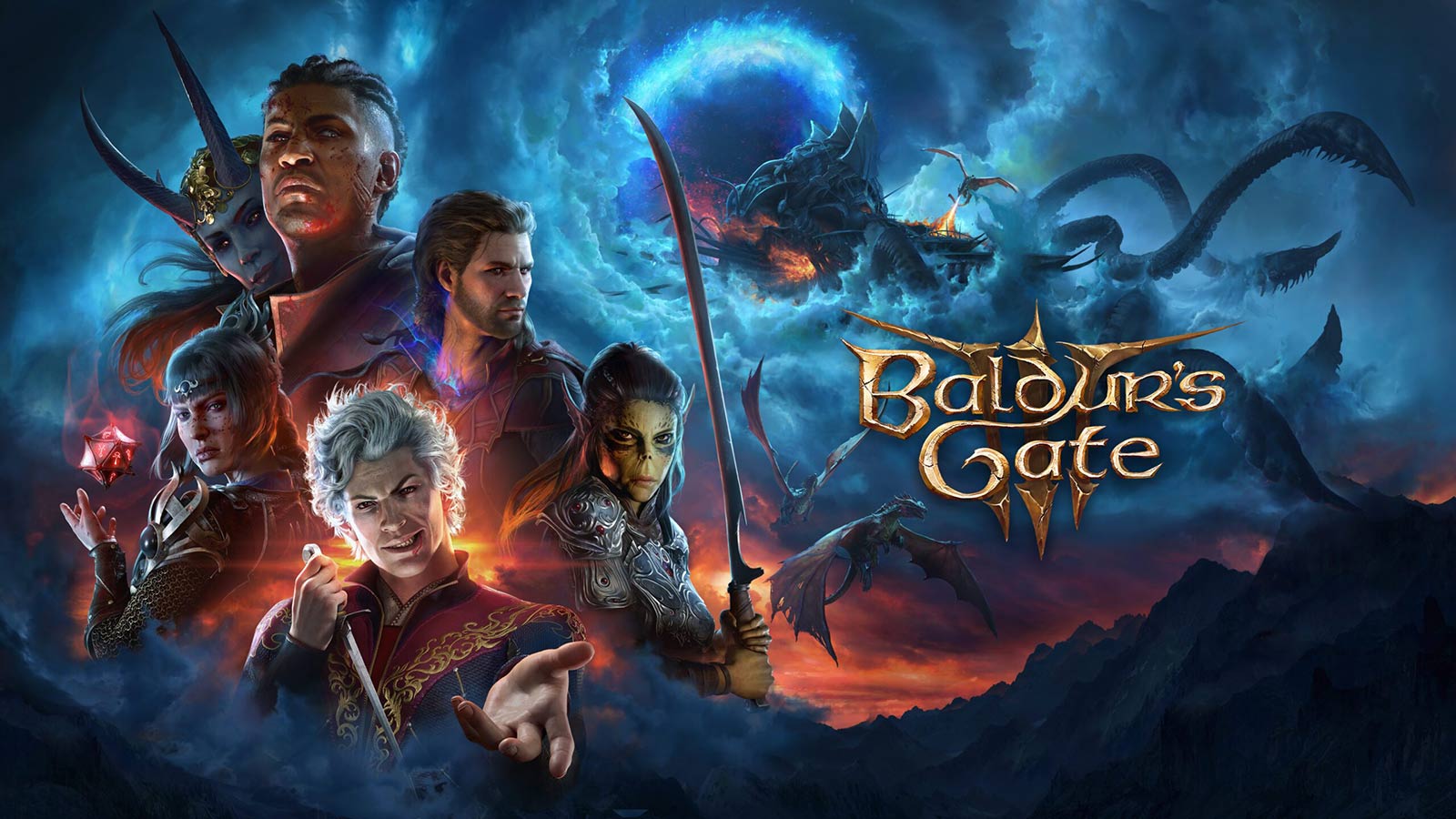
Her enthusiasm is contagious, and I pre-order the game as soon as I’m home. I’m now truly hooked. That game is Baldurs Gate 3 – set in the world of the tabletop fantasy role-playing game Dungeons and Dragons – and it has just won Game of the Year at the Game Awards.
Created by Belgium developer Larian Studios, Baldur’s Gate 3 is unbelievably ambitious. Iulia was right – the stunning, imaginative world reacts to the player’s presence in vivid, surprising ways. The diverse non-player characters are magnetic, complex and brilliantly written.
The puzzles and combat are carefully designed so that each encounter feels novel and riveting. Astarion, a High Elf companion character whose morals are as grey as his perfect hair, is glorious, and the actor who portrays him rightfully won Best Performance at The Game Awards too.
Real choices and consequences
What I have loved most about this game is its fervent commitment to freedom and consequence. Thousands of desire paths crisscross through the enormous virtual world. Each challenge has hundreds of possible solutions, depending on the player’s style and proficiency.
Every narrative decision bends the story in a new direction. And, most importantly, nothing the player chooses to do goes unnoticed by the game. This means that freedom doesn’t feel like a power trip pandering to a conceited desire for control: freedom feels like a responsibility – and at times, almost like a burden.
Also, although this game does feature its fair share of goblin battles, tentacled villains and bloodthirsty beasts, it ultimately doesn’t feel like a traditional hero’s tale of violent domination, mastery and extermination.

At its heart, Baldur’s Gate 3 is about relationships – the bonds of loyalty and dependence between allies, the reciprocal connections between the natural environment and its inhabitants and the entangled threads that bind the player and others when you navigate the nuances of integrity and expediency, diplomacy and justice. Ultimately, Baldur’s Gate 3 resists the “emptiness” of many blockbuster games.
The theme of many high-profile, high-budget video games often feels like shiny gift wrap taped around a set of repetitive loops, functioning only as a loose justification for why you must shoot this guy, climb this cliff, grab this loot – with more speed and precision than the next dude.
The world of Baldur’s Gate 3 is not a shell to package and sell a bundle of mechanics, but a dynamic ecosystem of intimately interconnected variables. This is what makes it feel like a true playground.
Unlike some successful video games that drill players into developing a kind of disciplined obedience to the game’s exacting choreography, Baldur’s Gate 3 rewards creativity, and even deviance, in play.
That is to say, the skills that are most prized within this game’s logic are ingenuity, experimentation and sociability, which to my mind are truly playful qualities and what make this game worthy of the title Best Game of 2023.
Written by Emma Joy Reay, Lecturer in Games Studies and Game Design, University of Southampton
This article is republished from The Conversation under a Creative Commons license. Read the original article.