















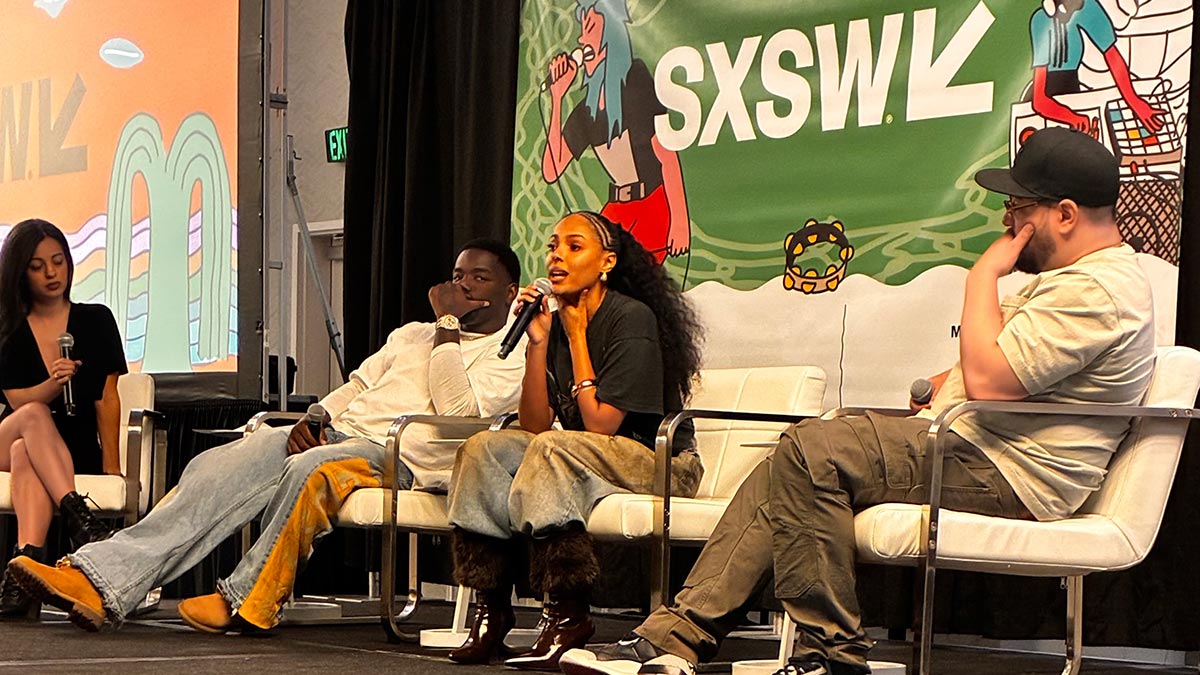

TLDR: HipHopCanada caught up with Samara Cyn at SXSW following Genius’ Story Behind The Song panel to talk storytelling, authenticity and the ideas shaping her music right now.
This past week, HipHopCanada was given the honour of being invited back to SXSW, where we had the opportunity to reconnect with Genius and cover their The Story Behind The Song panel. Known for shaping how fans engage with music through annotation, storytelling, and artist insight, Genius brought together a group of creatives who are actively redefining how stories are told in today’s music landscape.
The panel offered a deeper look into the creative process behind songwriting, breaking down how artists translate real-life experiences into records that resonate globally. From discussions around vulnerability and authenticity to the role platforms like Genius play in amplifying artist intent, the conversation highlighted just how important storytelling remains in an era driven by fast content and viral moments.
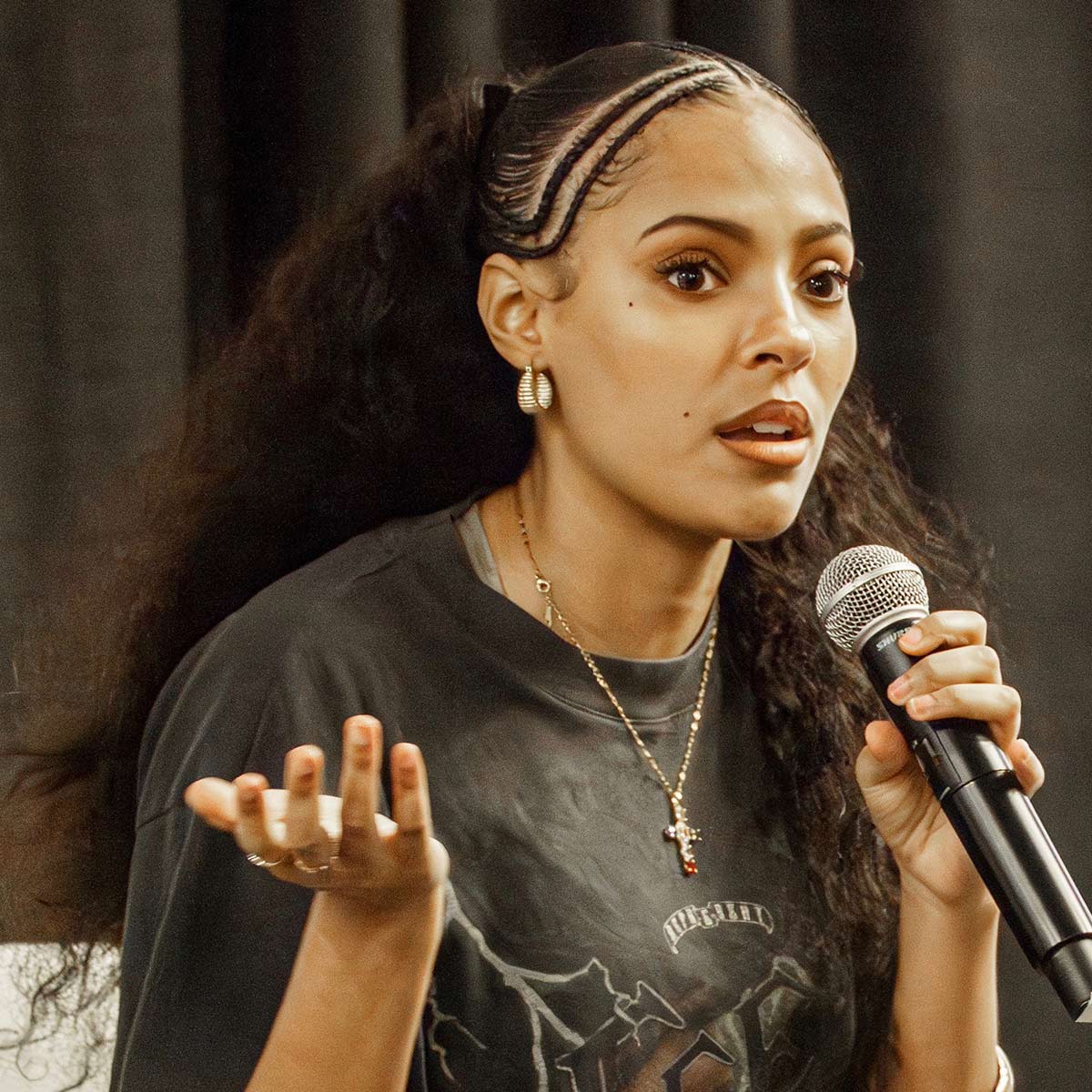 Photo: Pharron Fields
Another key theme was the evolving role of platforms like Genius in bridging the gap between artists and fans. By giving listeners access to the meaning behind lyrics and the context surrounding a record, Genius continues to create a deeper level of engagement that goes beyond surface-level listening. The discussion highlighted how this kind of access not only strengthens fan connection, but also gives artists more control over how their stories are understood.
Being in the room felt like more than just attending a panel, it was a reminder of how music, at its core, is still about connection. We had the chance to engage with industry leaders, ask meaningful questions, and capture moments that reflect the evolving relationship between artists and their audiences.
Among the panelists was rising artist Samara Cyn, whose approach to music stood out for its emotional depth and cinematic quality. Her perspective on storytelling, honesty in songwriting, and creative identity added a unique layer to the discussion, making it clear why her voice is resonating with so many right now. After the panel, we caught up with Samara Cyn to dive deeper into her artistry, her creative process, and the stories behind her music.
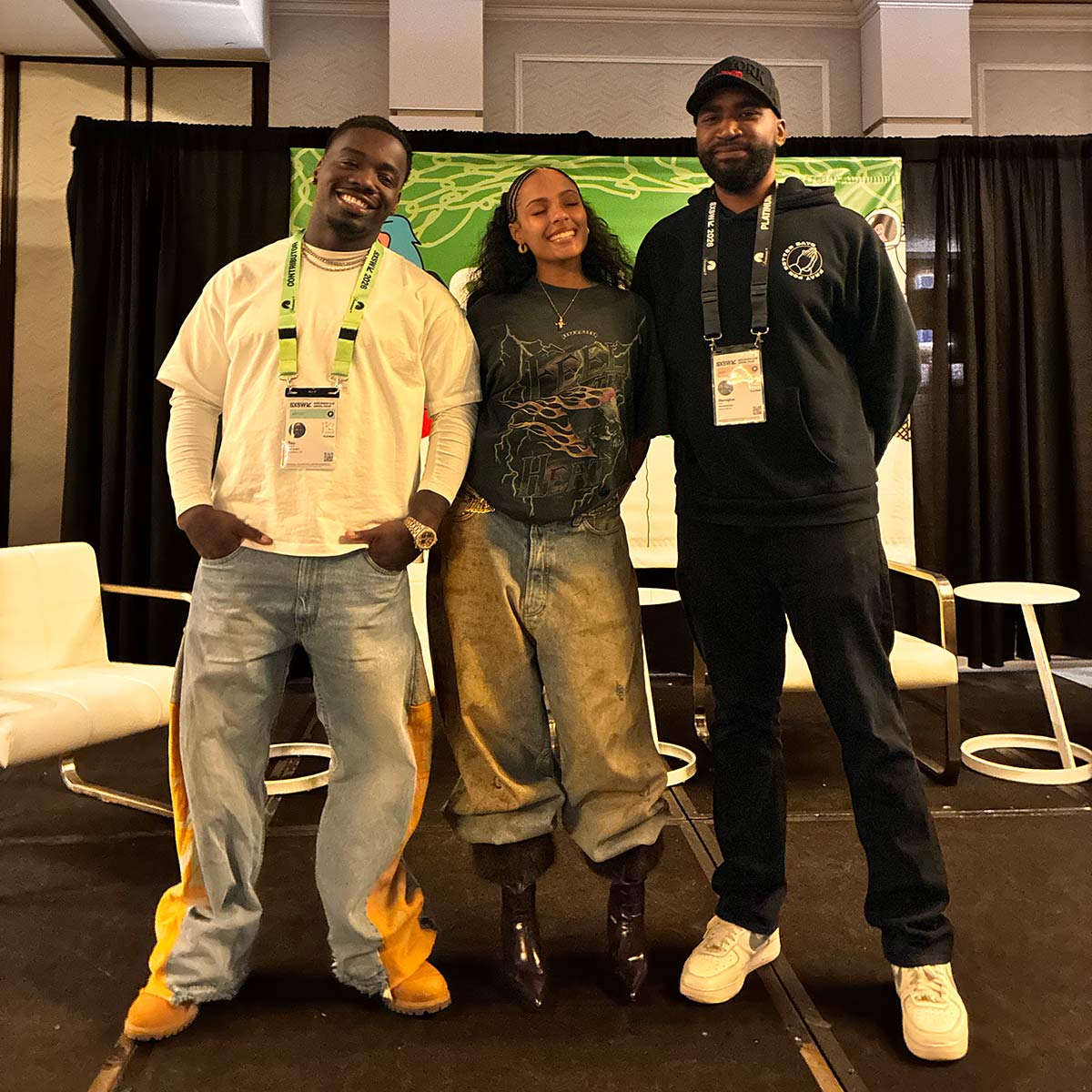
Ray Vaughn (TDE), Samara Cyn, and Remi Louis Harris (HipHopCanada)
Samara Cyn Interview
HipHopCanada: My first question for you is, your music feels very cinematic and emotionally detailed. If one of your songs had to be turned into a short film, which would you choose and what would that storyline look like?
Samara Cyn: Honestly, so I have a new project dropping, it’s called Detour. It drops on Friday. Free. It’s the first song of the project, it’s called Free. And when you listen to it, I think you’ll see it too.
HipHopCanada: Okay, that’s dope. A lot of artists talk about authenticity, but your storyline feels very personal. Is there a lyric that you wrote that almost felt way too honest for you to release that you’re like, nah, the world still needs to hear?
SC: In Brand New 2, that said, I don’t have time to heal today. It’s like, you know, sometimes you just want to be there already.You don’t want to travel, you want to be at the destination. You know, it’s just like, as somebody who’s very like, you know, very loving and I try to be very compassionate. It’s also like, damn, sometimes I want to get through the shit too, you know?

HipHopCanada: That’s a fact — If someone listened to your catalog backwards like a movie timeline, what story about your life would they discover?
SC: Wow, what an amazing question. I think they’ll see the progression of introspection and how it goes all the way back down to very personal childish and immature things. Like, oh, like, you know, I’m too prideful in a relationship or whatever. And I think where it’s at now is my commentary on the world and my place in it and my place in where I’m at and the self-reflection rather than the, you did this and you did that, you know?
HipHopCanada: You’re part of the new generation of women redefining rap. What is something about being a female rapper today that people still completely misunderstand?
SC: I think people don’t realize how quickly females, women, let me be correct. Women rappers get written off. You know, the standard that we’re held to compared to our counterparts and not just men, but like other demographics of music is absolutely insane. You know, the comments that I see under women’s posts, the comments that I get under my own posts, it’s just kind of like absolutely, like, it’s just compared to, you know.
HipHopCanada: They don’t let ya’ll have fun.
SC: They don’t let us do anything. Like, you know, why is she dressed like a boy? What’s up with you bitches dressing like boys? And then if I, you know, wear something girly, then it’s like, oh, you had to have your titties up for attention. It’s just like you cannot do anything right. So it’s just like, I think we need to show our women a lot more grace. And I think we also need to figure out why as a society we hate women so much.
HipHopCanada: Every artist has a studio moment they’ll never forget. What’s the one recording session that changed the way you approach music?
SC: Wow. When I first started rapping, when I first moved to L.A., I got in the studio with this dude named Retro. And Retro was the first person that I had ever seen that didn’t write his rap before he went into the booth. And he would go into the booth and he would freestyle basically, but he wouldn’t freestyle front to back. He would do like punching in and all that type of thing.
That’s the first time I’ve ever seen that before. And I remember being like, damn, that’s talent. And from that moment, it was like when I see things that I feel like, oh, that’s skill, then I try to practice that thing a lot. And that’s how I got songs like Magnolia Rain, which I was like, OK, the challenge for today is not to write anything down. Let me go off of the feeling. And from then on, it’s like instead of rehearsing the rap and writing the rap and rehearsing the rap, you go off of the way you feel. Because then when somebody listens to it, that person actually tunes in with how you’re feeling in that moment. Completely upgraded my music from that moment. I respect it.
HipHopCanada: If your creativity had a physical place like a room or an environment, what would that place look like?
SC: It would be a living room. It would be very cozy. It would have your friends in it and your family, the ones that you like. There would be open windows. There would be daylight coming in. And then when it gets nighttime, it would be nice, like dim living room lights. There would be plants there and you would be able to see outside.
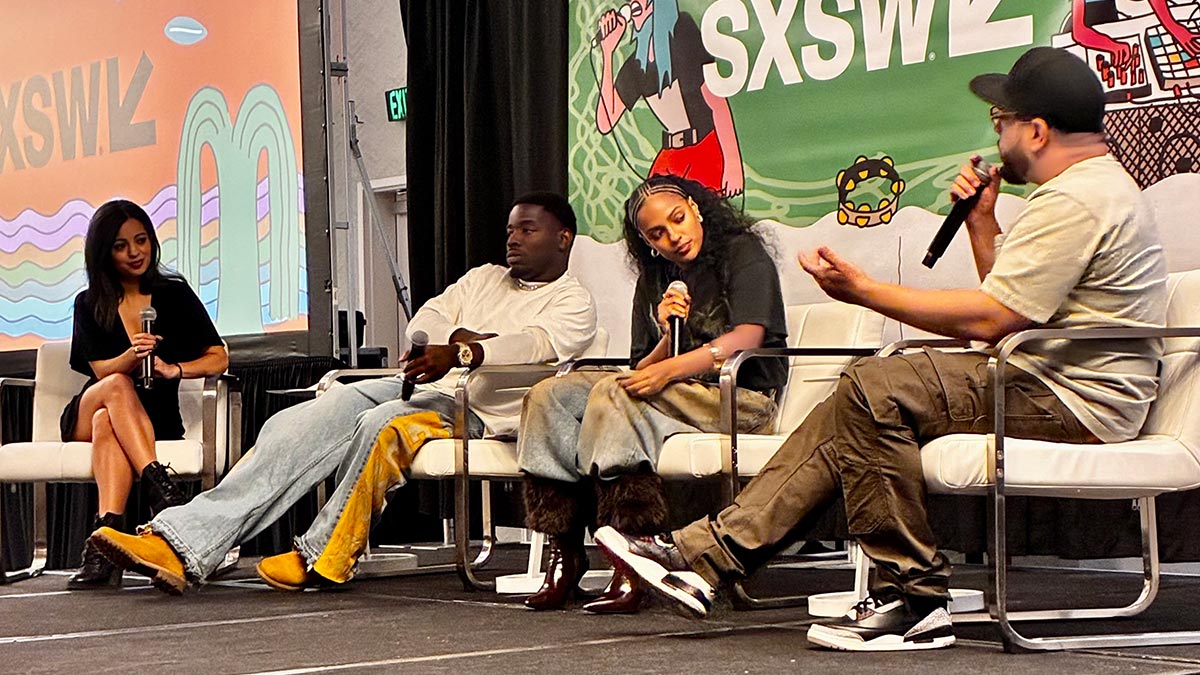
Julyssa Lopez (Rolling Stone), Ray Vaughn (TDE), Samara Cyn and Head of Artist Relations at Genius, Rob Markman (Photo: Remi Louis Harris / HipHopCanada)
HipHopCanada: Hip hop has always been about perspective, what is a life experience you’ve had that you think gives your music a point of view that no one else can replicate?
SC: Well, we all have a unique experience, right? That’s a fact. But we all relate to each other because we all experience the same six, seven emotions. The way that you’ve experienced anger and rage in your lifetime is different from the way that I’ve experienced anger and rage in my lifetime. And even though we’re completely two different people, we can relate that we both know what that feels like.
I don’t know. I’ve been through some things, you know what I’m saying? I also come from a place of love at the same time, too. And I feel like that’s also another perspective that not everybody has the privilege to have.
HipHopCanada: If you could send one unreleased song to your younger self before you ever started rapping or writing music, what message would you want to deliver?
SC: Man, be free. Be free. Be free with yourself. It doesn’t even matter being free with everybody. Be free with yourself. Allow yourself the respect to be free.
HipHopCanada: I like that. Your generation of artists is navigating music in the streaming and social era like you guys were talking about. What do you think gets lost in music today that older eras of hip-hop preserve better?
SC: I think originality. Everybody’s so eager to put you in a category. And while I do think that there’s a lot of non-original things out there and gimmicky things out there, I think we’re really quick to call something a gimmick without looking at it first. You know what I’m saying? Looking at it, understanding the context of it, which is what the panel was about today, too.
Those things matter. Not everybody is like, oh yeah, let me go in the studio, I’m going to make a song just like this person. Because you hear a reference doesn’t mean that that was their reference. I think us trying to make sense of the artists today. But again, back to that immediately I’m trying to write you off mentality. I go on the internet to hate on people type thing. I feel like we don’t give some artists a chance.
HipHopCanada: They get judged before they even get a chance to progress.
SC: Exactly. Nobody gave Georgiana a chance, I feel like. You know what I’m saying? And Georgiana has her own story and people are going to have their own opinions on her music. But when you hear her story and you hear her talk about her life, it’s like damn, she’s just a real ass bitch like the rest of them.
HipHopCanada: My very last question for you is imagine it’s ten years from now and someone is introducing you on stage. What do you hope that they say about your impact on hip-hop and the culture?
SC: Visionary. You know what I’m saying? I hope this develops and I really want it to and I’m working on it. But I hope it develops into something more than just music and just rap verses. I hope it extends out beyond me in ways that are impactful to the community. And I hope that in itself is respected and I do it in a respectable way.
_
Interview conducted by Remi Louis Harris for HipHopCanada
5 Ways to Support HipHopCanada:
- Submit Your Music
- Follow Canadian Fresh (HipHopCanada’s Spotify Playlist)
- Follow us on Instagram
- Follow us on X (Twitter)
- Like us on Facebook