















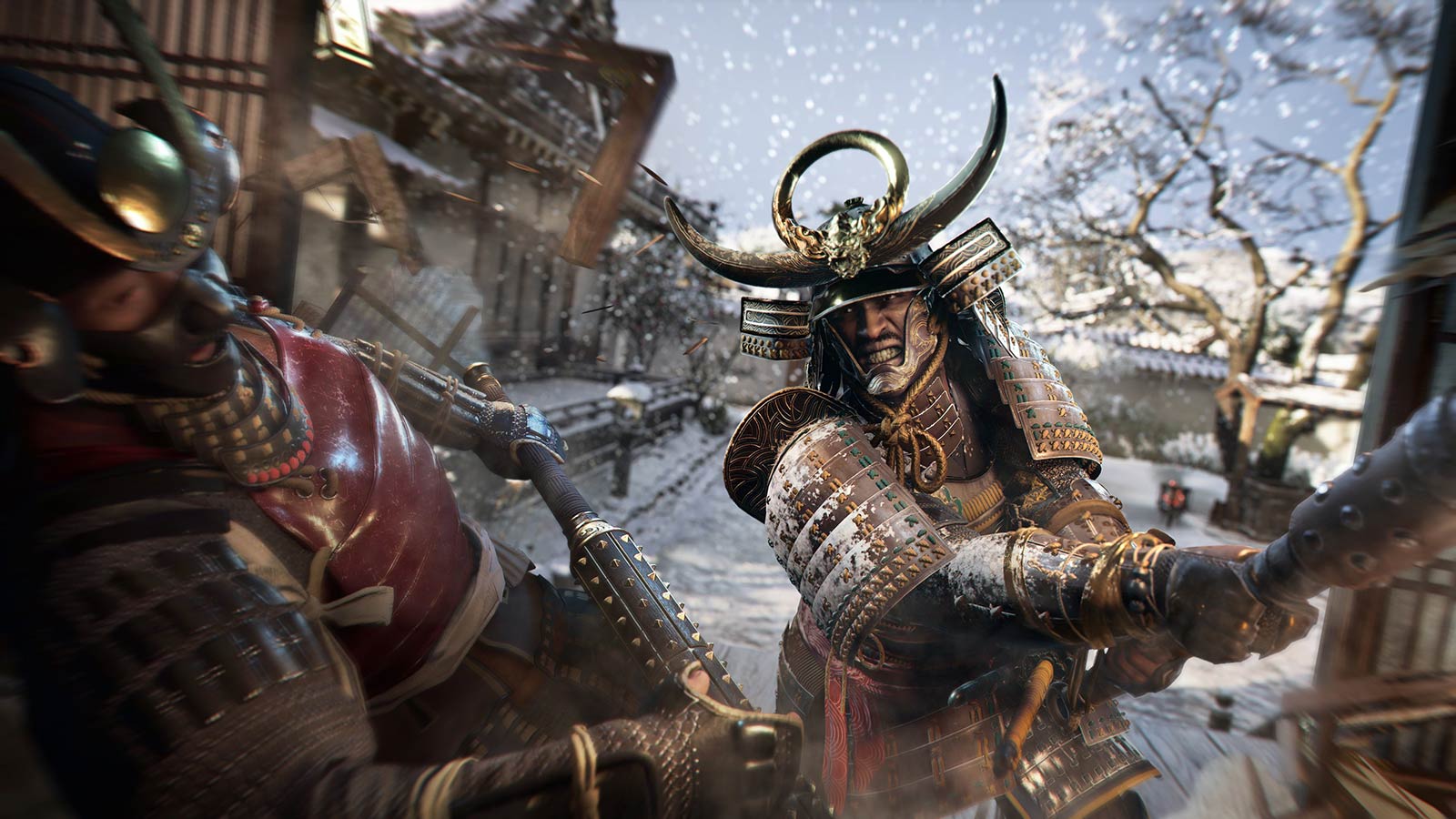
TLDR: The Assassin’s Creed Shadows game featuring Yasuke, a Black samurai, has sparked controversy for historical inaccuracies and cultural insensitivity. Critics argue it distorts history, but similar non-Japanese samurai have appeared in media before.
Fans of the video game franchise Assasin’s Creed have been pining for a game set in feudal Japan for decades. In theory, it looked like a match made in heaven.
The series (which started in 2007 and has sold over 200 million copies) uses historical settings, such as ancient Greece, the Italian Renaissance or the American Revolution, to tell its fictional epic story of a battle between the Order of Assassins and the Knights Templar. What better scenario, then, than the Japanese civil war (1477-1600), where samurai and ninjas (known as shinobi) were fighting each other?
Yet when the premiere trailer for Assassin’s Creed Shadows dropped on May 15 last year, it unleashed a torrent of criticism from fans around the world. By June, a Japanese-language petition had gathered over 100,000 signatures, claiming the game “insults Japanese culture and history” and “could be tied to anti-Asian racism.”
The publisher of the franchise Ubisoft issued a public apology, delaying the game’s release multiple times. With other Ubisoft titles under-performing, Shadows rescheduled release on March 20 has become a high-stakes endeavour.
So what exactly had fans so enraged? Online, amateur historians highlighted what they saw as copious historical inaccuracies in the promotional material.
However, none was deemed as damaging as the fact that one of the two playable characters in the game was based on the historical figure of Yasuke. Yasuke was a formerly enslaved Black man from Mozambique who became a retainer of the Japanese warlord Oda Nobunaga (1534-1582).
While the historical existence of Yasuke stands without question, some gamers took offence at the notion that Yasuke was being portrayed as a “Black samurai.” That’s because the historical sources are not clear on whether Yasuke was considered a “samurai” by his contemporaries.
Some gamers argue that focusing on Yasuke, rather than a more typical Japanese-born warrior, represents a misguided attempt at diversity, equity and inclusion. Especially since the second playable character is a fictional female ninja named Naoe.

To critics, highlighting these two characters allegedly overwrites the history of male Japanese samurai, injecting a “foreignness” they believe distorts the setting.
White samurai in popular media
Despite the uproar over Assassin’s Creed: Shadows, it’s not the first piece of media to depict a non-Japanese samurai.
In James Clavell’s 1975 novel Shōgun, English navigator John Blackthorne (based on the real-life William Adams) becomes a samurai in the rank of hatamoto of the warlord Toranaga (based on Tokugawa Ieyasu).
Historians also debate whether the real Adams was a true samurai, yet his “white samurai” image endures in adaptations like the 2024 FX series Shōgun, which garnered praise from critics across the ideological spectrum.
Another famous instance is Nathan Algren (played by Tom Cruise) who in the movie The Last Samurai (2003) joins the Satsuma Rebellion of 1877 led by the charismatic Katsumoto (played by Ken Watanabe and based on Saigō Takamori).
Katsumoto represents in the movie the “true” samurai spirit of male honour, duty, loyalty and principles. In the end, he dies in a final showdown against modern weaponry, but Tom Cruise’s character survives and reminds the emperor that Japan needs to honour its past despite the modernization.
The movie follows the formula of films like Dances with Wolves (1990), and later the first James Cameron Avatar movie (2009), in which a white character joins a minority population to “save” said people from their doom. This is also known as the “white savior complex”.
Accuracy v authenticity
Why, then, is Yasuke’s portrayal as a Black samurai so contentious when white foreigners in similar roles have been widely accepted?
Racism is one answer, but audience expectations about historical authenticity also play a key role. It’s critics claim that Shadows teems with historical inaccuracies, yet other celebrated titles, such as Ghost of Tsushima (2020) are just as historically inaccurate.
Ghost of Tsushima is set during the 13th-century Mongol invasion. Yet the game developers decided to base their protagonists on the heavily idealized and romanticized samurai of 1950s Akira Kurosawa movies, which have little in common with their historical 13th-century counterparts.
However, since these samurai conform to audience expectations of Japanese warriors with two swords that follow the largely fictional honour code of bushido, the game feels authentic even though it is historically inaccurate. By contrast, Yasuke’s presence in Shadows challenges a deeply ingrained notion of a xenophobic or sealed-off Japan – an anachronistic concept that overlooks evidence of foreign influence in the 16th century.
While Ubisoft has taken creative liberties and introduced historical inaccuracies, this is consistent with what has been done in other Assassin’s Creed titles and historically inspired games in general. Yet while predominantly white (and even Japanese) cultures seem quick to forgive depictions of white samurai figures, the same leniency does not seem to extend to a Black character.
Written by Fynn Holm, Junior Professor of Japanese Studies, University of Tübingen
This article is republished from The Conversation under a Creative Commons license. Read the original article.