











Who was the first celebrity?
To answer this question, we first need to think about what the people we think of as celebrities have in common. If we break down the formula for fame, we find three significant things: product, audience and industry.
All celebrities produce something. This could be a film, a television show, music or social media content. This product is then consumed and enjoyed by an audience. Often, this audience is called a fandom.
All celebrities exist within specific industries, such as Hollywood film or pop music. This industry creates a space for the celebrity to exist and ensures that their product reaches the correct audience. This could be through marketing, such as advertising posters and social media campaigns. This formula for fame can help us work out who the first modern celebrity was. While figures like Cleopatra, Henry VIII or Albert Einstein are very famous, they don’t fit the model for a celebrity because they don’t produce a product that is sold to an audience for entertainment.
I study the history of celebrity. I think the first celebrity was Lord Byron, the English Romantic poet who lived from 1788 to 1824.
Lord Byron’s rise to fame
Lord Byron is one of the most celebrated English Romantic poets. The Romantic poets were a group of writers in the late 18th century and early 19th century who were interested in nature, beauty and the imagination.
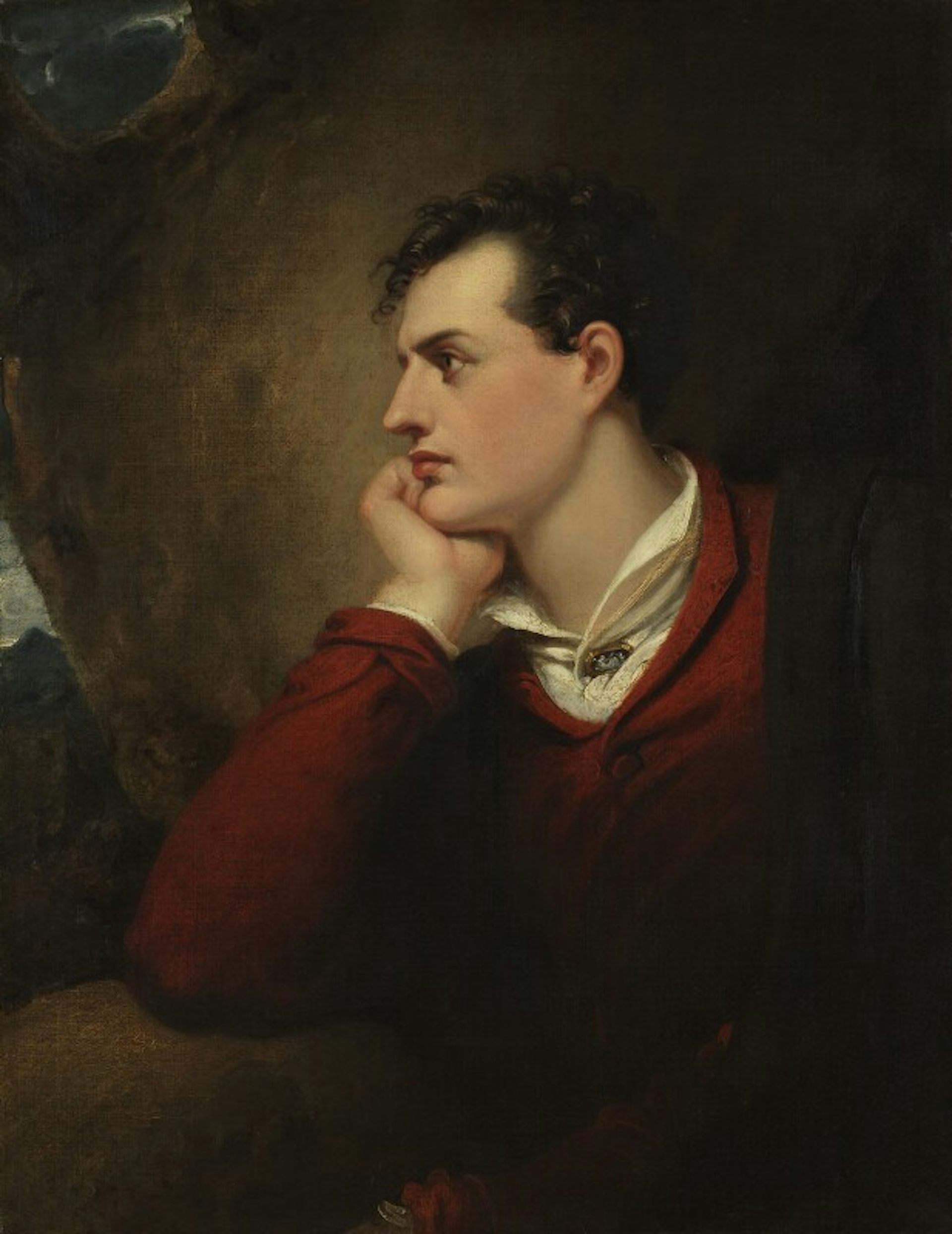
A portrait of Lord Byron painted in 1813 by Richard Westall. (© National Portrait Gallery, London, CC BY-NC-ND)
The story of Byron’s rise to stardom begins in his early twenties when he set off on a grand tour of the Mediterranean between 1809 and 1811. The grand tour was a traditional trip around Europe for young, upper-class men in Byron’s time and marked them becoming adults. It was a bit like the gap year that some teenagers today take before they go to university.
During his travels through countries such as Greece and Turkey, he began writing a poem called Childe Harold’s Pilgrimage. It followed the story of a young man who is tired of life and seeks distraction and adventure abroad. The poem was thought to be partly autobiographical, meaning that some of it was based on the author’s own life.
Byron published the first two sections of Childe Harold’s Pilgrimage in March 1812. The poem was a hit. It sold out in three days and made Byron an overnight A-lister.

Much like a Hollywood star or a social media influencer, he was treated like a VIP. He was invited to the most fashionable places, and everywhere he went, people wanted to meet him.
The aristocrat Lady Elizabeth Foster, the Duchess of Devonshire, said that Byron “is really the only topic of almost every conversation”. Readers couldn’t get enough of Byron’s tales of adventure and the mystique of the poet behind them.
The first fandom
Before Swifties, the Beyhive or Beatlemania, there was “Byromania”. This was a term coined at the time by Byron’s wife, Annabella Milbanke, to describe the frenzy for anything Byron-related. Readers of Byron’s poetry, known as Byromaniacs, paved the way for modern-day fandoms.
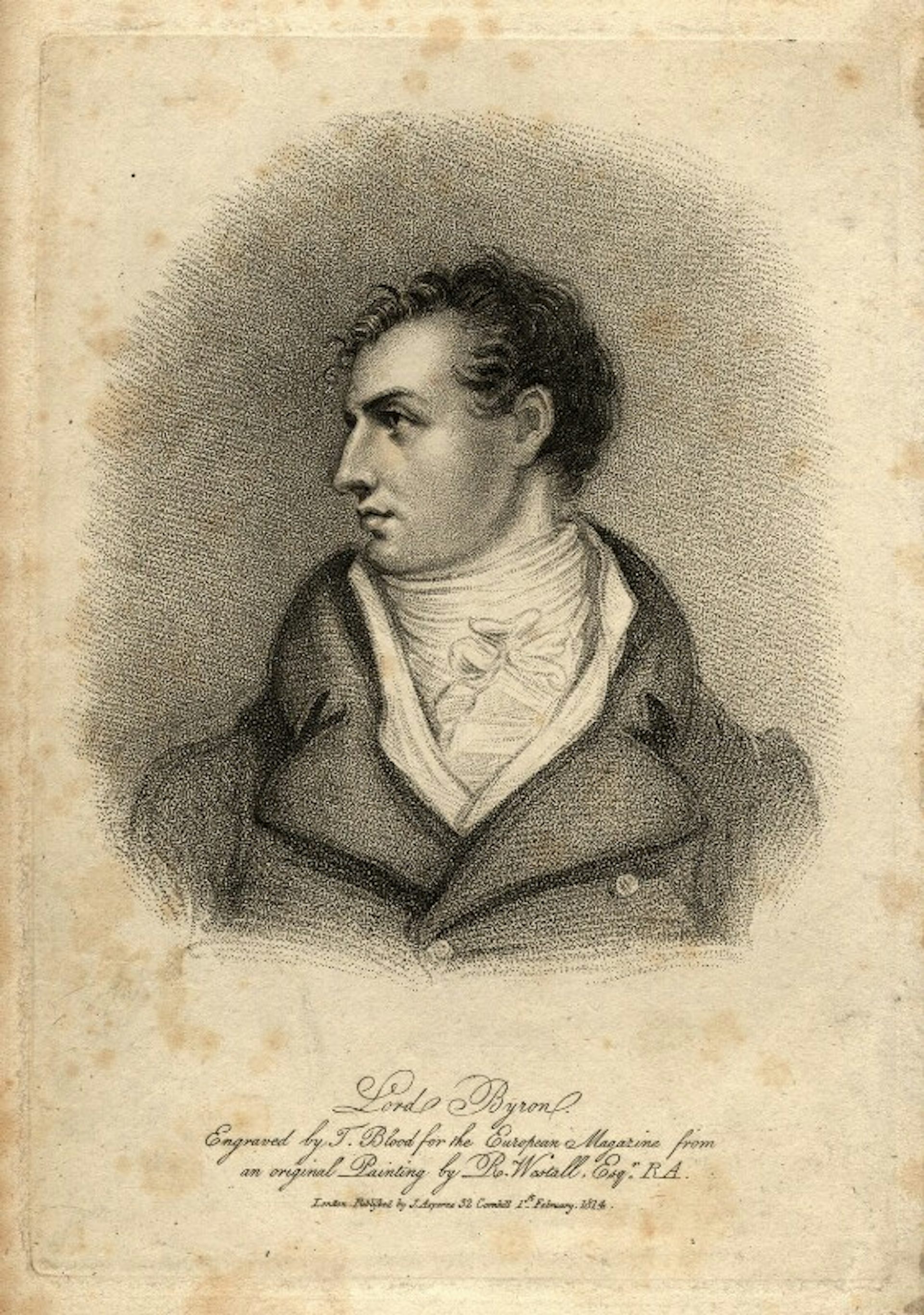
An engraving of Lord Byron by Thomas Blood, published by James Asperne in 1814, after Richard Westall. (© National Portrait Gallery, London, CC BY-NC-ND)
Byron was one of the first writers to receive fan mail. Fans bought Byron merchandise, which ranged from printed portraits sold alongside his writings to novelty plates and jugs.
Readers would collect Byron-related writings and pictures and compile them in books to share with friends. This practice, known as commonplacing, was a bit like a modern-day fanzine or blog.
Byron’s followers also wrote fan fiction – creating a new story based on the original work. Readers wrote poems imitating Byron’s style and alternative endings to his work, some of which were actually published.
Popular culture
Lord Byron become famous so quickly because more people than ever before were able to read his work. At the time he was writing, the Industrial Revolution was making books, newspapers and magazines cheaper and easier to print. The range of printed items available to buy was widening, from pictures to poetry and cartoons.
What’s more, a greater number of people were able to read, meaning more people were buying books and magazines than ever before. These changes created the perfect conditions for a young poet’s rise to fame.
Written by Harriet Fletcher, Lecturer in Media and Communication, Anglia Ruskin University
This article is republished from The Conversation under a Creative Commons license. Read the original article.